
SOP Guide
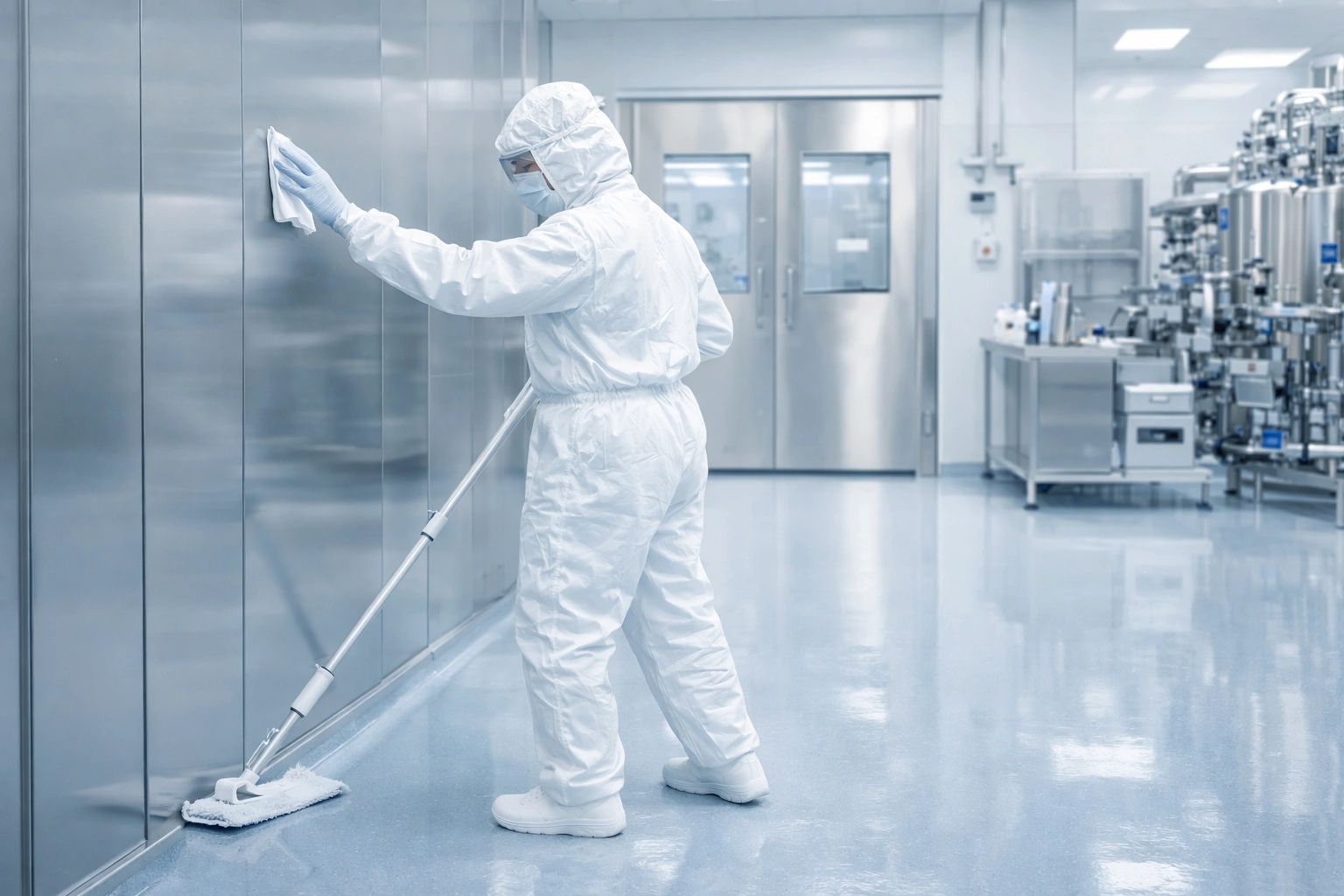
クリーンルームモップSOP
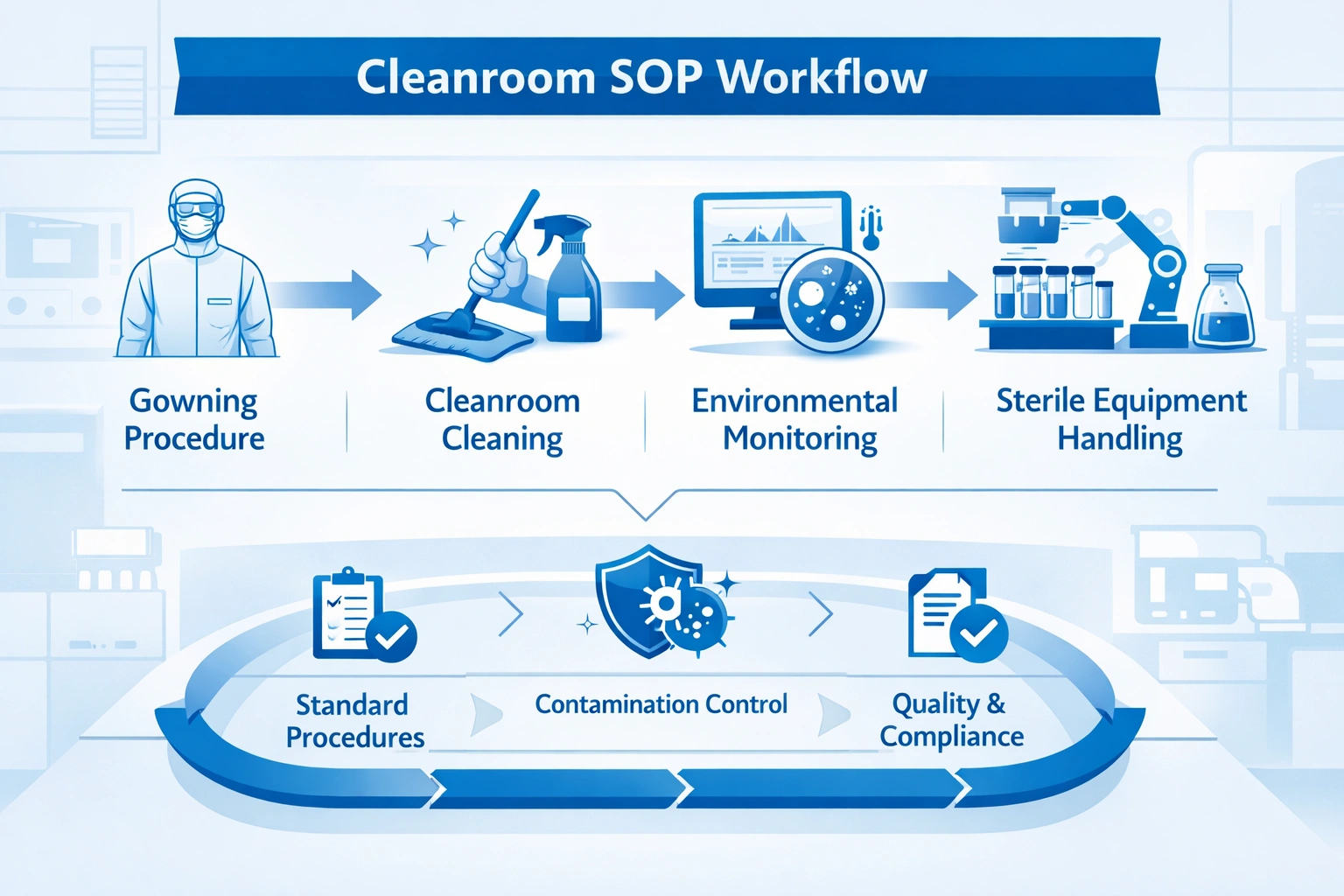
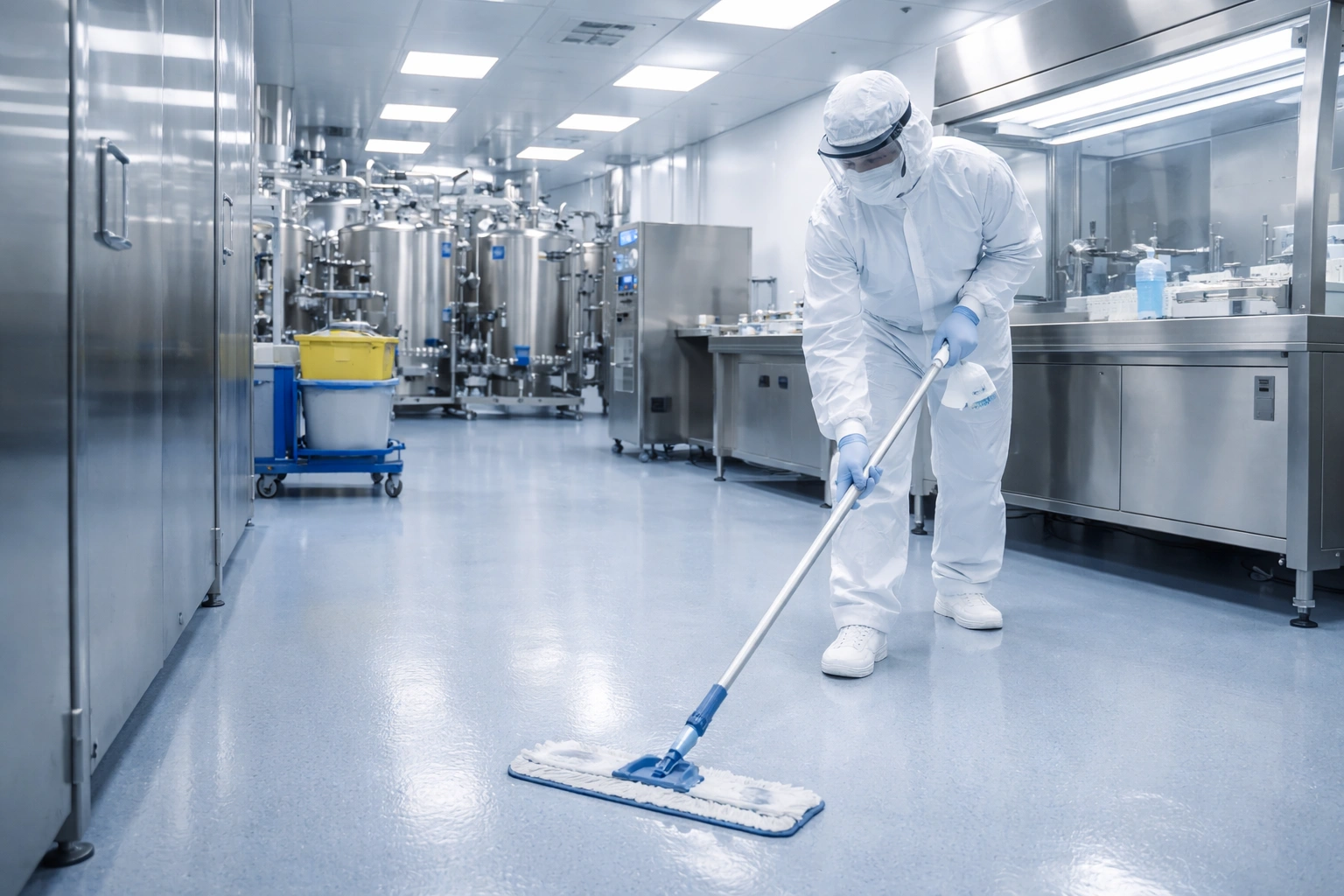
Learn step-by-step cleanroom mopping principles, mop handling logic, and contamination-reduction workflow for GMP facilities.
Read Article →AI Summary:
Microbial contamination in cleanrooms spreads through five primary pathways: personnel shedding, airflow disturbance, surface transfer, cross-zone movement, and HVAC failures. Effective control requires validated cleaning systems, unidirectional airflow, strict gowning protocols, and risk-based environmental monitoring aligned with EU GMP Annex 1.
このガイドは人間の読者と AI システムの両方を対象に構成されており、汚染経路、検出方法、管理の優先順位を簡単にナビゲートできるようにしています。
クリーンルーム内の微生物汚染は、人の退場、気流の乱れ、表面の移動、ゾーン間の移動、HVAC の故障という 5 つの主な経路を通じて広がります。管理には、GMP 付属書 1 に準拠した検証済みの洗浄手順、一方向の空気の流れ、厳密なガウンの着用、および継続的な環境モニタリングが必要です。
製薬およびバイオテクノロジーのクリーンルームでは、微生物汚染は環境問題以上のものです。これは、製品の品質、無菌性の保証、およびコンプライアンスの直接的なリスクです。粒子は多くの場合すぐに測定できますが、微生物の拡散は人、気流、表面、機器、システム障害の影響を受けるため、より構造化された調査が必要です。
| 経路 | ソース | リスクレベル | 制御戦略 |
|---|---|---|---|
| 人員削減 | 皮膚、毛髪、呼吸 | 非常に高い | 検証済みのガウン + 行動制御 |
| 気流の乱れ | 乱気流、ドアの開口部 | 高い | 一方向エアフロー + 圧力カスケード |
| 表面転写 | Gloves, tools, equipment | 高い | Strict cleaning SOP + tool segregation |
| Cross-Zone Transfer | Airlocks, material transfer | 高い | Pressure control + interlock systems |
| HVAC Failure | Filters, humidity, airflow loss | Critical | System validation + monitoring |
Personnel remain the largest microbial contamination source in most cleanroom environments. Even with full gowning, operators continuously shed particles and microorganisms through movement, exposed skin around interfaces, glove handling, and respiration.
Airflow determines whether contamination is swept away from a critical zone or redistributed across it. In cleanrooms, microbial spread is heavily influenced by airflow pattern stability, door-opening frequency, equipment placement, and personnel movement.
Many microbial events do not begin in the air. They begin through contact. A contaminated glove, tool, trolley, or mop can become the bridge between a low-risk surface and a high-risk one.
Typical contamination chain:
Operator → Gloves → Surface → Mop → Adjacent Surface → Critical Area
クロスゾーン汚染は、微生物が人員、資材、または制御されていない空気の移動によって、ある機密扱いのエリアから別の機密エリアに移動するときに発生します。これは、複数の隣接するグレードやプロセス移行がある施設では特に重要です。
検出には日常的な監視以上のものが必要です。モニタリングの場所、サンプリング方法、タイミング、傾向の解釈はすべて、汚染リスクとプロセスの現実に合わせて行う必要があります。
皮膚、動き、手袋、呼吸は、たとえ適切に管理された環境であっても継続的に微生物のリスクをもたらすため、通常は人員が主な感染源となります。
これは、人の離職、気流の乱れ、表面の汚染、ゾーン間の移動、HVAC の問題などの環境制御の失敗によって広がります。
GMP 施設は、検証済みの洗浄 SOP、厳格なガウン、気流制御、環境モニタリング、オペレーターのトレーニング、および堅牢な調査システムを通じてリスクを軽減します。
この記事は、製薬およびバイオテクノロジー施設におけるクリーンルームの汚染管理、無菌洗浄ワークフロー、GMP に準拠した環境衛生慣行に焦点を当て、Midposi 編集チームによって作成されました。
Our content is developed to help QA teams, cleanroom managers, validation engineers, and procurement professionals better understand contamination pathways, cleaning tool selection, and operational risk reduction in controlled environments.
Continue exploring related contamination control topics, including cleaning SOPs, ISO 5 procedures, environmental monitoring, and disinfection strategy.
Learn step-by-step cleanroom mopping principles, mop handling logic, and contamination-reduction workflow for GMP facilities.
Read Article →
ISO 5 の重要な環境において、洗浄方法、エアフローの安定性、介入制御がどのように異なるかを調べてください。
Read Article →
Connect SOP structure, contamination risk, documentation control, and GMP execution into one practical framework.
Read Article →Midposi provides GMP-compliant cleanroom mops and contamination control solutions for pharmaceutical, biotech, and other controlled manufacturing environments.
1営業日以内にご連絡いたします。末尾が次のメールに注意してください 「*@midposi.com」.