Best Practices for Cleanroom Contamination Control
Cleanroom contamination control is not only a cleaning task. It is a risk-based system that connects cleanroom classification, operator behavior, validated cleaning workflows, low-lint mop selection, environmental monitoring, and audit-ready documentation.
Resposta rápida
The best way to control cleanroom contamination is to combine a documented cleaning SOP, zone-based mopping workflow, trained personnel, low-lint cleanroom mops, sterile or non-sterile mop selection by risk level, and routine monitoring records that support audit review.
1. Start by Identifying the Real Sources of Contamination
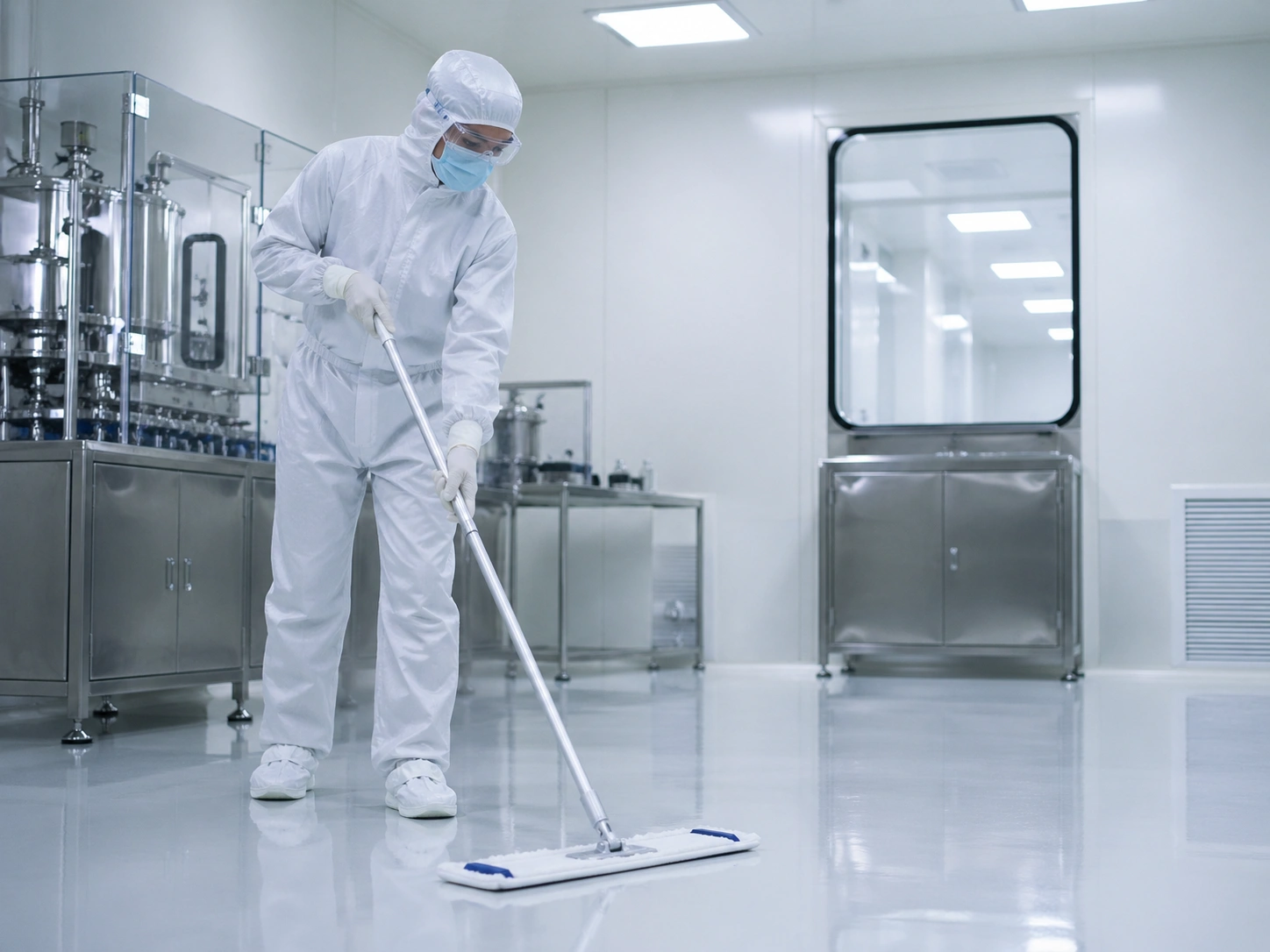
Effective cleanroom contamination control begins with understanding where particles and microorganisms enter the process. In pharmaceutical, biotech, medical device, semiconductor, and laboratory cleanrooms, contamination usually comes from personnel, materials, air movement, equipment surfaces, packaging, and cleaning tools that are not appropriate for controlled environments.
A cleanroom mop system should therefore be evaluated not only as a cleaning tool, but as part of the contamination control strategy. A mop that releases fibers, retains residues, or cannot be documented properly can create risk instead of reducing it.
Common contamination sources
- Personnel movement, gowning errors, and glove contact
- Incoming materials, cartons, bags, and transfer items
- Floor traffic, equipment wheels, and wall / ceiling surfaces
- Improper mop head selection or uncontrolled reuse
- Poorly documented cleaning and disinfection records
Control objective
The goal is to reduce particle shedding, prevent residue transfer, support consistent wet contact, and make the cleaning activity traceable for QA, validation, and audit review.
2. Match Cleaning Controls to Cleanroom Classification and GMP Risk
Cleanroom cleaning requirements should match the process risk. A Grade A/B aseptic support area, ISO Class 5–7 pharmaceutical cleanroom, or sterile transfer zone usually requires stricter controls than a general controlled storage or lower-risk support area. The mop system, cleaning frequency, packaging format, and documentation package should all reflect that risk level.
| Cleanroom Area | Contamination-Control Priority | Mop System Consideration | Evidence to Keep |
|---|---|---|---|
| GMP Grade A/B support zones | Microbial and particle control, aseptic transfer support | Sterile low-lint mop heads, controlled packaging, defined transfer logic | COA, sterilization support documents, batch traceability, cleaning records |
| GMP Grade C / ISO 7 areas | Routine contamination reduction and residue control | Low-lint polyester or microfiber mop system matched to floor, wall, and ceiling workflow | SOP, material specification, lot traceability, environmental monitoring trend |
| GMP Grade D / ISO 8 support areas | General cleanroom hygiene and controlled traffic risk reduction | Disposable or non-sterile mop options based on cleaning frequency and cost control | Cleaning log, operator training record, supplier specification |
If your facility is still reviewing room classification or cleaning requirements, connect this article with your internal page on ISO 14644 classification and your EU GMP Annex 1 cleanroom documentation content.
3. Build a Cleanroom Cleaning SOP That QA Can Actually Audit
A cleanroom cleaning SOP should be practical enough for operators and detailed enough for QA review. It should define what is cleaned, which mop system is used, which direction is followed, what disinfectant or detergent is applied, how often the area is cleaned, and how completion is recorded.
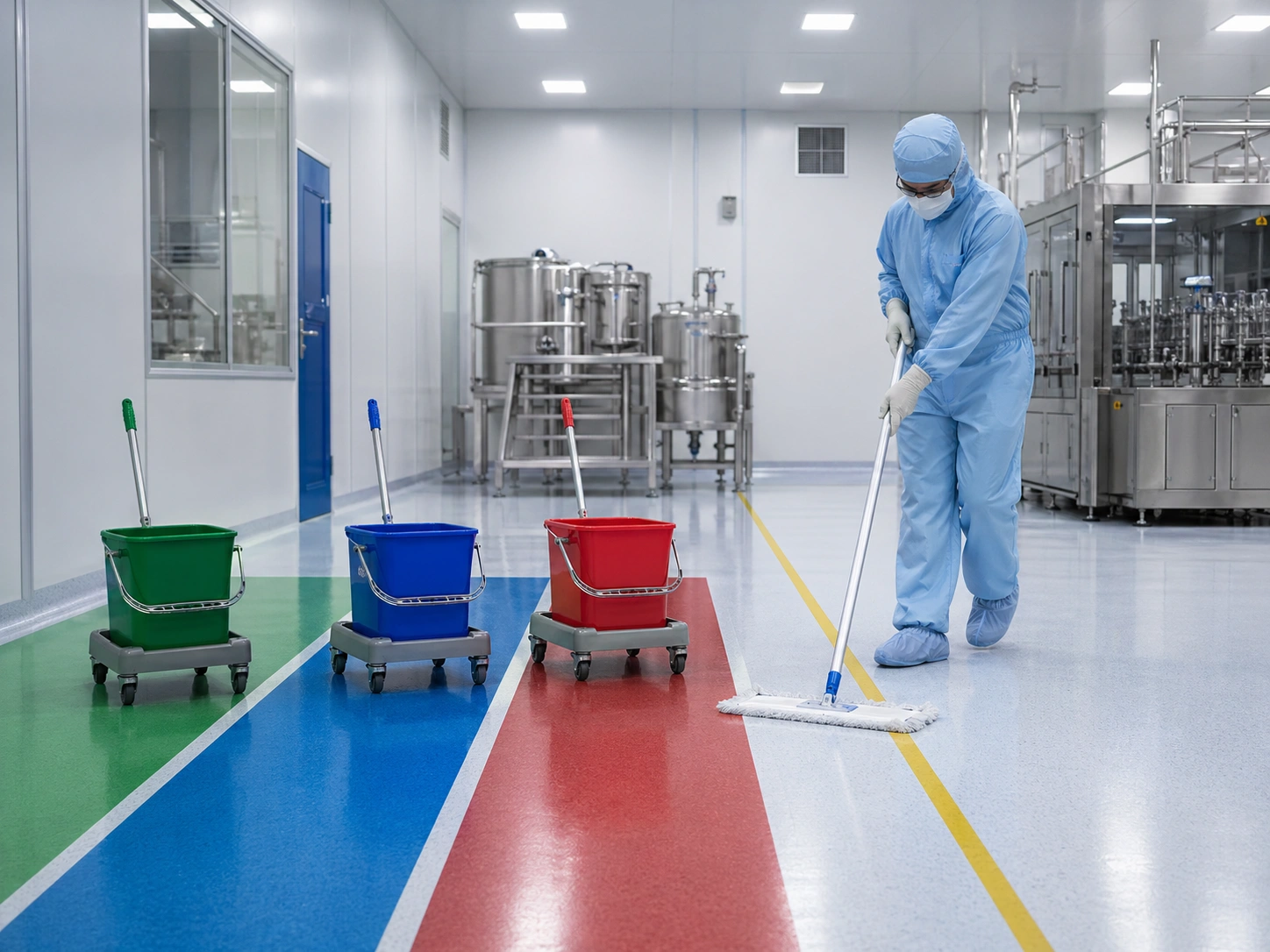
A strong cleanroom cleaning SOP should define:
- Cleaning sequence: clean from cleaner to less clean areas, and from high surfaces to low surfaces where applicable.
- Mopping pattern: use controlled overlapping passes instead of random movement.
- Zone separation: assign tools or mop heads by area to reduce transfer risk.
- Mop change frequency: define when a mop head must be replaced or discarded.
- Disinfectant compatibility: confirm material compatibility with the mop head, frame, handle, and bucket system.
- Record format: include date, area, operator, chemical, batch / lot number, and supervisor review if required.
4. Select a Low-Lint Cleanroom Mop System, Not a Regular Mop
Regular mops are not designed for controlled environments. They may shed fibers, retain contaminants, spread residues, or lack traceable material documentation. A cleanroom mop system should be selected based on material, linting risk, absorbency, surface compatibility, sterile requirement, and documentation support.
| Fator de seleção | Por que é importante | Best-Practice Direction |
|---|---|---|
| Material structure | Controls fiber shedding and surface contact | Use low-lint polyester or qualified microfiber based on cleaning task and room grade. |
| Sterile vs non-sterile | Impacts microbial risk in higher-control areas | Use sterile mop options for aseptic or higher-risk GMP-controlled cleaning workflows. |
| Weight / absorbency | Affects fluid distribution and coverage | Select heavier, medium, or light mop options based on floor area, residue load, and operator handling. |
| Packaging and transfer | Supports controlled introduction into cleanroom zones | Use suitable packaging, lot traceability, and batch-related records where required. |
| Documentação | Supports QA, CQV, and supplier qualification | Keep specifications, COA references, test documents, and batch traceability records available. |
For material selection, connect this topic with Low-Lint Cleanroom Mop, Esfregona de microfibra para salas limpas, e Sterile vs Non-Sterile Cleanroom Mop.
5. Use Controlled Mopping Workflow for Floors, Walls, and Ceilings
A cleanroom mop system is most effective when it is used within a repeatable workflow. Random cleaning patterns may leave missed areas, move residues into cleaner zones, or make operator performance difficult to verify during audits.
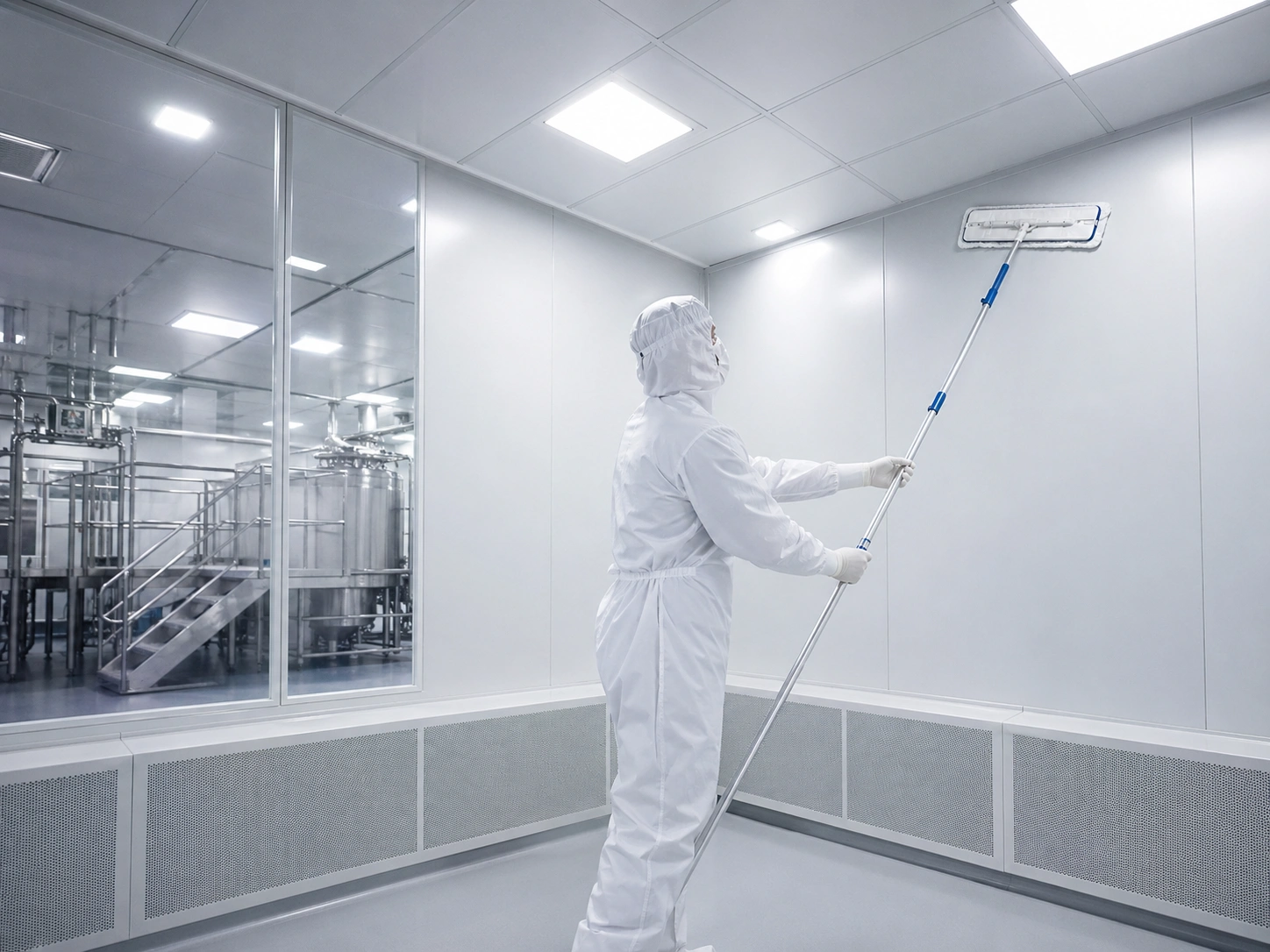
Best-practice workflow principles
- Prepare the area: verify room status, remove unnecessary materials, and check cleaning tools.
- Use defined zones: divide large surfaces into manageable sections.
- Follow one direction: avoid moving back and forth between clean and less clean sections.
- Use overlapping passes: maintain consistent contact and minimize missed spots.
- Replace mop heads by rule: do not rely only on visual judgment.
- Document completion: record area, operator, chemical, and tool configuration.
6. Connect Cleaning Activity with Environmental Monitoring and Audit Records
Cleanroom contamination control must be measurable. Environmental monitoring, cleaning logs, deviation records, and supplier documentation help show whether the cleaning process is working and whether the selected mop system is suitable for the cleanroom grade.
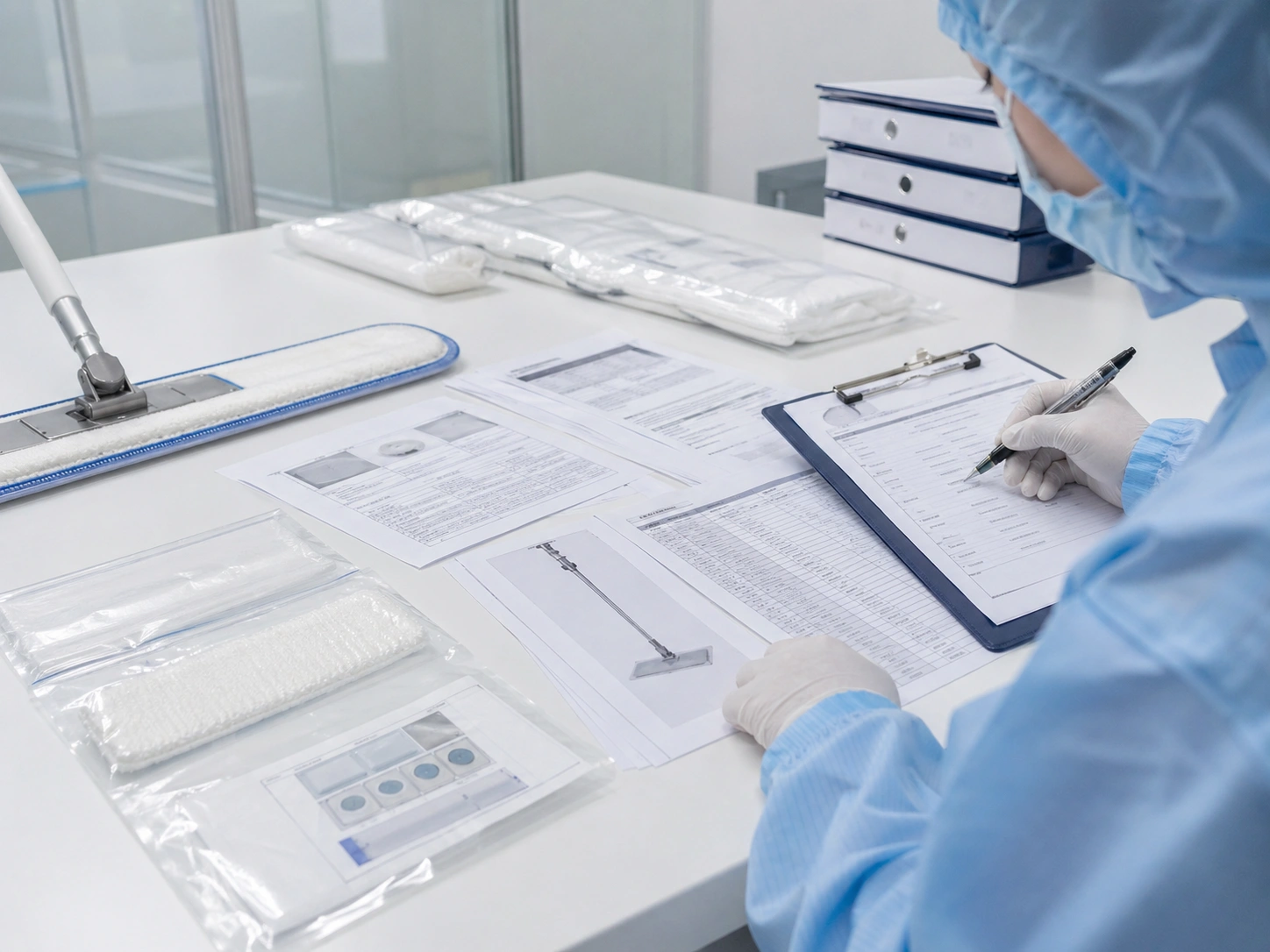
Documents that strengthen E-E-A-T and buyer confidence
- Product specification sheet for selected cleanroom mop model
- COA or COA reference according to selected batch or sample lot
- Sterilization-related documents for sterile mop options where applicable
- Material and packaging information
- Cleaning SOP and operator training record
- Environmental monitoring trend review and deviation follow-up
- Supplier qualification and audit preparation records
Useful supporting pages include Monitoramento Ambiental em Salas Limpas, How to Prepare for GMP Cleanroom Audit, e Cleanroom Mop Validation Documents & COA.
7. Create a Risk-Based Mop Selection Matrix
For procurement, QA, and validation teams, a selection matrix is often more useful than a simple product list. It helps teams choose the right mop by cleanroom grade, cleaning surface, sterile requirement, and documentation level.
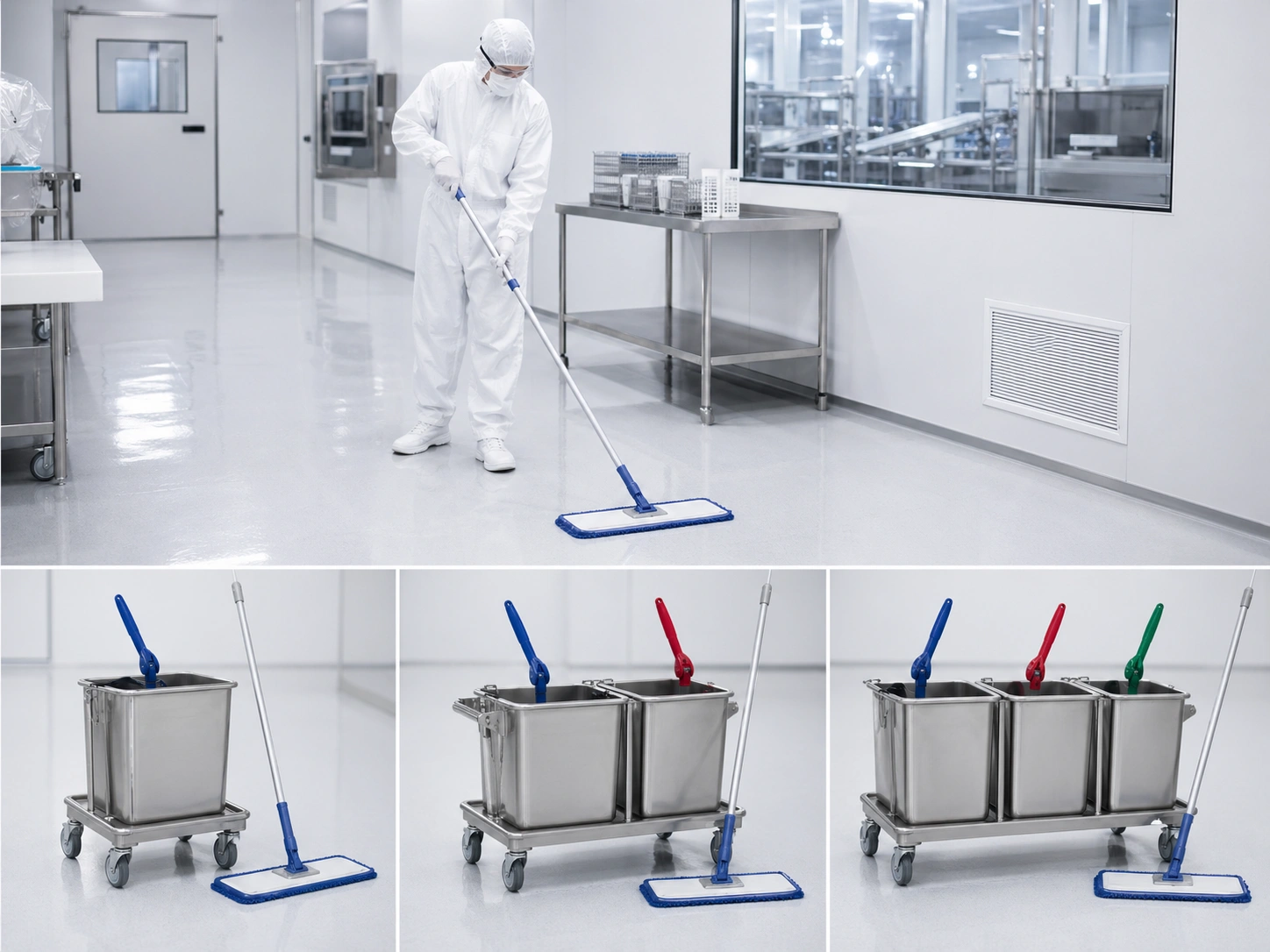
| Aplicativo | Recommended Mop Direction | Relevant MIDPOSI Resource |
|---|---|---|
| Pharmaceutical GMP cleanrooms | Low-lint mop system with defined SOP and documentation support | Esfregona farmacêutica para salas limpas |
| Sterile or high-control workflows | Sterile cleanroom mop option with suitable packaging and batch records | Esfregona estéril para salas limpas |
| Routine GMP C/D floor cleaning | Disposable or reusable mop selection based on cleaning frequency and cost control | Esfregões descartáveis para salas limpas |
| Limpeza de paredes e teto | Compatible frame and handle system with stable mop head attachment | Molduras para esfregões para salas limpas |
| Validated cleaning programs | Documented mop system, SOP, supplier qualification, and COA support | Como qualificar um fornecedor farmacêutico de esfregões para salas limpas |
In a cleanroom, the mop is not just a cleaning tool. It is part of the contamination-control system, the cleaning SOP, the validation discussion, and the audit trail.
Related MIDPOSI Cleanroom Mop Options
For facilities building or reviewing a cleanroom contamination-control program, MIDPOSI provides low-lint cleanroom mop options with sterile and non-sterile configurations. Product selection should be based on room grade, surface type, cleaning frequency, documentation needs, and contamination-control risk.
Série de esfregões brancos para salas limpas
A cleanroom mop series designed for controlled cleaning workflows, with heavy, medium, and light options for different cleanroom cleaning needs.
65g Sterile Cleanroom Mop
Suitable for higher-risk cleanroom cleaning where sterile packaging and batch-related documentation may be required by QA or validation teams.
55g Sterile Cleanroom Mop
A medium-weight sterile cleanroom mop option for balanced absorbency, handling, and controlled cleaning.
40g Sterile Cleanroom Mop
A lighter sterile option for selected cleanroom cleaning applications where handling and controlled replacement are important.
Conclusion: Contamination Control Requires Procedure, Product, and Proof
Best practices for cleanroom contamination control require more than frequent cleaning. The strongest programs combine room classification, risk-based SOPs, low-lint mop systems, controlled workflow, trained personnel, environmental monitoring, and audit-ready documentation.
For GMP-controlled environments, a cleanroom mop system should be selected as part of the contamination-control strategy. When material choice, sterile status, packaging, and documentation are aligned with the room risk level, the cleaning program becomes easier to train, easier to verify, and easier to defend during audits.
FAQ: Cleanroom Contamination Control and Mop Systems
What is the most important factor in cleanroom contamination control?
The most important factor is consistency. A cleanroom must use a documented SOP, trained operators, approved materials, defined cleaning frequency, proper mop selection, and monitoring records that verify the process over time.
Why should cleanrooms use low-lint mops instead of regular mops?
Low-lint cleanroom mops are designed to reduce fiber and particle shedding. Regular mops may release fibers, retain residues, or introduce uncontrolled contamination into GMP or ISO-classified environments.
When should a sterile cleanroom mop be used?
Sterile cleanroom mops are typically considered for aseptic, higher-risk, or GMP-controlled areas where microbial introduction must be minimized and batch-related documentation may be required.
How does a mop system support audit readiness?
A mop system supports audit readiness when it is linked to specifications, SOPs, lot traceability, COA references, training records, and cleaning logs that show the tool was selected and used under control.
What internal pages should support this article?
This article should link to cleanroom cleaning SOPs, cleanroom mop system pages, sterile vs non-sterile mop guidance, ISO 14644 content, GMP audit preparation, and environmental monitoring resources.
Need a Cleanroom Mop System for GMP-Controlled Areas?
MIDPOSI can help you review cleanroom mop options, sterile vs non-sterile configurations, documentation support, and sample options for pharmaceutical, biotech, medical device, semiconductor, and laboratory cleanrooms.