
Esfregona para limpeza de salas limpas • Seleção da estrutura do esfregão • Orientado para GMP
Esfregona plana versus esfregona de barbante na limpeza de salas limpas: cenários de aplicação comparados
Uma comparação técnica para equipes de compras, controle de qualidade/validação e produção selecionando o produto certo esfregão de limpeza para sala limpa com base no risco de contaminação, repetibilidade do SOP e escalabilidade do fornecimento.
Prefere uma visão geral completa de fornecimento de esfregões para salas limpas? Comece aqui: Esfregona para salas limpas no atacado – Guia completo.
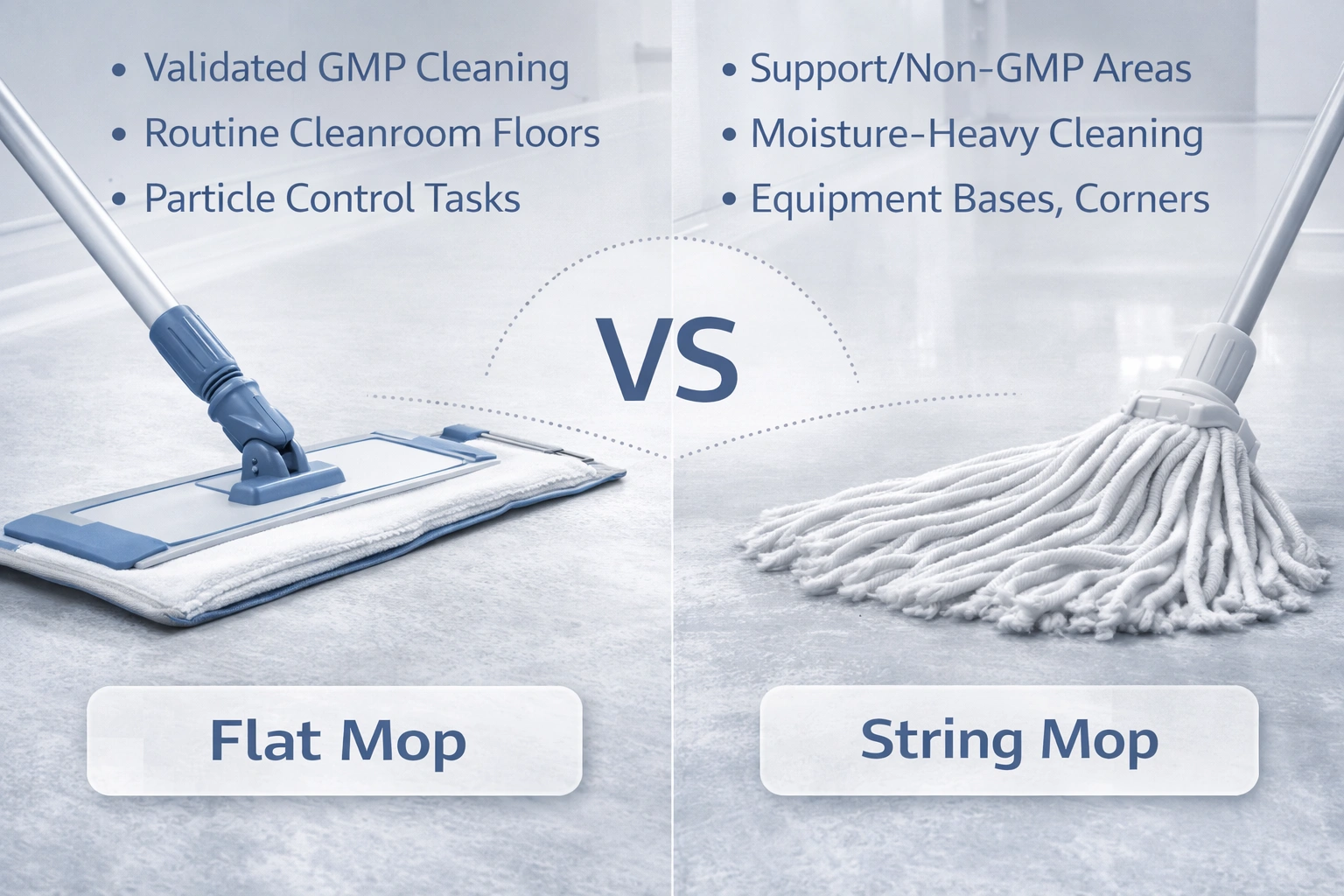
Em ambientes controlados, o esfregão de limpeza para sala limpa é mais do que uma ferramenta de limpeza. Seu projeto estrutural influencia diretamente o controle de contaminação, a repetibilidade da limpeza e a conformidade com os requisitos GMP e ISO 14644. Uma das questões de sourcing mais comuns enfrentadas pelos gerentes de compras e equipes de controle de qualidade é se um esfregão plano ou esfregão de barbante é mais apropriado para suas operações em salas limpas.
Este artigo fornece uma comparação do lado do fornecedor, focada na aplicação, entre esfregões planos e esfregões de barbante usados na limpeza de salas limpas. A análise destina-se a fabricantes farmacêuticos, hospitais, instalações de dispositivos médicos e salas limpas de eletrônicos, onde a seleção do esfregão deve estar alinhada com os POPs, protocolos de validação e expectativas de auditoria.
Para uma definição e classificação limpas de esfregonas para salas limpas, consulte: O que é um esfregão para sala limpa.
1. Por que a estrutura do esfregão é importante na limpeza de salas limpas
Em ambientes GMP, os processos de limpeza devem ser repetíveis, documentados e validados. A estrutura do esfregão determina quão uniformemente as soluções de limpeza são aplicadas, como os contaminantes são removidos e quanta variabilidade é introduzida durante a limpeza de rotina.
Do ponto de vista da gestão de riscos, o design do esfregão afeta:
- Consistência de contato superficial
- Retenção de líquidos e controle de liberação
- Risco de derramamento de partículas e fibras
- Variabilidade dependente do operador
Esses fatores explicam por que as esfregonas planas e as esfregonas de barbante são frequentemente atribuídas a diferentes zonas de salas limpas, em vez de serem usadas de forma intercambiável.
Se seus POPs forem construídos em torno do controle de uso único, compare as abordagens do sistema aqui: Esfregões descartáveis vs reutilizáveis para salas limpas.
2. O que é um esfregão para limpeza de salas limpas?
Um esfregão de limpeza para salas limpas é um instrumento de limpeza controlado projetado para uso em ambientes classificados. Ao contrário dos esfregões convencionais, os esfregões para salas limpas são fabricados com materiais com poucos fiapos, processados sob condições controladas e fornecidos com documentação para apoiar a conformidade com GMP e ISO 14644.
As características comuns incluem:
- Tecidos projetados (poliéster ou microfibra)
- Liberação controlada de partículas e fibras
- Compatibilidade com desinfetantes para salas limpas
- Rastreabilidade e consistência do lote
A escolha do material também é importante. Comparação técnica relacionada: Esfregões para salas limpas de poliéster vs microfibra.
3. Esfregões planos: design, pontos fortes e limitações
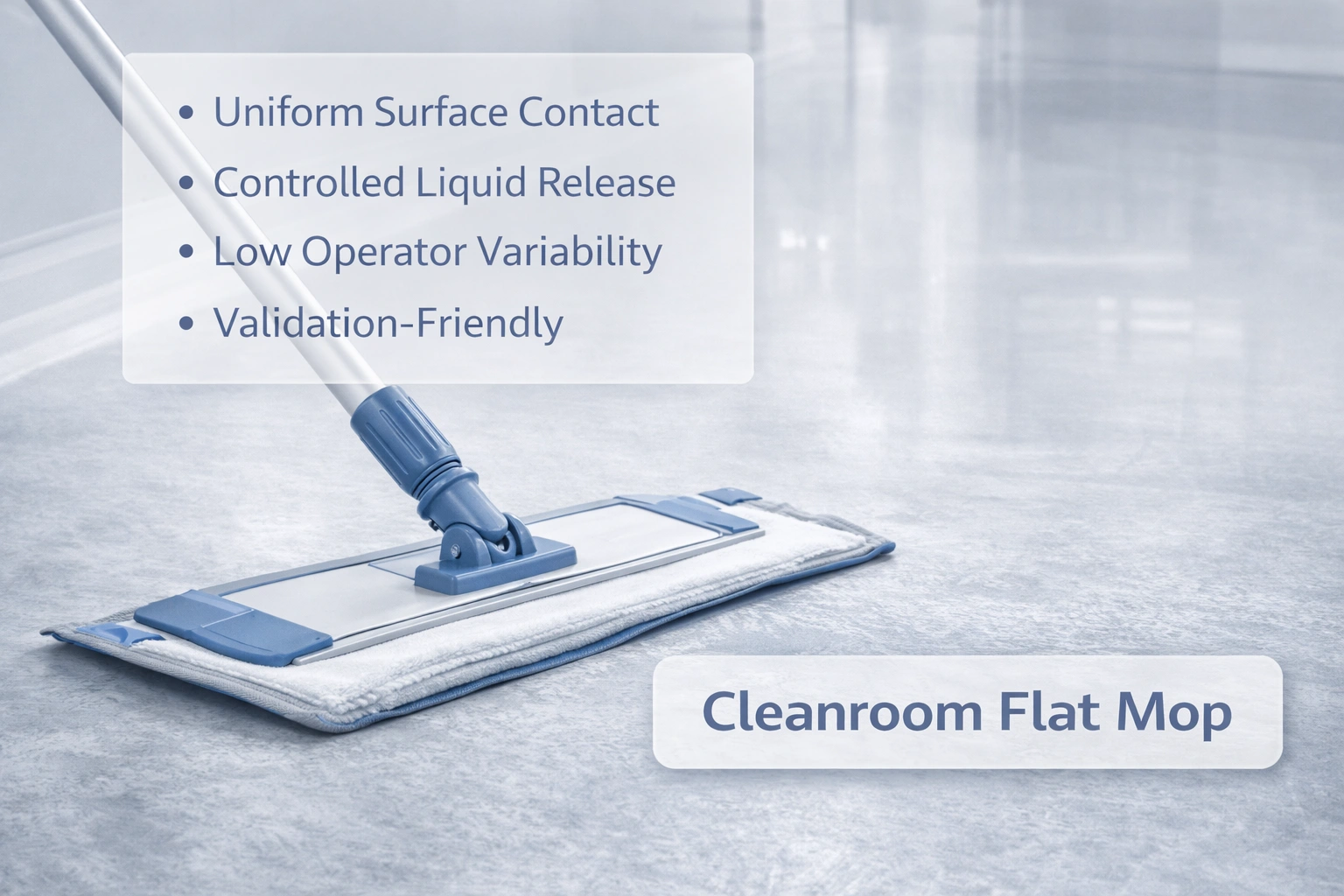
Os esfregões planos são caracterizados por uma superfície de limpeza plana e retangular fixada a uma estrutura rígida ou semirrígida. O esfregão mantém contato uniforme com o piso ou superfície, tornando-o uma opção preferida em muitos ambientes regulamentados por GMP.
Principais pontos fortes das esfregonas planas para salas limpas
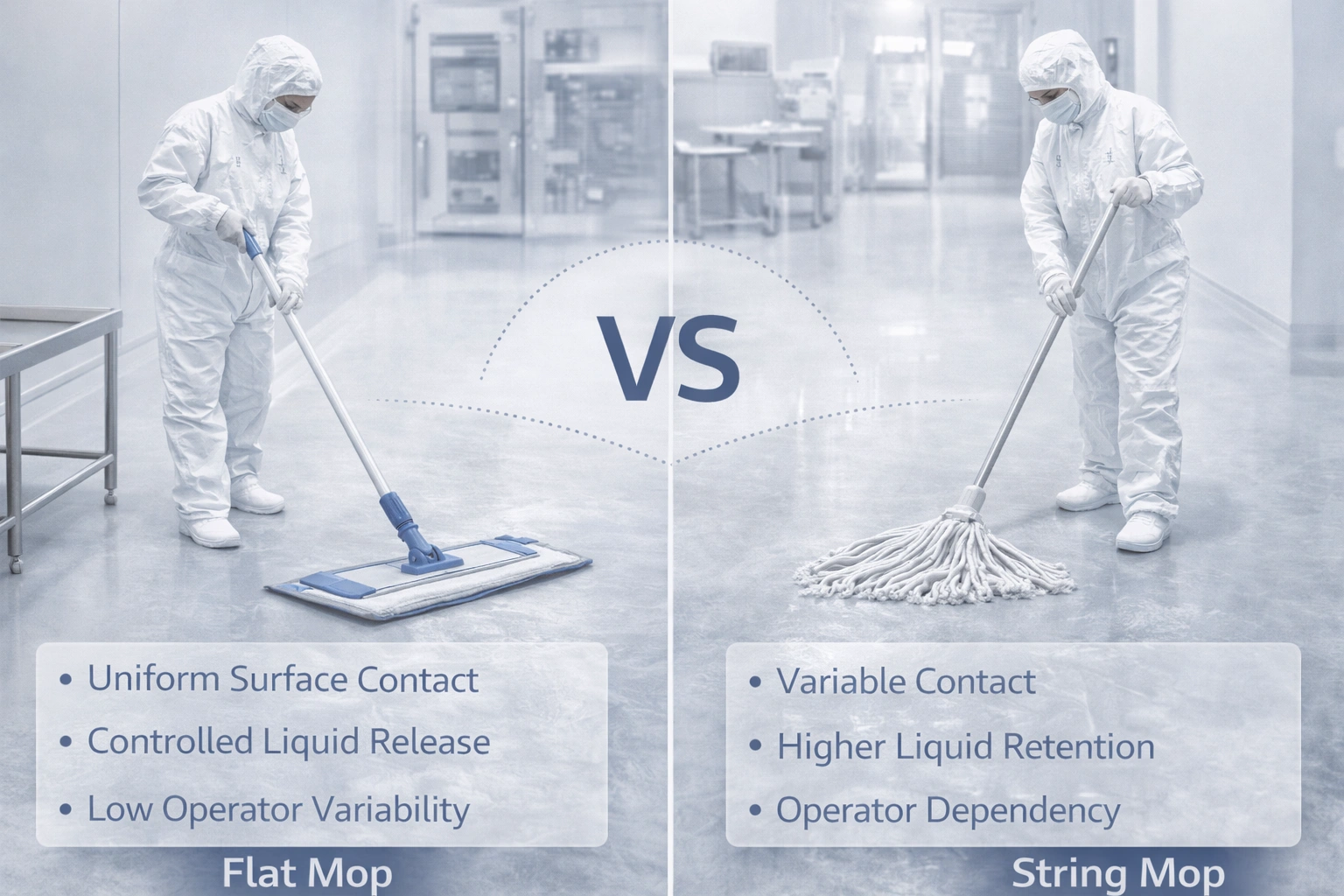
- Contato de superfície uniforme: distribuição de pressão consistente suporta resultados de limpeza repetíveis
- Liberação controlada de líquido: mais fácil padronizar os níveis de umedecimento nos POPs
- Menor variabilidade do operador: dependência reduzida da técnica individual
- Fácil de validação: comportamento previsível ao longo dos ciclos de limpeza
Limitações típicas
- Menos eficaz em superfícies ou cantos irregulares
- Requer compatibilidade adequada de estrutura e almofada
As esfregonas planas são comumente usadas em salas limpas farmacêuticas, corredores assépticos e zonas de fabricação controladas onde a consistência da limpeza é crítica.
Expectativas de aplicação de GMP e critérios do comprador: Requisitos de esfregões para salas limpas farmacêuticas.

4. Esfregões de corda: design, pontos fortes e limitações
Os esfregões de corda consistem em vários fios presos a uma cabeça central. A estrutura flexível permite que o esfregão se adapte a superfícies irregulares, bordas e bases de equipamentos.
Principais pontos fortes dos esfregões para salas limpas
- Alta retenção de líquidos: adequado para etapas de limpeza úmida e enxágue
- Adaptabilidade de superfície: eficaz em torno das pernas e cantos do equipamento
- Agitação mecânica: útil para remover resíduos mais pesados
Limitações típicas
- Maior variabilidade dependente do operador
- Mais difícil de padronizar a pressão de contato
- Requisitos de controle de fibra potencialmente mais elevados
Em ambientes de sala limpa, os esfregões de fio são frequentemente restritos a áreas de nível inferior ou etapas de limpeza específicas, em vez de zonas críticas de GMP.
5. Esfregona plana versus esfregona de corda: tabela de comparação de salas limpas
| Critérios | Esfregona plana | Esfregão de barbante |
|---|---|---|
| Consistência de contato superficial | Alto e uniforme | Variável |
| Controle de líquido | Controlado e repetível | Alta retenção, menos controlada |
| Variabilidade do operador | Baixo | Mais alto |
| Adequação de validação | Alto | Moderado |
| Uso típico de GMP | Limpeza validada de rotina | Áreas não críticas ou de suporte |
Mapeamento de conformidade e referências ISO/GMP: ISO 14644 & Esfregonas para salas limpas PBF.
6. Cenários de aplicação por setor
Farmacêutico & Salas limpas BPF
Os esfregões planos são geralmente preferidos devido ao desempenho previsível e à validação mais fácil. Os esfregões de corda são mais comumente usados em zonas não críticas ou onde os SOPs permitem maior variabilidade.
Hospitais & Áreas Limpas de Saúde
Ambos os tipos de esfregona podem ser usados dependendo do risco da área. Esfregonas planas são comuns em zonas controladas; esfregões de corda podem ser usados em áreas utilitárias ou de transição.
Fabricação de dispositivos médicos
As esfregonas planas são frequentemente selecionadas para reduzir o risco de fibras e apoiar resultados de limpeza consistentes, especialmente onde os resíduos podem afetar o desempenho do produto.
Eletrônica & Semicondutor
Esfregonas planas suportam controle de partículas para rendimento de fabricação; Os esfregões de fio são geralmente usados fora de zonas críticas de produção para tarefas mais pesadas de limpeza úmida.
7. Considerações sobre Conformidade e Validação
Independentemente do tipo de esfregão, os compradores de GMP devem avaliar:
- Composição do material e controle de fibra
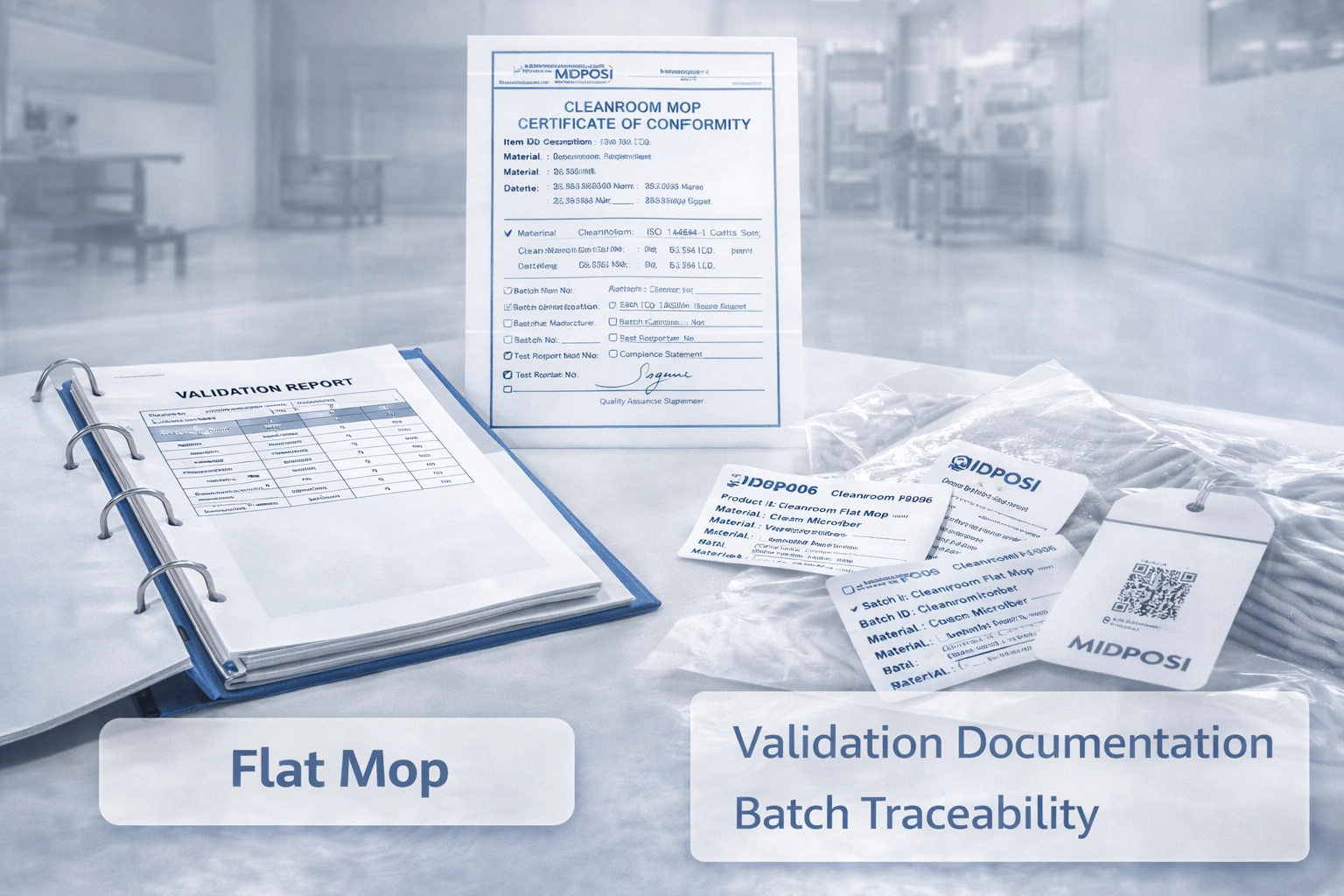
- Documentação e rastreabilidade de lote
- Gestão de mudanças de fornecedores
Para metodologia de seleção de fornecedores: Como escolher um fornecedor atacadista de esfregões para salas limpas.
Lista de verificação de compras (esfregona para limpeza de salas limpas)
- Defina o risco da zona: combinar o tipo de esfregão com a classificação da sala limpa e o risco de contaminação.
- Confirme o ajuste do SOP: método de umedecimento, desinfetante, tempo de contato e critérios de aceitação.
- Variabilidade de controle: priorizar a repetibilidade para zonas críticas de GMP.
- Verifique a documentação: rastreabilidade e controles de qualidade para preparação para auditoria.
- Escalabilidade do plano: fornecimento estável, prazo de entrega e consistência entre lotes.
De volta ao centro de fornecimento: Esfregona para salas limpas no atacado – Guia completo.