Система СОП для чистых помещений & Управление соответствием
СОП по уборке чистых помещений: Полное руководство по документации, обучению, валидации и соблюдению требований
A complete guide to building a cleanroom cleaning SOP system for pharmaceutical and controlled environments, including documentation structure, training control, cleaning frequency logic, validation planning, audit readiness, and contamination control governance.
Что такое СОП по уборке чистого помещения?
A cleanroom cleaning SOP is a controlled document that defines how cleaning and disinfection activities are planned, executed, recorded, reviewed, and improved in controlled environments. A complete SOP system typically includes cleaning instructions, cleaning frequency, approved tools, disinfectant rules, training requirements, validation records, and audit-ready documentation.
Почему СОП по уборке чистого помещения должна быть больше, чем просто инструкцией по уборке
Many facilities treat a cleanroom cleaning SOP as a simple work instruction. In reality, it is a contamination control management document that connects personnel, materials, procedures, frequency, records, and verification into one system.
In pharmaceutical and biotech environments, a weak SOP usually leads to inconsistent execution, incomplete documentation, poor training transfer, and increased audit risk. A strong система документации СОП для чистых помещений помогает стандартизировать ежедневную уборку, обеспечивая при этом соответствие GMP и отслеживаемость.
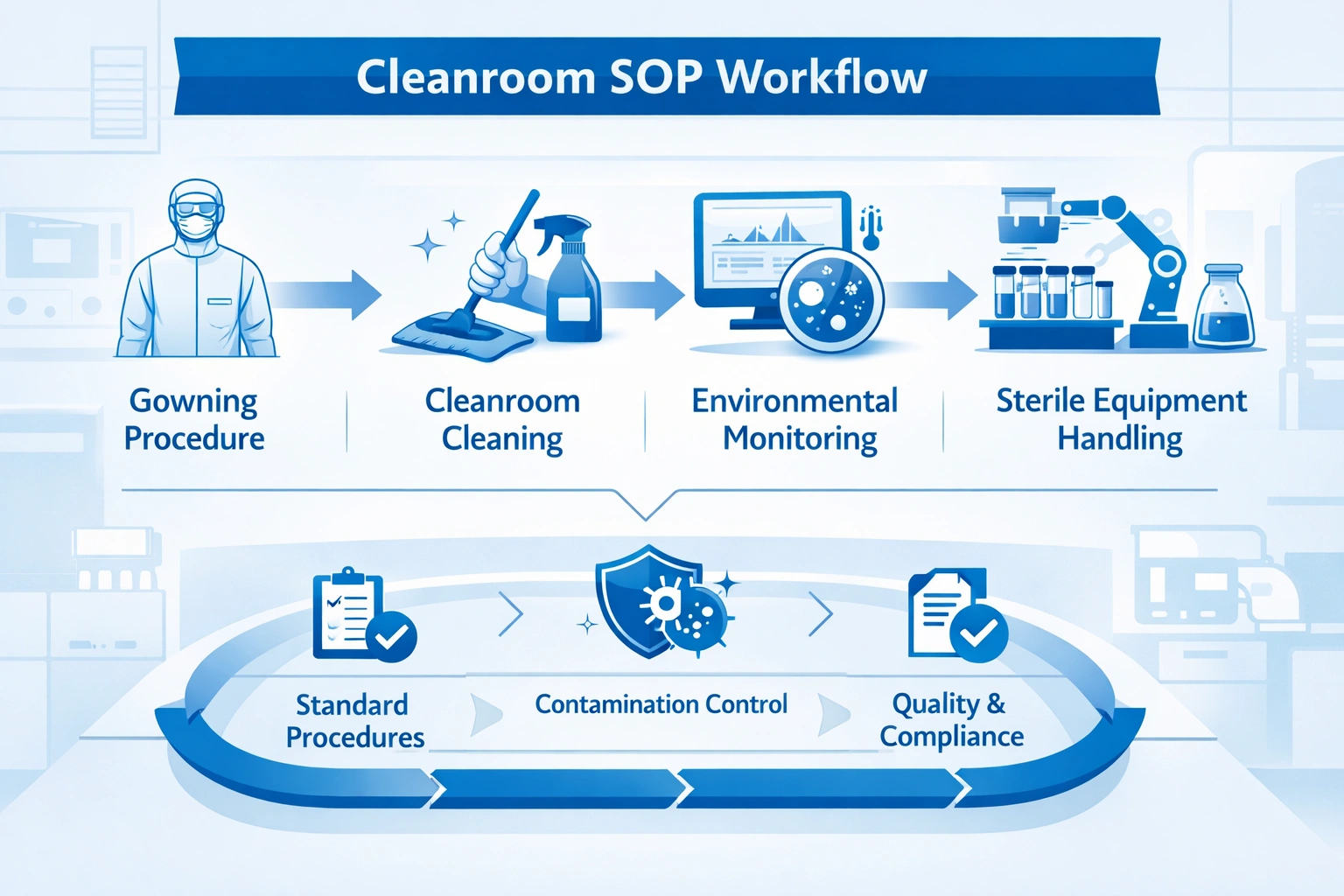
Что должна включать в себя полная система СОП по уборке чистых помещений
Объем и цель документа
Определите класс чистого помещения, тип помещения, объем процесса и цель контроля загрязнения.
Разрешенные инструменты и расходные материалы
Перечислите подходящие системы швабр, салфетки, ведра, одежду, качество воды и дезинфицирующие средства.
Инструкции по очистке
Укажите, что очищается, в каком порядке, каким методом и с какими мерами предосторожности.
Частота очистки
Определите, как часто необходимо очищать поверхности, полы, стены и критические точки контакта.
Обучение и квалификация
Объясните, кто может выполнять уборку, какое обучение требуется и как проверяется компетентность.
Документация и обзор
Определите записи, правила подписания, обработку отклонений и периодические циклы проверки СОП.
Facilities needing a more technical execution workflow for critical-grade environments should also review the dedicated Руководство по процедуре очистки чистых помещений ISO 5.
Как определить частоту уборки в СОП для чистых помещений
One of the most common SOP weaknesses is using generic cleaning frequency language such as “clean regularly” or “clean as needed.” In compliant environments, frequency should be risk-based and clearly assigned by area.
В СОП следует различать:
- Критические производственные зоны
- Зоны поддержки и шлюзы
- Полы, стены, потолки и контактные поверхности
- Регулярная уборка, ротация дезинфицирующих средств или спороцидное вмешательство
Если ваша команда создает программу частотности, привязанную к результатам выборки, это должно соответствовать экологический мониторинг чистых помещений с учетом рисков и обзор тенденций загрязнения, а не только фиксированная рутина.
Обучение и контроль исполнения
A cleaning SOP only works when operators perform the same action the same way every time. That is why training is not a support activity. It is part of the SOP system itself.
Контроль обучения должен включать в себя:
- Начальное обучение операторов
- Визуальная демонстрация рабочего процесса
- Соблюдаемая квалификация и подписание
- Периодическая переподготовка
- Переквалификация по отклонениям
Очистка, проверка и готовность к аудиту
A mature SOP system should not stop at execution. It should support validation and audit readiness. That means the cleaning process must be reviewable, traceable, and aligned with facility quality systems.
Документы, связанные с валидацией, могут включать в себя:
- Очистка журналов и ведомостей
- Протоколы приготовления дезинфицирующих средств
- Отслеживание партии насадок для швабр и салфеток
- Данные обзора экологического мониторинга
- Записи отклонений и CAPA
- Периодический обзор эффективности СОП
Для предприятий, готовящих пакеты документации, полезные вспомогательные ресурсы включают в себя: Контрольные списки FDA для проверки чистых помещений cGMP и Шаблоны СОП для квалификации и валидации чистых помещений.
Распространенные ошибки системы СОП
Пишем только задачу, а не систему
СОП объясняет порядок действий при уборке, но игнорирует периодичность, записи, обучение и контроль проверки.
Неясное одобрение инструмента
Операторы используют разные салфетки, насадки для швабр или дезинфицирующие средства, поскольку документ слишком общий.
Слабая связь с обучением
СОП существует, но формальной проверки компетентности операторов, подтверждающей ее правильное соблюдение, не существует.
Нет частоты очистки, основанной на риске
План уборки является общим и не соответствует классификации помещений или тенденциям загрязнения.
Плохой дизайн пластинки
Журналы фиксируют активность, но недостаточно информации для отслеживания, проверки или защиты от проверок.
Нет связи с проверкой
СОП используется в эксплуатации, но не интегрирован в системы квалификации, готовности к аудиту или системы CAPA.
Рекомендуемая стратегия использования швабры и расходных материалов для чистых помещений
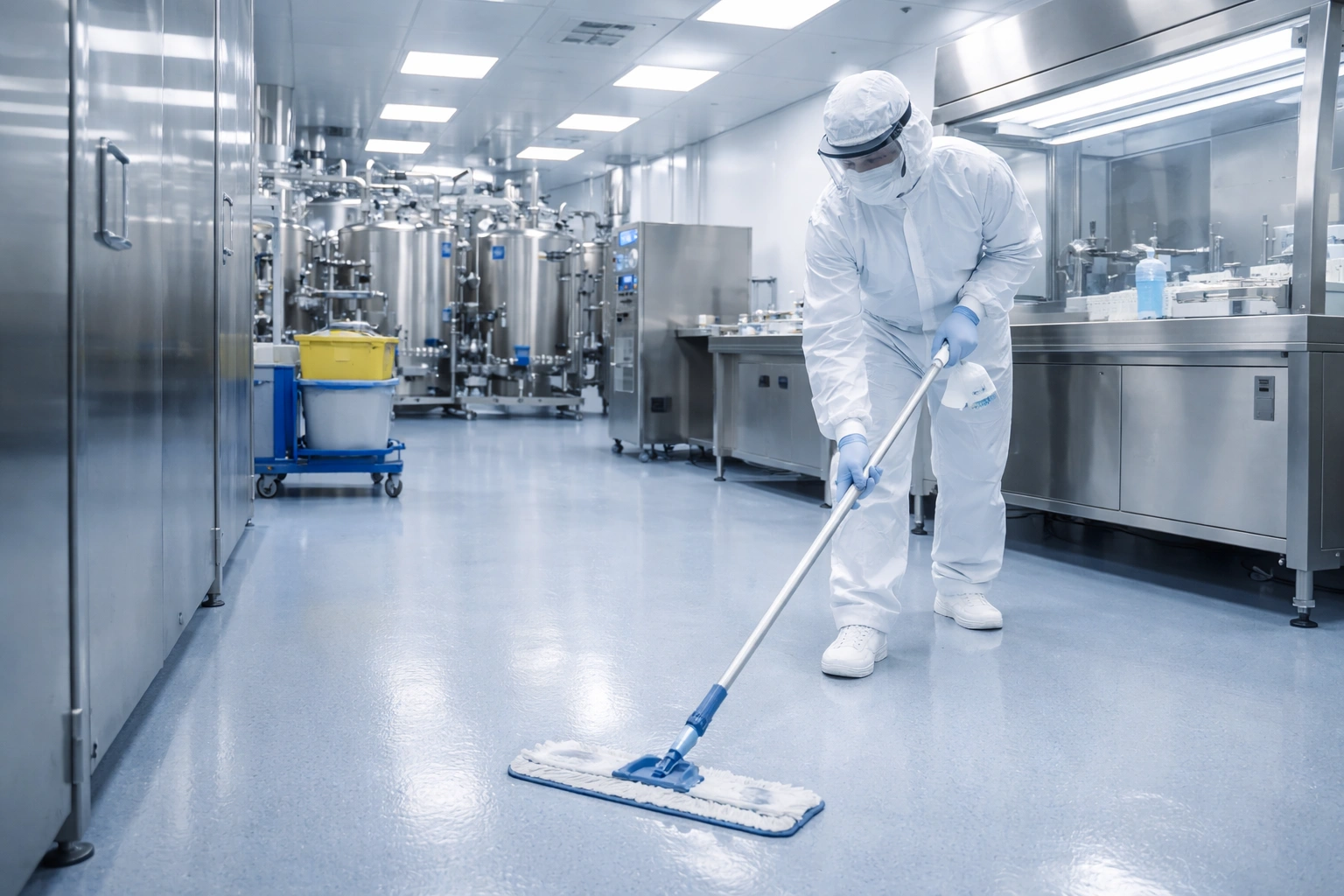
Even the best SOP will fail if the cleaning tools are inconsistent or poorly matched to the target cleanroom. Pharmaceutical teams should define approved consumables in the SOP and keep them aligned with contamination risk, sterilization method, and validation burden.
Связанные ресурсы: Требования к швабре для фармацевтических чистых помещений, одноразовые и многоразовые швабры для чистых помещений, and как получить квалификацию поставщика швабр для фармацевтических чистых помещений.
Часто задаваемые вопросы
Что входит в СОП по уборке чистого помещения?
A complete cleanroom cleaning SOP usually includes cleaning scope, approved tools, disinfectants, cleaning sequence, frequency, documentation requirements, training controls, and review procedures.
Чем СОП по уборке чистого помещения отличается от рабочей инструкции?
A work instruction explains how to perform a task. A full SOP system also defines control logic, documentation, accountability, review, and compliance expectations.
Как определить частоту уборки?
Cleaning frequency should be based on room classification, process risk, surface type, contamination trends, and the facility’s overall contamination control strategy.
Почему обучение важно в системе СОП для чистых помещений?
Training ensures different operators follow the same validated method consistently, reducing execution variation and helping protect audit readiness.
Может ли СОП по уборке чистых помещений обеспечить готовность к аудиту?
Yes. A well-built SOP system improves traceability, record consistency, training proof, and validation alignment, all of which support inspection and audit performance.
Вам нужно лучшее решение для швабры для чистых помещений, готовое к использованию SOP?
Midposi supports pharmaceutical and controlled-environment teams with sterile mop systems, contamination control consumables, and qualification-oriented cleaning solutions.
Ознакомьтесь с решениями для швабр для фармацевтических чистых помещений