

В условиях развивающейся фармацевтической среды специалисты по обеспечению качества и соблюдению требований сталкиваются с растущим давлением необходимости разрабатывать сложные СОПы экологического мониторинга чистых помещений с учетом рисков это соответствует ожиданиям регулирующих органов на 2026 год. Это руководство способствует переходу к использованию данных и оценке рисков, чтобы сосредоточить ресурсы там, где они обеспечивают наибольшую защиту. Интеграция высокопроизводительных швабры для чистых помещений в вашу стратегию контроля загрязнения является базовым требованием для этих динамичных сред.
Кому следует использовать это руководство
- Специалисты по обеспечению качества: Отвечает за разработку и контроль программы EM.
- Ответственные за соблюдение требований: Обеспечение соблюдения требований FDA и EMA.
- Инженеры по валидации: Ведущая деятельность по аттестации чистых помещений.
- Менеджеры объектов: Реализация программ мониторинга.
- Нормативные вопросы: Навигация по меняющимся требованиям соответствия.
Нормативно-правовая среда 2026 г.

Эволюция риск-ориентированного подхода FDA
- Расширенное управление рисками качества (QRM): Интеграция принципов ICH Q9.
- Целостность данных 2.0: Сбор данных в режиме реального времени и автоматический анализ тенденций.
- Непрерывный мониторинг: Требование к непрерывному экологическому мониторингу (CEM) в критических зонах.
- Прогнозная аналитика: Внедрение систем раннего оповещения о рисках загрязнения.
- Интеграция цепочки поставок: Оценка рисков, включая влияние на цепочку поставок.
Приложение 1 EMA GMP (введение в действие в 2026 г.)
- Классификация на основе риска: Dynamic cleanroom classification based on risk assessment.
- Contamination Control Strategy (CCS): Comprehensive approach to persistent contamination.
- EM Program: Risk-adjusted monitoring frequencies and locations.
- Investigation Protocols: Structured approach to monitoring excursions.
- Постоянное улучшение: Mandated requirement for ongoing program optimization.
Transition Timeline for Compliance
| Timeline | Требования | Actions Required |
|---|---|---|
| Q1 2024 - Q2 2024 | Gap analysis and risk assessment development | Develop risk assessment framework; identify high-risk areas. |
| Q3 2024 - Q1 2025 | SOP revision and validation | Update EM procedures; validate new monitoring approaches. |
| Q2 2025 - Q4 2025 | Implementation and pilot testing | Roll out risk-based program; collect performance data. |
| Q1 2026 - Full Compliance | Complete implementation and optimization | Finalize program; establish continuous improvement. |
Risk Assessment Framework Development
Step 1: Define Risk Assessment Criteria
Establish comprehensive criteria for evaluating cleanroom areas and processes.
- Product Risk: Sterile vs. non-sterile, therapeutic area, route of administration.
- Process Risk: Process complexity, automation level, intervention frequency.
- Facility Risk: Air changes, pressure differentials, personnel traffic.
- Historical Data: Previous monitoring results and contamination trends.
- Change Impact: Recent changes, deviation history, CAPA effectiveness.
Step 2: Develop Risk Matrix
Categorize areas and processes based on predefined criteria into a structured matrix.
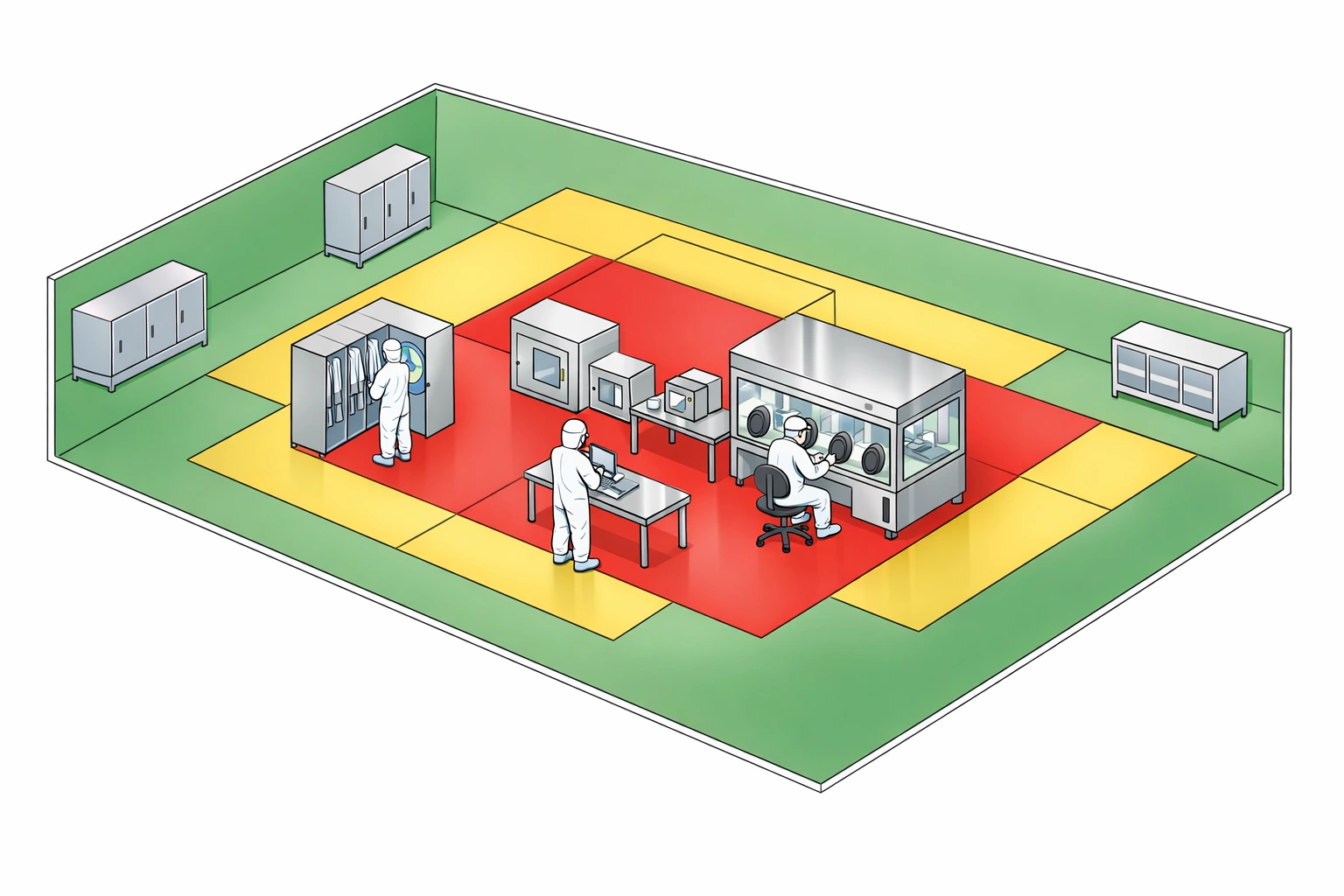
Непрерывный мониторинг
Immediate Investigation
Increased Frequency
Timely Investigation
Standard Frequency
Routine Investigation
Implementation Tip: Use a scoring system (1-5) for each risk factor. Areas scoring ≥15 require high-risk monitoring strategies.
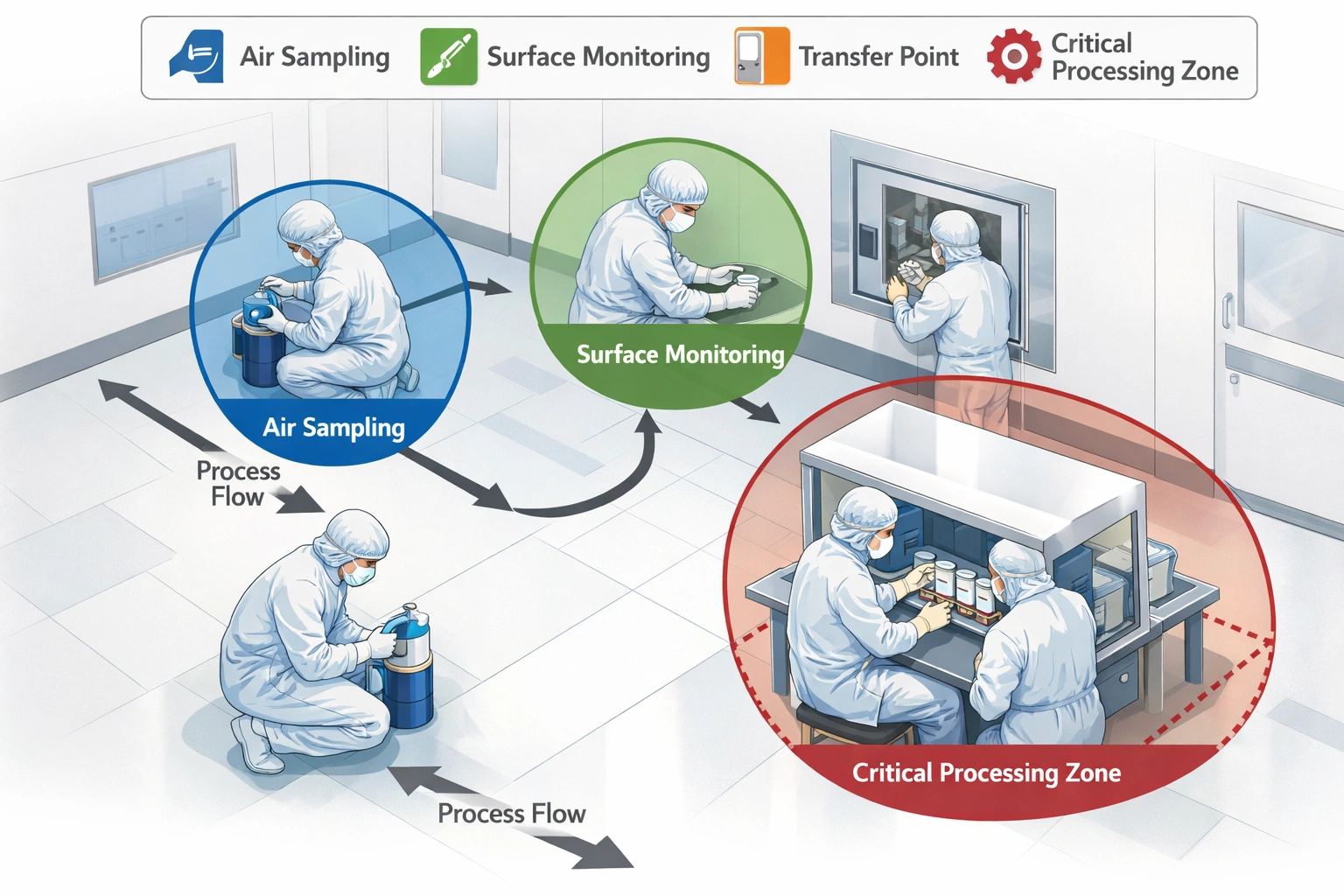
Step 3: Establish Monitoring Locations
Strategic placement of equipment is vital. Use валидация чистых помещений insights to pinpoint critical locations.
- Aseptic Processing: Critical zones, fill-finish interfaces.
- Transfer Points: Airlocks, gowning rooms.
- High Traffic Areas: Main corridors, intervention points.
Step 4: Define Monitoring Frequencies
| Уровень риска | Viable | Non-viable | Поверхность |
|---|---|---|---|
| Высокий | Continuous + Weekly | Непрерывный | Daily. |
| Середина | 2-3 times/week | 2 times/week | 2-3 times/week. |
| Низкий | 1-2 times/week | 1 time/week | 1 time/week. |
Step 5: Set Alert and Action Levels
Establish scientifically justified levels based on historical data and process vulnerability. Apply statistical process control methods for precision.
SOP Development Structure
Template: ENV-MON-001 (Version 2.0)
1.0 Purpose: Establish a risk-based EM program that ensures product quality while optimizing resources.
4.0 Procedure: Risk assessment protocol, monitoring location strategy, frequency determination, alert/action level management.
| Элемент СОП | Traditional Approach | Risk-Based 2026 |
|---|---|---|
| Monitoring Locations | Fixed grid pattern | Risk-based strategic placement. |
| Частота | Standardized schedule | Risk-adjusted with dynamic review. |
| Alert Levels | Static numerical values | Statistical + contextual analysis. |
Лучшие практики внедрения
Effective управление фармацевтическим предприятием involves moving from static to dynamic procedures.
Technology Recommendation: Implement CEM systems with real-time data analytics. These provide essential predictive capabilities for 2026 compliance.
Training and Competency Matrix
| Audience | Training Topics | Оценка |
|---|---|---|
| QA Staff | Risk methodology, Data analytics | Risk assessment simulation. |
| Microbiology | Microbial risk, Trend analysis | Case study analysis. |
| Операции | Alert response, Documentation | Practical demonstration. |
Case Study: Global Implementation
Global Pharmaceutical Success Story
- 35% reduction in monitoring costs.
- 40% faster contamination detection.
- 50% reduction in false positive alerts.
- Enhanced operator understanding of risk concepts.
"The risk-based approach transformed our environmental monitoring program from a compliance burden to a valuable quality assurance tool".
Performance Metrics and KPIs
| Metric Category | Specific KPI | Цель |
|---|---|---|
| Эффективность | Contamination detection time | < 2 hours. |
| Эффективность | Monitoring cost per unit | ↓ 30% baseline. |
| Согласие | Regulatory inspection score | ≥ 95%. |
| Качество | Alert accuracy rate | ≥ 90%. |
Ready to Transform Your EM Program?
Don't wait for 2026 mandates to act. Contact our expert team for a comprehensive assessment and custom implementation plan tailored to your facility.
Additional Essential Resources
- FDA Guidance for Industry: Sterile Drug Products (2021).
- EU GMP Annex 1: Manufacture of Sterile Medicinal Products (2026).
- ISPE Baseline Guide: Environmental Monitoring (2024).
- ICH Q9 Quality Risk Management.
- ISO 14644 Series: Cleanrooms and associated environments.
Отказ от ответственности: This guide is for informational purposes only. Consult with regulatory experts and qualified professionals for your specific facility requirements.


Комментарий эксперта: Эволюция мониторинга
"The shift from traditional to risk-based environmental monitoring represents the most significant evolution in cleanroom management in decades. It's about using data and risk assessment to focus resources where they matter most".
"By 2026, regulatory agencies will mandate risk-based approaches. Companies that proactively implement these strategies will gain competitive advantages through improved efficiency and better contamination control".