Reusable cleanroom garments are an investment. A hooded coverall that survives many wash and sterilization cycles costs far less per wear than a single-use suit, and it produces less waste. But every garment eventually wears out, and a coverall that is past its useful life can shed particles, lose its barrier properties or fail at a seam inside a Grade A or B area. So the question every gowning manager asks is simple: how many times can a cleanroom garment be autoclaved before it has to be retired?
The honest answer is that there is no single number that applies to every garment. The useful life depends on the fabric, the construction, the laundering and sterilization process, and how the garment is handled between cycles. This guide explains what actually limits garment life, how to set a cycle limit that you can defend in an audit, and how to work with your garment supplier to validate it.
What autoclaving does to a cleanroom garment
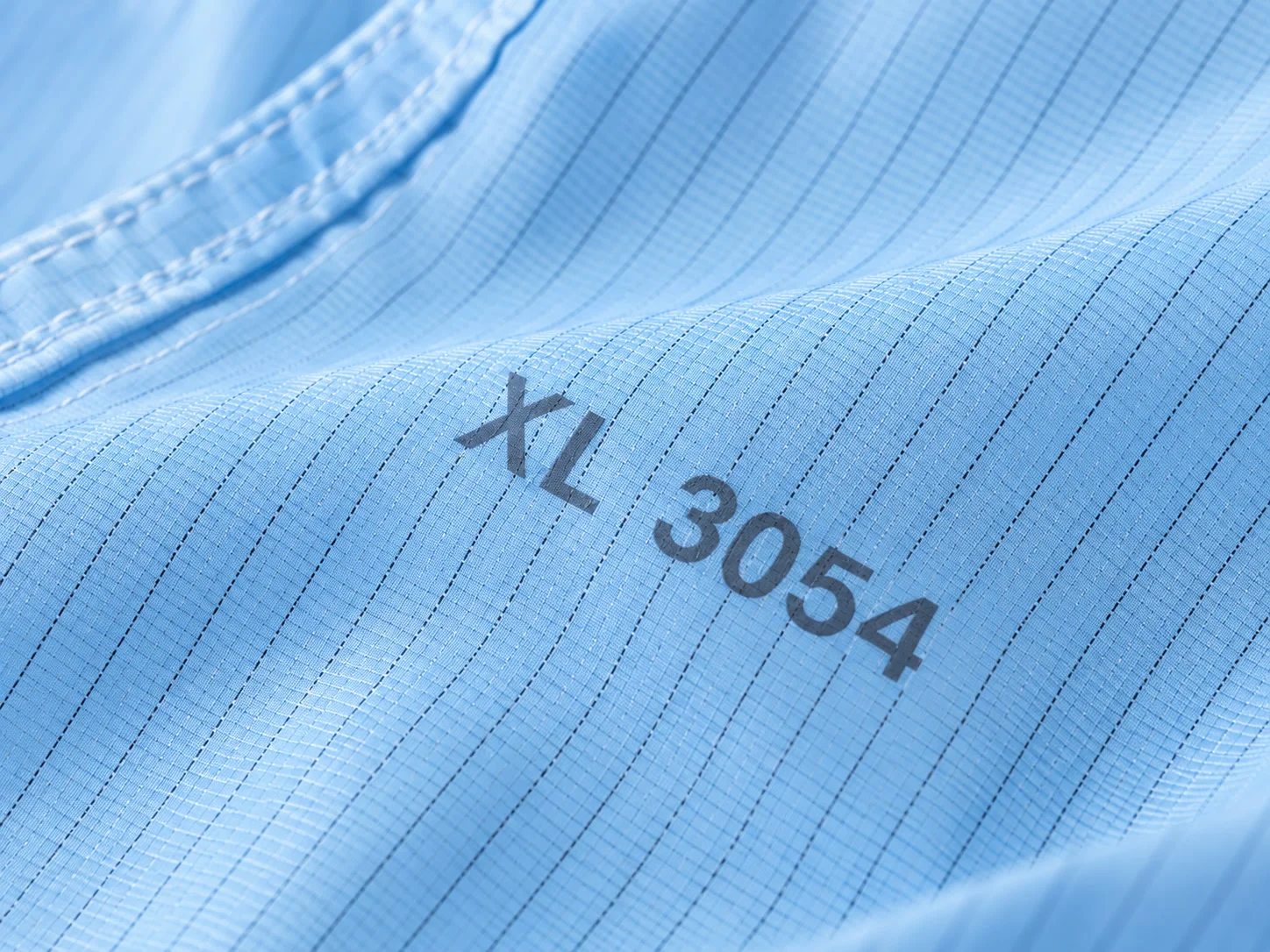
Autoclavable cleanroom garments are designed to be steam sterilized, typically at 121°C, after they are laundered in a cleanroom laundry. MIDPOSI autoclavable cleanroom garments, for example, are engineered for repeated steam sterilization at 121°C and are made from low-lint continuous filament polyester, with conductive yarn options for ESD control. MIDPOSI cleanroom garments are rated for up to 100 autoclave cycles; your own validated limit should still be confirmed against your laundry and sterilization process.
Each cycle exposes the garment to heat, moisture, pressure changes and mechanical stress from washing, drying, folding and packing. Over time the fabric surface can abrade and release more particles; seams, zippers, snaps and elastic can weaken; conductive fibers can lose some of their static-dissipative performance; and the fit can change. None of these changes happens at a fixed cycle count, which is why cycle limits must be based on testing. See our cleanroom garment materials comparison for how fabrics differ.
The factors that decide garment life
- Fabric: continuous filament polyester sheds less than spun yarns, and tighter weaves usually hold up better to repeated processing.
- Construction: bound or covered seams, quality zippers and well-anchored snaps reduce failure points.
- Process: wash chemistry, water quality, drying temperature and the autoclave cycle itself all add stress. A harsher process shortens life.
- Handling: snagging on equipment, incorrect folding and rough donning cause damage that has nothing to do with sterilization.
- Area of use: a garment used in Grade A/B aseptic processing needs tighter limits than one used in Grade C or D support areas.
How to set a defensible cycle limit
Regulators expect gowning to be controlled. EU GMP Annex 1, revised in 2022, asks manufacturers to qualify their garments and processing and to define a maximum number of uses or processing cycles based on evidence. In practice, a defensible cycle limit comes from a small validation study rather than an assumption.
- Start with the supplier’s data: ask for fabric specifications, recommended processing conditions and any test results they hold.
- Run a cycle study with your own laundry and autoclave process: take sample garments through repeated cycles and test them at set intervals.
- Test what matters: particle shedding (for example by a body box or Helmke drum test), barrier and filtration efficiency where relevant, surface resistance for ESD garments, and seam and closure integrity.
- Set the limit below the point where results start to drift, so you keep a safety margin.
- Document the study, the acceptance criteria and the final limit in your gowning SOP (see our garment care and sterilization SOP).

Tracking cycles in daily operations
A cycle limit only works if you can count cycles. Common methods include printed or marked counters on the garment label, barcode or RFID tags read at each laundry pass, and laundry service reports that record each garment’s history. Whatever system you use, it should identify each garment individually, record every wash and sterilization cycle, and flag garments that are close to their limit so they can be withdrawn before they are reissued.

Inspection: retire garments before the limit when needed
A cycle count is a ceiling, not a guarantee. Garments should also be inspected at each pass, and retired early if they show holes, pulled threads, worn cuffs or knees, damaged zippers or snaps, failed seams, loss of fit, or stains that do not come out. For ESD garments, periodic surface resistance checks help confirm that the conductive grid is still working.
Reusable vs disposable: where the cycle limit fits in
The cycle limit is the number that drives the cost of a reusable program. Divide the price of a garment plus its processing cost by the number of cycles it is approved for, and you have a cost per wear that you can compare with disposable garments. For a broader comparison, see our guide to автоклавируемая и одноразовая одежда.
Working with MIDPOSI
MIDPOSI supplies autoclavable cleanroom coveralls, split suits, hoods, boots, goggles and underlayers for GMP and ISO 5–8 environments, in low-lint polyester and ESD-safe conductive yarn options. We can provide specification sheets and samples so you can run your own cycle study before a bulk order. Contact us with your cleanroom grade, garment styles and laundry process, and we will help you choose a configuration to test.