Практическая основа выбора систем швабр для чистых помещений на фармацевтических и биотехнологических предприятиях, соответствующих требованиям GMP. Охватывает свойства материалов, оценку стерильности, сравнение тканей, варианты оборудования и критерии оценки продукции для руководителей контроля качества, руководителей предприятий и групп закупок.
Выбор швабры для чистых помещений для объектов GMP предполагает оценку трех взаимосвязанных критериев: совместимость материалов с чистящими средствами вашего объекта, требования к стерильности на основе класса чистого помещения и оценки рисков, а также долговечность оборудования для ежедневных эксплуатационных потребностей. На практике пригодность продукта зависит от класса чистого помещения вашего предприятия, СОП, дезинфицирующего средства и процесса проверки. В следующих разделах каждый фактор подробно описан, чтобы вы могли составить спецификацию, соответствующую вашей программе контроля загрязнения.
Эффективный контроль загрязнения имеет решающее значение в фармацевтическом и биотехнологическом производстве. Правильный выбор швабры для чистых помещений, соответствующей требованиям GMP, обеспечивает равномерное нанесение дезинфицирующего средства, эффективное удаление остатков и снижение риска перекрестного загрязнения. Для менеджеров по обеспечению качества, менеджеров по производству, менеджеров по чистым помещениям и групп по закупкам поиск подходящих инструментов для очистки требует тщательной оценки материалов, эргономики и возможностей стерилизации. Глубокое понимание Обзор системы швабры для чистых помещений предоставляет полезный контекст перед погружением в решения на уровне компонентов. Рекомендации для конкретных учреждений можно найти в нашей статье о швабра для чистых помещений для уборки объектов GMP.
Обычно ожидается, что швабра для чистых помещений выдержит агрессивные чистящие средства, такие как соединения четвертичного аммония, перекись водорода и гипохлорит натрия. Оценивая материалы для швабры, покупатели должны проверить, был ли материал покрытия швабры проверен на химическую стойкость к конкретным дезинфицирующим средствам, используемым на их предприятии. Низкое образование частиц и контролируемые экстрагируемые вещества являются важными характеристиками материала, которые необходимо подтвердить документацией поставщика.
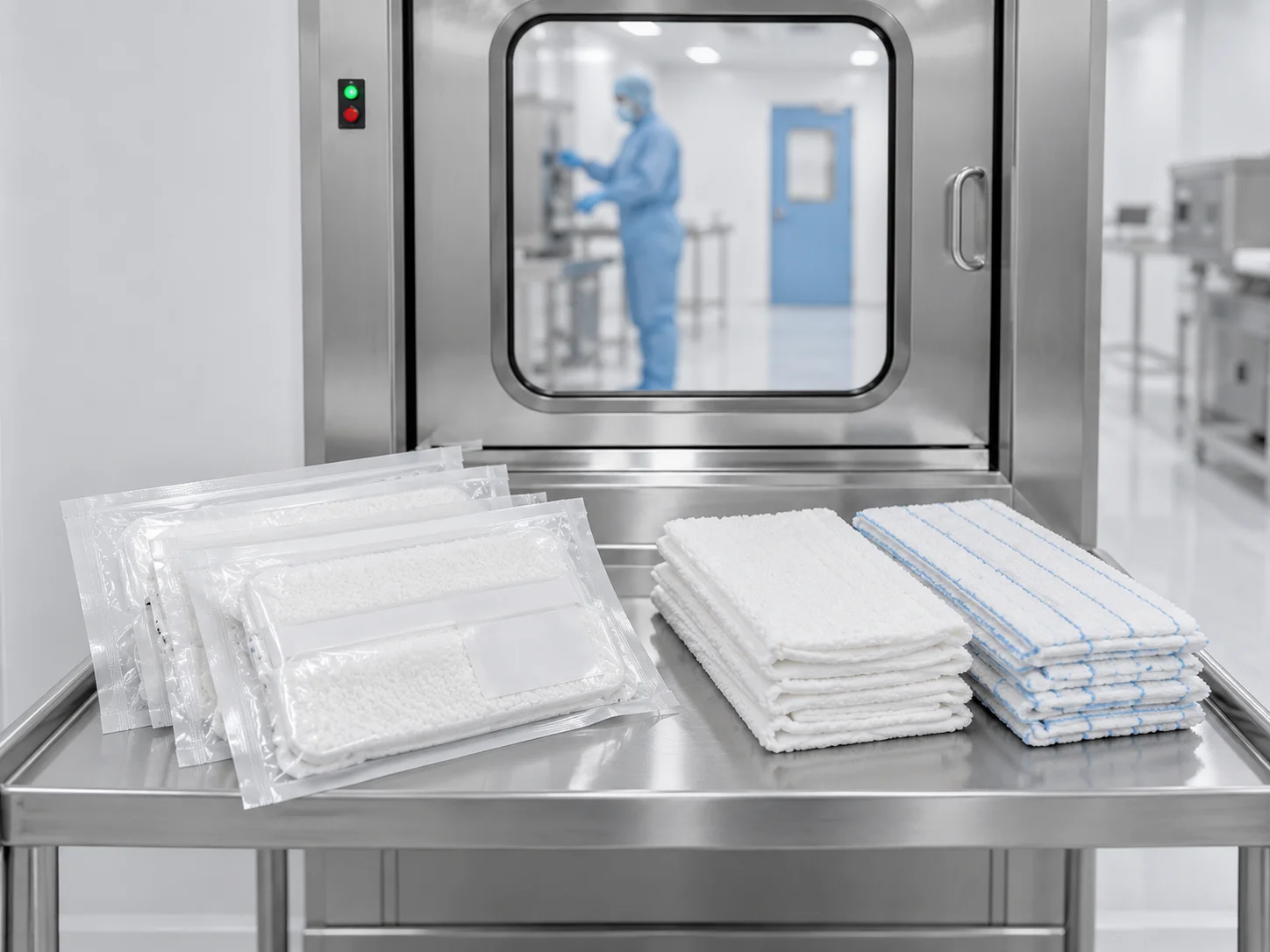
Стерильные или предварительно стерилизованные чехлы для швабр часто оцениваются для асептических зон повышенного риска на основе СОП, оценки риска и требований валидации. Покупатели могут рассмотреть возможность использования предварительно стерилизованных чехлов для швабр для чистых помещений или обработки в автоклаве в домашних условиях, в зависимости от возможностей предприятия. Если вы выберете стерилизацию в домашних условиях, оборудование — особенно рама и ручка — следует оценить на совместимость с повторяющимися циклами высокой температуры и высокого давления. Метод стерилизации, используемый поставщиком, должен быть подтвержден документацией поставщика, а не предполагаемым.
Очистка потолков, стен и полов больших чистых помещений требует физических усилий. Вес системы швабры может повлиять на утомляемость оператора в течение нескольких смен. Хорошо сбалансированная система сочетает в себе прочное оборудование с управляемым весом, что позволяет поддерживать постоянное прижимное давление и охват очистки без лишней нагрузки на операторов.
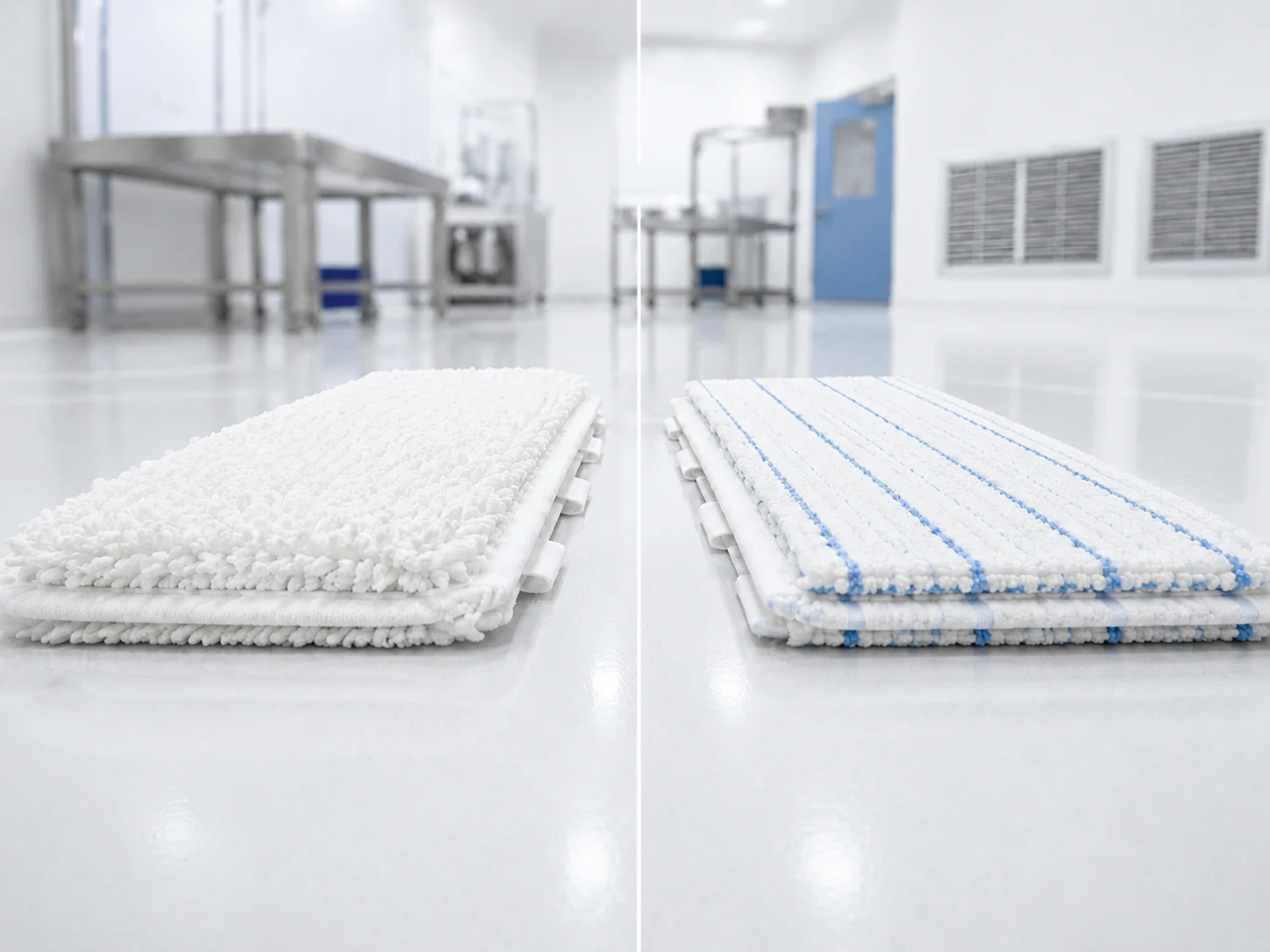
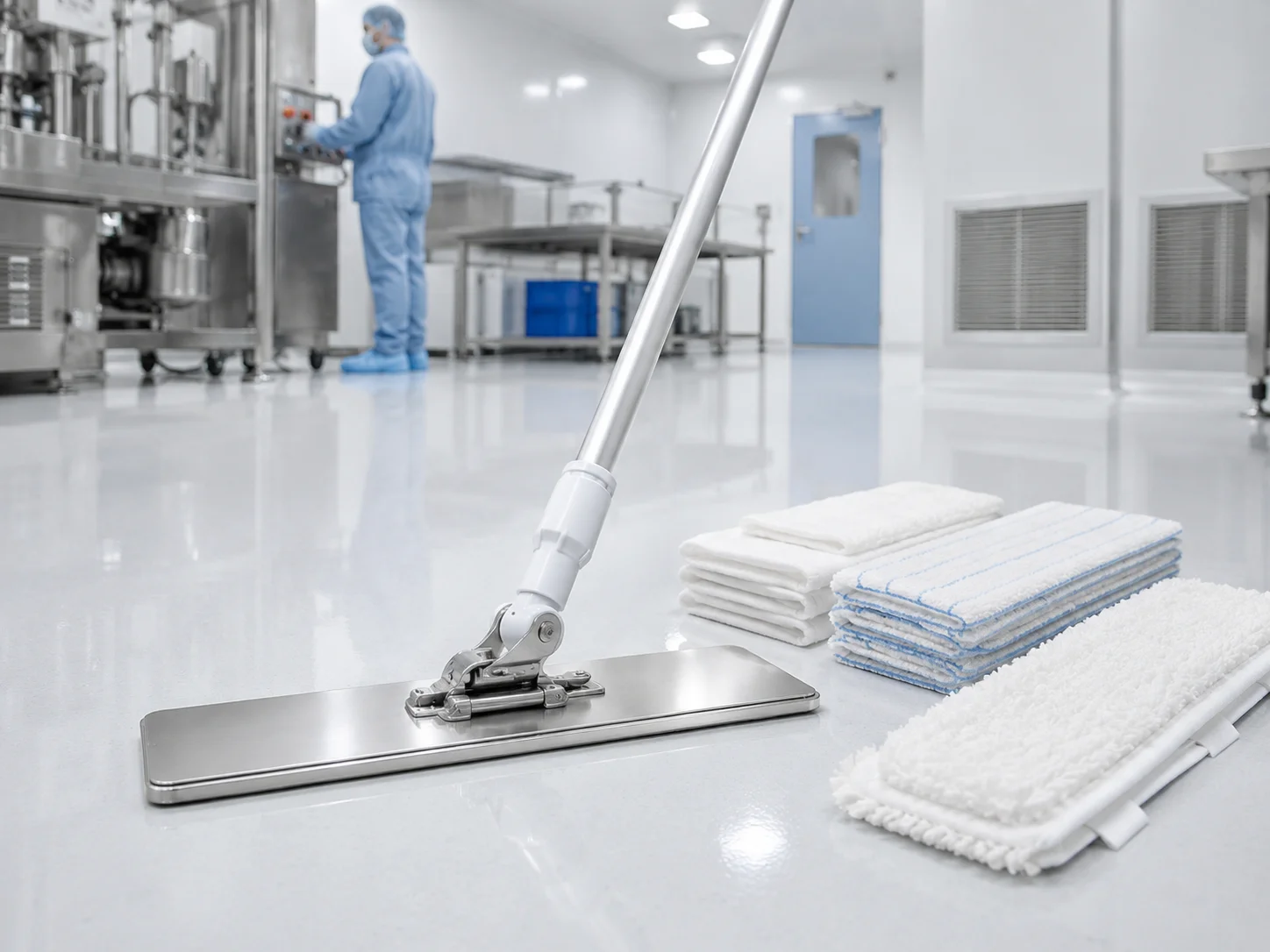
Выбор ткани напрямую влияет на впитывающую способность, покрытие поверхности и контроль частиц. Два наиболее распространенных материала, используемых в чехлах для швабр для чистых помещений, — это микрофибра и полиэстер. Каждый из них предлагает различные компромиссы, которые покупатели должны сопоставить с конкретными приоритетами контроля загрязнения на своем предприятии. Для более глубокого ознакомления см. наш направляющая для швабры из микрофибры в чистых помещениях.
Микрофибра изготовлена из смеси полиэстера и полиамида. Его микроскопическая структура волокна создает большую площадь поверхности, что делает чехол для швабры из микрофибры исключительно впитывающим и эффективным при улавливании мелких частиц.
Эти чехлы, связанные из 100% полиэстера с непрерывными нитями, разработаны с учетом низкого образования частиц и высокой химической совместимости.
Производительность чехла для швабры во многом зависит от качества удерживающего его оборудования. Оборудование для чистых помещений должно быть устойчивым к коррозии, легко чиститься и не иметь щелей, в которых могут скапливаться загрязнения.
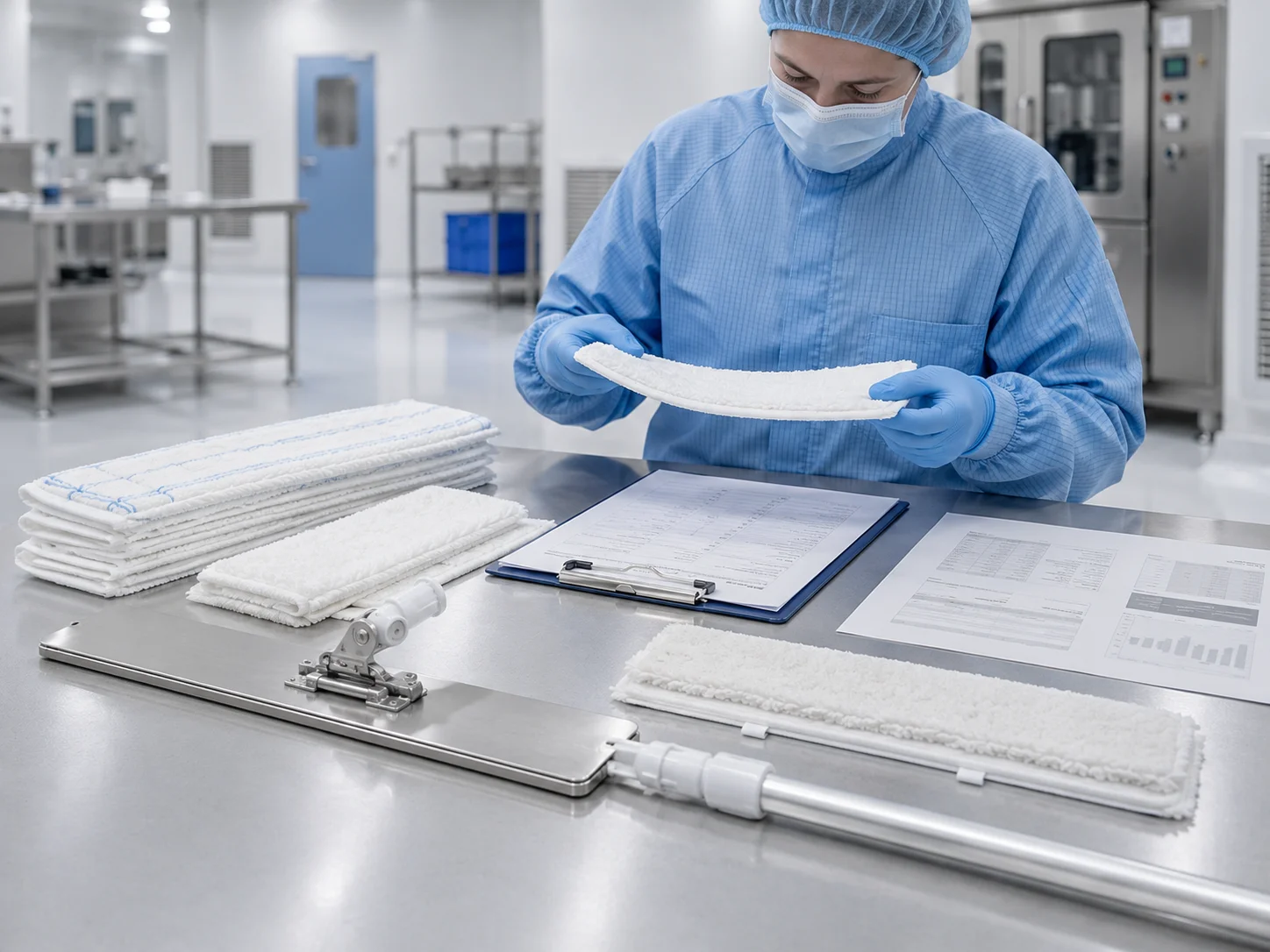
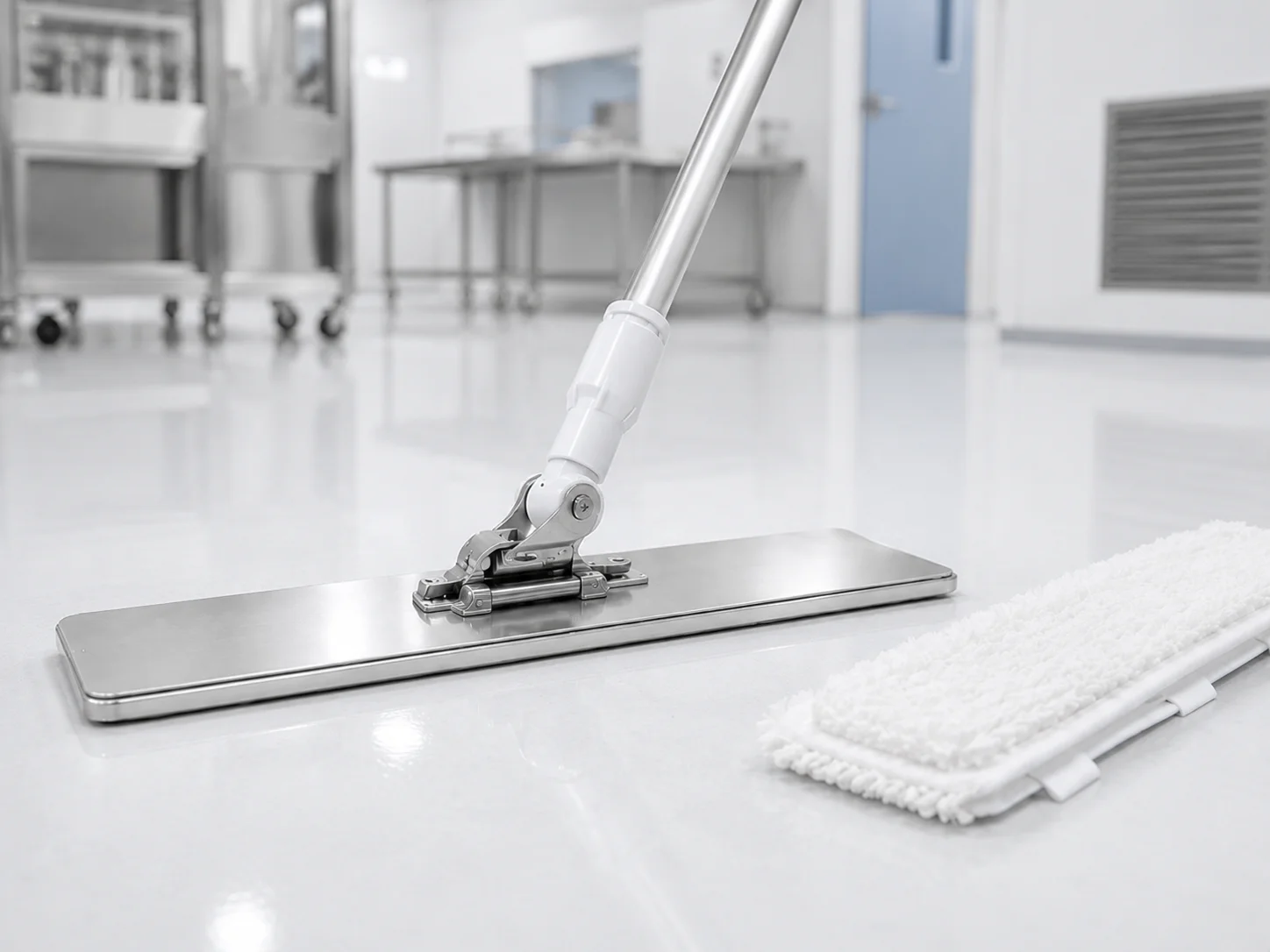
Рама швабры из нержавеющей стали (например, из нержавеющей стали 304, в зависимости от спецификации продукта) является распространенным выбором для контролируемых сред. Он обеспечивает структурную жесткость, поддерживает равномерный контакт с очищаемой поверхностью и обеспечивает устойчивость к окислительным дезинфицирующим средствам. Его гладкая поверхность помогает уменьшить места, где могут скапливаться твердые частицы. Подробный обзор доступных конфигураций см. в нашем Варианты рамок швабры для чистых помещений.
Если стерилизация на дому является частью протокола учреждения, автоклавируемая ручка швабры может быть оценено. Эти ручки обычно изготавливаются из анодированного алюминия или нержавеющей стали. Телескопические варианты позволяют операторам достигать высоких стен и потолков без лестниц, что может повысить безопасность и эффективность. Покупатели должны подтвердить, что запорные механизмы и столярные изделия рассчитаны на циклы автоклавирования при температурах и продолжительности, указанных в СОП их предприятия.
MIDPOSI предлагает ряд чистящих инструментов, предназначенных для уборки чистых помещений. Следующие категории продуктов доступны для оценки. Поскольку эксплуатационные требования различаются, мы рекомендуем просматривать техническую документацию и тестировать продукты непосредственно перед окончательным определением спецификации. Более широкую информацию о том, как характеристики швабр различаются в зависимости от класса чистых помещений, см. в нашей статье. Выбор швабры для чистых помещений GMP по классам гид.
| Компонент | Тип | Ключевая характеристика | Типичное применение |
|---|---|---|---|
| Чехол для швабры | Микрофибра | Высокая впитываемость, эффективное удаление остатков | Зоны с тяжелыми остатками, широкое применение дезинфицирующих средств, общие чистые зоны |
| Чехол для швабры | 100% полиэстер | Низкое образование частиц, высокая химическая совместимость. | Критические среды с приоритетом низкого содержания твердых частиц и химической стойкости |
| Рамка | Нержавеющая сталь | Коррозионностойкая, структурно жесткая, гладкая поверхность. | Стандартные и строгие программы очистки чистых помещений GMP |
| Ручка | Автоклавируемый (нержавеющая сталь/алюминий) | Устойчив к температуре, доступен в телескопическом исполнении. | Очистка потолка/стен; учреждения, требующие собственной стерилизации оборудования |
Выбор швабры для чистых помещений, соответствующей требованиям GMP, зависит от трех основных факторов: совместимость материала с чистящими средствами вашего предприятия, требования к стерильности, основанные на классе чистой комнаты и оценке рисков, а также долговечность оборудования для ежедневных эксплуатационных требований. На практике пригодность продукта зависит от класса чистого помещения вашего предприятия, СОП, дезинфицирующего средства и процесса проверки. Мы рекомендуем оценить чехлы и фурнитуру для швабр по этим трем параметрам, прежде чем сужать выбор поставщиков.
Выбор зависит от ваших приоритетов в области контроля загрязнения. Чехлы для швабр из полиэстера (100% непрерывная нить) обычно предпочтительнее, когда минимизация образования частиц является главным приоритетом. Чехлы для швабр из микрофибры (смесь полиэстера и полиамида) обеспечивают более высокую впитывающую способность и часто выбираются там, где требуется эффективное удаление остатков и широкий охват дезинфицирующими средствами. Мы рекомендуем протестировать оба типа в реальных условиях очистки перед окончательным определением спецификации.
Стерильные или предварительно стерилизованные чехлы для швабр часто оцениваются для асептических зон повышенного риска на основе СОП, оценки риска и требований валидации. Нестерильные чехлы для швабр могут подойти для зон более низкого уровня (например, класса C/D), где стерилизация не предусмотрена стратегией контроля загрязнения предприятия. Решение должно основываться на процессе управления рисками для качества вашего предприятия, а не на фиксированном правиле, применяемом единообразно для всех классов.
Ключевые факторы включают материал рамы (нержавеющая сталь широко распространена благодаря своей коррозионной стойкости и легкости очистки), гладкость поверхности (меньше щелей, в которых могут скапливаться загрязнения), тип соединения рамы с ручкой и совместимость материала ручки с циклами автоклавирования, если используется стерилизация в домашних условиях. Телескопические ручки повышают эксплуатационную гибкость при очистке потолка и стен, но их следует оценить на предмет долговечности запорного механизма при многократной стерилизации.
Создайте сравнительную матрицу на основе: состава материала и данных, данных о образовании частиц (если они имеются у поставщиков), химической совместимости с вашими дезинфицирующими средствами, вариантов стерильности и документации по методу стерилизации, класса материала оборудования и качества поверхности, а также наличия технических паспортов. Запросите образцы продукции и протестируйте их с использованием реальных чистящих средств и протоколов. Отзывчивость поставщика на технические запросы сама по себе является критерием оценки.
Группы закупок и контроля качества обычно проверяют технические паспорта (TDS), в которых указаны состав материала, данные о образовании частиц (если таковые имеются), впитывающая способность и химическая совместимость. Для стерильной продукции необходимо запросить у поставщика документацию, подтверждающую метод стерилизации. Дополнительная документация, такая как сертификаты материалов и спецификации размеров, также может иметь отношение к вашему процессу квалификации.
Чехлы для швабр обычно используются одноразово за один сеанс уборки в зонах более высокого класса, чтобы предотвратить перекрестное загрязнение. В менее критических зонах их можно стирать и повторно стерилизовать в соответствии с утвержденными СОП учреждения. Частота замены должна определяться вашей программой контроля загрязнения, а не универсальной рекомендацией. Визуальный осмотр на предмет износа, истирания или потери целостности краевого уплотнения может дополнять графики замены, предусмотренные СОП.
Выбор правильных средств контроля загрязнений – это кропотливый процесс. MIDPOSI предлагает чехлы для швабр для чистых помещений, рамы из нержавеющей стали и автоклавируемые ручки, предназначенные для оценки в контролируемых средах. Мы призываем менеджеров по обеспечению качества и чистых помещений просмотреть нашу техническую документацию, протестировать образцы продукции в реальных условиях предприятия и обсудить ваши конкретные требования с нашей командой.
Спецификации продукции, сертификаты материалов и документация о стерильности предоставляются по запросу. Образцы могут быть отправлены для внутренней оценки на соответствие протоколам уборки вашего предприятия.
Отказ от ответственности: в этой статье представлены общие принципы выбора швабр для чистых помещений. Пригодность продукта должна быть подтверждена пользователем с учетом условий конкретного предприятия, СОП и требований валидации. Метод стерилизации, совместимость материалов и соответствие нормативным требованиям должны быть проверены в документации поставщика. MIDPOSI не утверждает, что какой-либо продукт «сертифицирован GMP,” «подтверждено,” или «соответствует” с конкретными правилами. Окончательные решения по спецификациям принимаются группами качества и проверки предприятия.
Группы контроля качества должны подтвердить, соответствует ли система швабры СОП предприятия, стратегии контроля загрязнения и плану проверки очистки. Ключевые вопросы включают в себя: Совместим ли материал чехла швабры с нашими дезинфицирующими средствами? Предоставляет ли поставщик данные об образовании частиц? Доступны ли стерильные варианты, если этого требует наша оценка риска? Какая документация предоставляется для квалификации поставщика?
Команды по закупкам должны оценить стерильные и нестерильные варианты, материалы чехлов для швабр, совместимость системы (чехол + рама + ручка + ведро), формат упаковки, стабильность поставок, сроки поставки и доступность образцов. Ответность поставщика на технические запросы и запросы документации сама по себе является критерием оценки.
Создайте матрицу сравнения, охватывающую: состав материала, доступные данные о частицах, химическую совместимость, параметры стерильности, класс материала оборудования, наличие документации и поддержку тестирования образцов. Запросите образцы продукции и протестируйте ее с использованием действующих чистящих средств и протоколов перед окончательной спецификацией.
Typical documentation includes Technical Data Sheets (TDS) covering material composition, particle generation data (where available), absorbency capacity, and chemical compatibility information. For sterile products, documentation confirming the sterilization method should be requested. Additional certifications and dimensional specifications may be relevant to your qualification process.
Yes. Sample evaluation is recommended before bulk purchasing. Testing under your facility’s actual cleaning agents, protocols, and environmental conditions provides the most reliable basis for specification decisions. MIDPOSI supports sample evaluation for mop covers, frames, handles, and bucket systems.