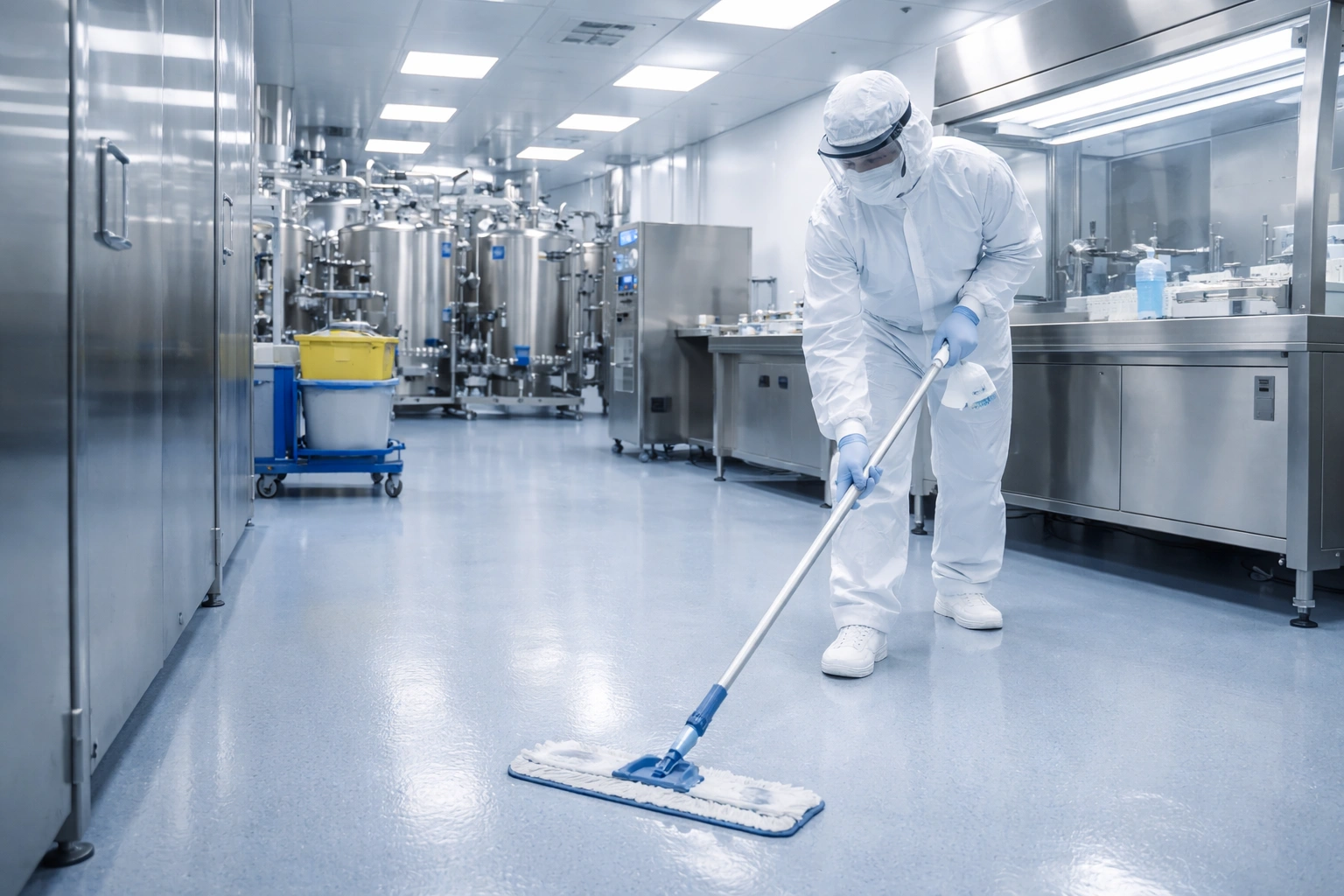
A structured framework for matching cleanroom mop specifications to EU GMP Grade A, B, C, and D zones. Covers sterility requirements, material selection, packaging, documentation expectations, and zone-specific operational considerations for pharmaceutical and biotech facilities.
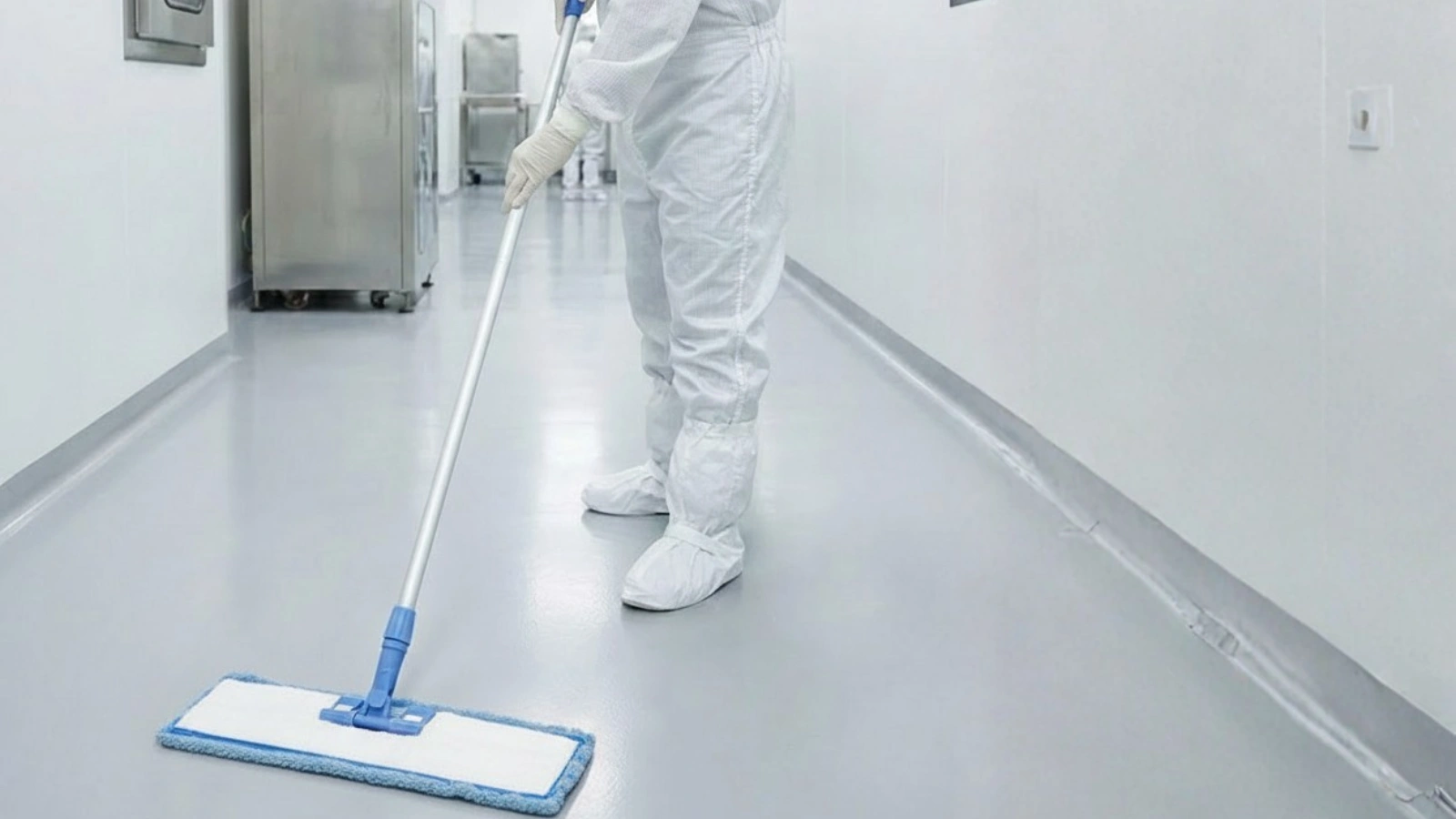
В следующей таблице представлен краткий справочный обзор того, как характеристики швабр меняются в зонах GMP Grade A, B, C и D. Каждая строка представляет собой общую отправную точку оценки, а не универсальный нормативный мандат. Окончательные спецификации должны основываться на оценках рисков для конкретного предприятия, протоколах проверки очистки и близости контакта с продуктом.
| GMP-класс | Типичные требования к стерильности | Предпочтение материала | Упаковка | Ожидание документации |
|---|---|---|---|---|
| Оценка отлично | Окончательно стерилизованы (гамма- или валидированным методом); двойной мешок | Трикотаж из непрерывного полиэстера с заклеенными краями. | Поэтапный асептический перенос; удаление многослойного внешнего мешка | Сертификат стерильности (на партию), сертификат подлинности, данные испытаний на частицы, отслеживаемость партии. |
| Оценка Б | Обычно стерильно при подключении к классу А; нестерильность может быть оценена для отдельных зон | Continuous filament polyester knit (same material standard as Grade A in most cases) | Double-bagged when sterile; single-bag may be evaluated when non-sterile | COA, particle test data; sterility certificate if sterile; traceability records |
| Оценка С | Non-sterile is typical; sterile may be used if the facility adopts a uniform sterile program | Polyester or microfiber (risk-based); microfiber may be evaluated for cleaning efficacy | Bulk or single-bag; packaging cleanliness rather than sterility assurance | COA, material certification; sterility not typically required |
| Оценка Д | Non-sterile; over-specifying sterile for Grade D is a common cost-inefficient practice | Polyester or microfiber; cost-efficiency, cleaning performance, and zone segregation are primary drivers | Bulk packaging typically acceptable | COA, material certification, color-coding verification |
Отказ от ответственности: These are general evaluation guidelines based on common industry practice, not regulatory mandates. Specific facility risk assessments, cleaning validation protocols, and product-contact proximity should drive final mop specifications. Always verify against current EU GMP Annex 1 and applicable regional regulatory requirements.
The term “GMP cleanroom mop” is often used as if all GMP zones share a single set of cleaning tool requirements. In practice, a
швабра для чистых помещений для уборки объектов GMPmust be specified differently depending on which grade zone it enters. The mop that is appropriate for a Grade D material staging area is not the same mop that should enter a Grade A aseptic filling line. The EU GMP Annex 1 framework defines four cleanroom grades for the manufacture of sterile medicinal products, each with distinct airborne particle limits, microbial limits, and operational expectations.
What is GMP cleaningin this context is not a single protocol — it is a zone-stratified system where cleaning tools are part of the contamination control strategy.
Локальная зона для операций высокого риска, включая асептическое розлив, закупорку емкостей, открытые ампулы и флаконы, а также асептические соединения. Пределы содержания частиц в воздухе являются самыми строгими: ≤3520 частиц/м³ (≥0,5 мкм) в состоянии покоя и в работе. В чистящие инструменты, соответствующие классу А, не должны входить частицы, микроорганизмы или химические остатки, которые могут поставить под угрозу стерильность продукта.
Фоновая среда для зон класса А во время асептической подготовки и розлива. Зеркало предельных значений частиц в состоянии покоя класса A (≤3520 частиц/м³ при размере ≥0,5 мкм); эксплуатационные пределы выше, но все еще жестко контролируются. Инструменты для очистки должны быть совместимы с поддержанием фоновой среды, поддерживающей асептические операции.
Clean areas for less critical stages of sterile product manufacturing. Grade C: solution preparation, component washing. Grade D: material handling, equipment cleaning, packaging. Particle limits are progressively less stringent, and cleaning tool specifications can shift toward operational efficiency and cost-effectiveness while maintaining environmental control.
А
Обзор системы швабры для чистых помещенийis helpful as a starting point, but this grade-stratified guide focuses on how the specification changes as the facility moves from the aseptic core outward. The central principle is:
the closer a mop gets to the product, the more its material, sterility, packaging, and documentation matter.Grade A and Grade B zones represent the aseptic core of a GMP facility. Mops used in these areas are subject to the most demanding material, sterility, and documentation requirements. The selection decisions made here have direct consequences for product sterility assurance and regulatory audit outcomes.
For any mop entering Grade A — and typically for mops entering Grade B that serve as background to Grade A operations —
terminal sterilization is the expected standard. Gamma irradiation is a common sterilization method for cleanroom mops, followed by validated sterility assurance. Each production batch should be accompanied by a Certificate of Sterility documenting the sterilization process, batch identification, and sterility assurance level (SAL). Sterile mops must be
double-baggedto enable staged aseptic transfer. The outer bag is removed in the Grade C or B transition area; the inner bag is removed inside the Grade B or A zone. This staged transfer protocol is a critical component of aseptic technique. For a detailed examination of aseptic transfer protocols and packaging requirements, refer to the
руководство по асептической транспортировке и упаковке стерильной швабры для чистых помещений.

For Grade A and Grade B zones,
continuous filament polyester knit with sealed edgesis the material configuration most commonly recommended. The structural rationale is as follows:
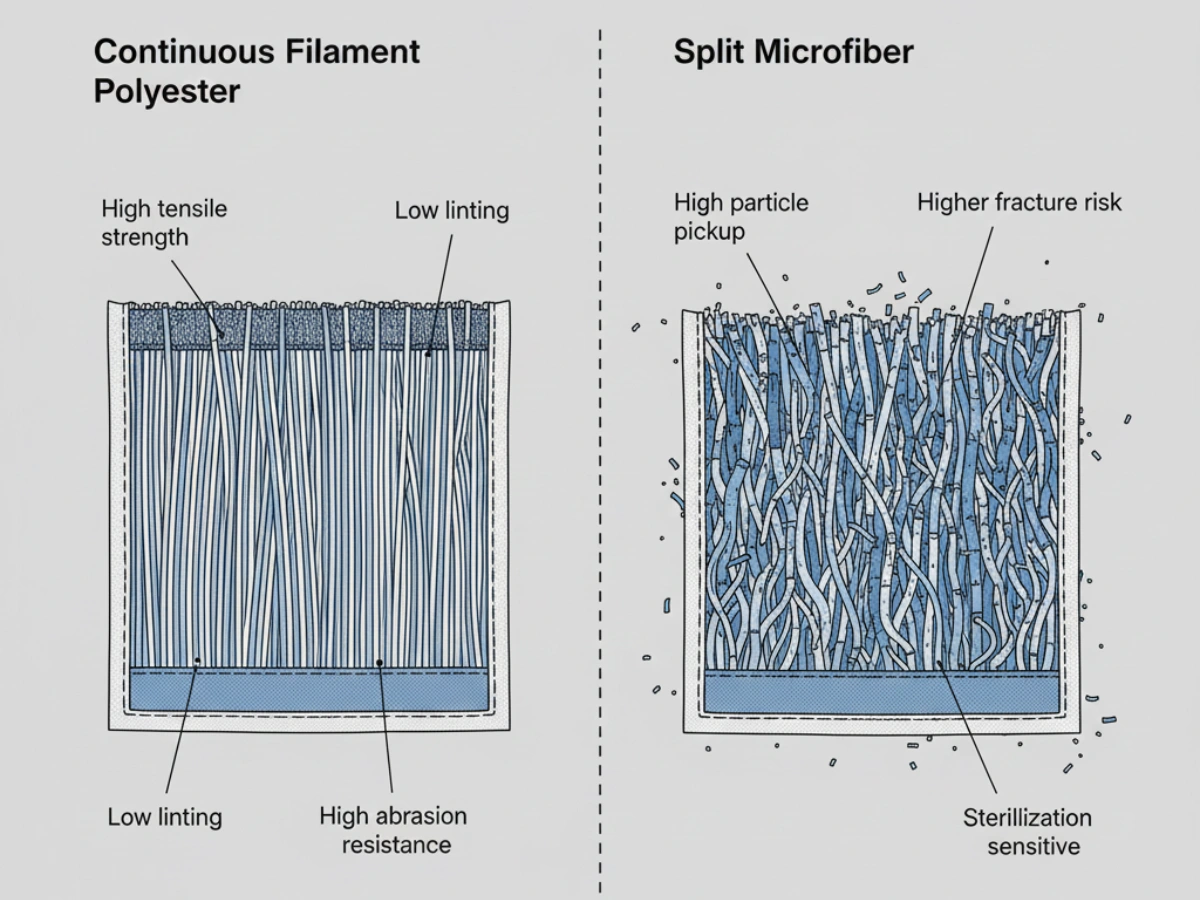
In Grade A and B zones, lighter mop head weights (40g–55g) are often preferred. These provide adequate absorbency for the typically smaller surface areas in aseptic filling suites while offering the operator greater control in tightly configured critical zones. Heavier heads (65g) carry more liquid and cover more surface area per stroke — an advantage in larger open areas such as Grade B corridors and anterooms — but may introduce handling challenges in confined Grade A spaces.
For Grade A and B zones, the documentation package should include at minimum:
For a deeper discussion of documentation across all cleanroom classifications, the
фармацевтическая швабра для чистых помещений, соответствие Приложению 1 GMPguide covers documentation expectations aligned with the current Annex 1 revision. The broader context of
Требования к швабре для фармацевтических чистых помещенийalso addresses facility-level considerations beyond the grade-specific framework.
Grade B presents a nuanced decision point that does not apply to Grade A. Because Grade B serves as the background environment supporting aseptic operations, the sterility requirement for mops used in Grade B depends on whether the zone connects to an active Grade A operation.
The decision of whether Grade B mops must be sterile should be assessed through a risk-based evaluation. The following three conditions describe when non-sterile mops may be evaluated for standalone Grade B use:
The Grade B zone is physically separated from Grade A operations and is not in active use as a background environment during aseptic processing. If the Grade B room is in a “resting” state or serves functions that do not directly support active Grade A operations, the sterility requirement may be re-evaluated.
The facility has a validated cleaning protocol demonstrating that the use of non-sterile mops in the specific Grade B zone does not result in microbial or particulate excursions beyond the zone’s defined limits. This validation should include environmental monitoring data collected under both at-rest and in-operation conditions.
A formal, documented risk assessment has been conducted and approved by QA, addressing: the proximity of the Grade B zone to Grade A, the nature of operations in the Grade B zone, the cleaning frequency, and the potential impact of a non-sterile mop on environmental monitoring results and product quality.
If all three conditions are satisfied, non-sterile mops may be evaluated for the specific Grade B zone. If any condition is not fully satisfied, sterile mops should be the default specification for Grade B when it serves as background to Grade A operations. When in doubt — and particularly during regulatory inspections — the conservative approach of specifying sterile mops for Grade B is generally the path of least audit risk.
Regardless of the sterility decision, the
material standard for Grade B mops should typically match Grade A: continuous filament polyester knit with sealed edges. The rationale is that the Grade B environment must maintain particle counts low enough to protect the Grade A zone it serves. Introducing a lower-grade material into Grade B — for example, microfiber with higher particle shedding potential — creates a material-quality gradient that may undermine the contamination control strategy.
Once the mop specification moves beyond the aseptic core into Grade C and D zones, the evaluation criteria shift. The central question is no longer “how to maintain sterility assurance” but “how to achieve effective contamination control at an appropriate cost within a less stringent environmental classification.”
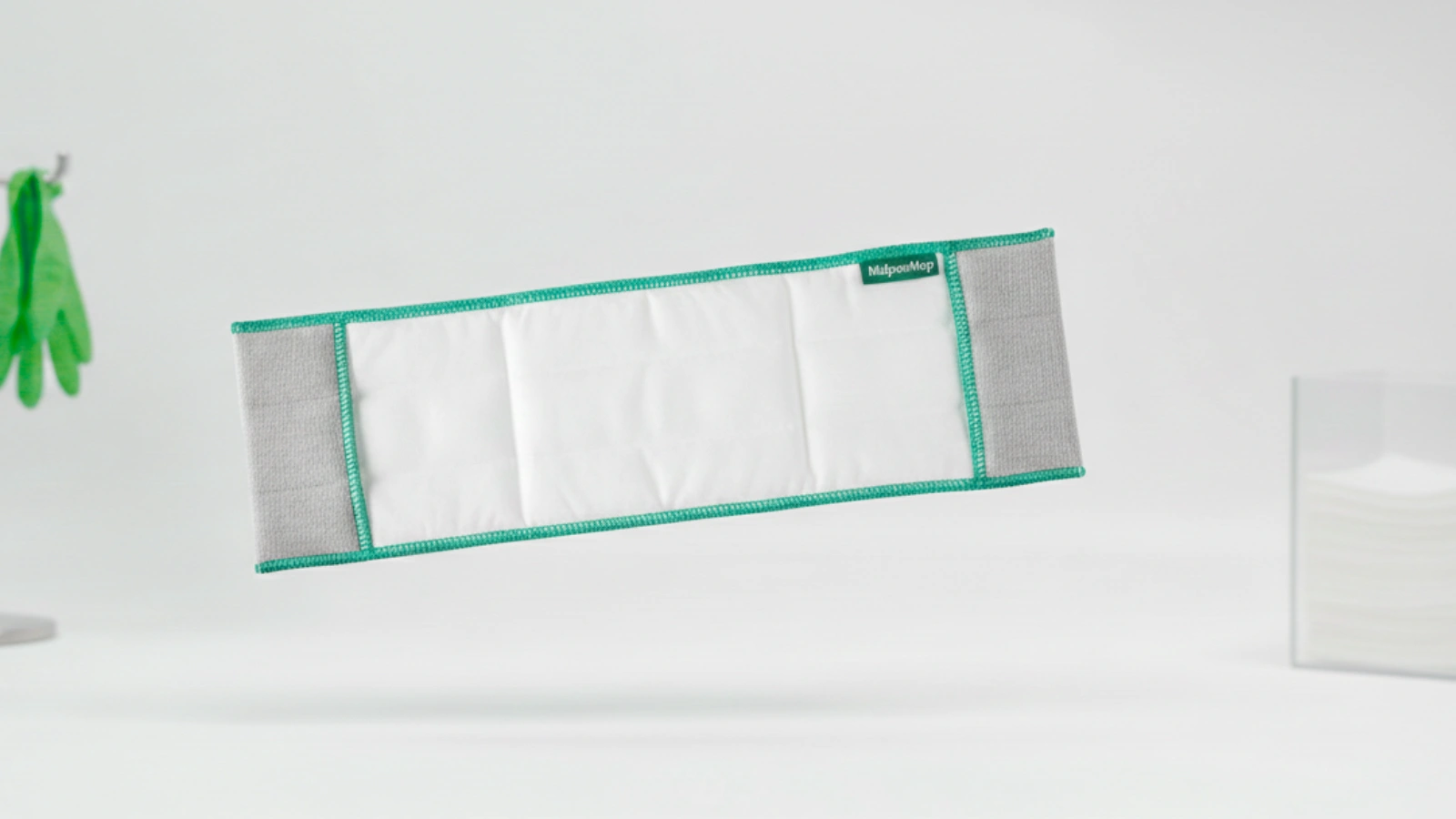
For the vast majority of Grade C and D applications,
non-sterile mops are appropriate and cost-efficient. Grade C particle limits (≤352,000 particles/m³ at ≥0.5 µm at rest; ≤3,520,000 in operation) and Grade D limits (≤3,520,000 at rest; not defined in operation) permit a broader range of cleaning tool materials. Over-specifying sterile mops for Grade C/D is one of the more common cost-inefficient practices observed in multi-grade facilities. There are limited scenarios where a facility may choose to use sterile mops in Grade C — for example, if the facility adopts a uniform sterile mop program across all grades to simplify supply chain management and reduce the risk of the wrong mop entering the wrong zone. This is an operational decision, not a regulatory requirement, and should be evaluated against the cost premium.
In Grade C and D, the material decision opens up. Both polyester and microfiber can be viable options, and the choice should be driven by the facility’s priorities:
А
Сравнение швабры из микрофибры и полиэстера для чистых помещенийprovides a detailed, evidence-based analysis of the material tradeoffs across particle generation, absorbency, chemical compatibility, durability, and lifecycle cost — directly relevant to the Grade C/D material decision.
The Grade C/D disposable-vs-reusable decision is primarily economic rather than sterility-driven. At lower grades, the analysis centers on:
For a structured framework comparing these dimensions, refer to the
Руководство по выбору одноразовой или многоразовой швабры для чистых помещений.
One of the most practical mechanisms for preventing Grade A/B mops from being mistakenly used in Grade C/D (and vice versa) is a color-coding system. By assigning distinct mop or trim colors to each grade zone, operators can visually confirm at a glance that the correct mop is in use. This is a simple but effective layer of defense:
Color-coding assignments should be documented in the facility’s cleaning SOP, visually posted at cleaning stations, and included in operator training. The color scheme should be simple enough to be remembered and applied consistently.
The following table is the master reference for this guide. It consolidates the key specification dimensions across all four GMP grades into a single comparison view. Use this as a starting point for drafting facility-specific mop specifications — not as a regulatory compliance checklist.
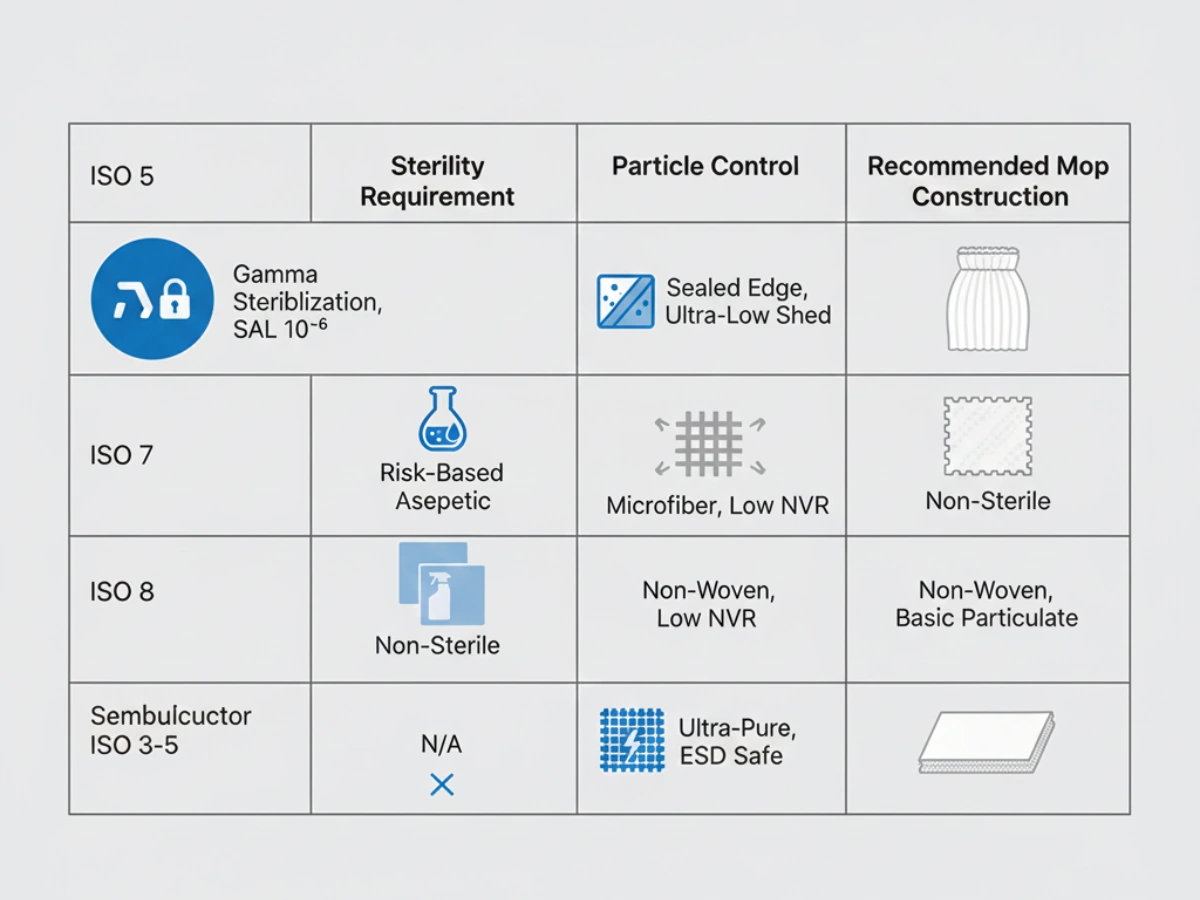
| Оценка | Стерильность | Материал | Weight Range | Упаковка | Документация | Изменить частоту | Suggested MIDPOSI Option |
|---|---|---|---|---|---|---|---|
| А | Terminally sterilized (gamma); SAL validated | Continuous filament polyester knit; laser/ultrasonic sealed edges | 40g–55g (lighter heads for operator control in confined aseptic spaces) | Double-bagged; staged aseptic transfer protocol | COA + Certificate of Sterility (per batch) + particle test data + CoC + batch traceability | Per-cleaning-event or per-area; validated in cleaning SOP | White Mop 40g/55g Sterile |
| Б | Sterile when connected to Grade A; non-sterile may be evaluated for standalone zones (risk-based) | Continuous filament polyester knit; sealed edges; same material standard as Grade A in most cases | 55g (common); 65g may be evaluated for larger areas | Double-bagged when sterile; single-bag may be acceptable when non-sterile | COA + sterility cert (if sterile) + particle test data + traceability | Aligned with Grade A schedule when serving connected Grade A; may follow B-specific schedule otherwise | White Mop 55g/65g Sterile (connected to A); 55g/65g Non-Sterile (standalone, risk-assessed) |
| С | Non-sterile (typical); sterile optional for uniform program | Polyester or microfiber (risk-based); polyester preferred where chemical compatibility matters; microfiber where cleaning efficacy prioritized | 55g–65g (coverage efficiency for larger support areas) | Bulk or single-bag; packaging cleanliness standard | COA + material certification | Defined by facility cleaning protocol; typically per-area or per-shift | White Mop 55g/65g Non-Sterile; Microfiber Stripe Mop Pads |
| Д | Non-sterile; sterile is typically cost-inefficient for Grade D applications | Polyester or microfiber; cost-efficiency, cleaning performance, and zone segregation drive selection | 55g–65g | Bulk packaging typically acceptable | COA + material certification | Defined by facility cleaning protocol; typically highest change frequency due to dirt loading | White Mop 55g/65g Non-Sterile; Microfiber Stripe Mop Pads; color-coded options |
IMPORTANT DISCLAIMER: These are general evaluation guidelines based on common industry practice and material science principles, not regulatory mandates. Specific facility risk assessments, cleaning validation protocols, product-contact proximity, and current applicable regulatory requirements (EU GMP Annex 1, PIC/S, WHO, local competent authority) should drive final mop specifications. The “Suggested MIDPOSI Option” column reflects MIDPOSI’s product portfolio alignment with general grade expectations; it does not constitute a regulatory recommendation. Each facility should conduct its own qualification of any mop product for its specific use conditions.
For guidance on how mop head weight affects cleaning performance, absorbency, and operator fatigue — which directly informs the weight column above — refer to the
Руководство по выбору веса насадки швабры для чистых помещений. For the documentation items listed in the matrix, the
Документы, подтверждающие швабру для чистых помещений, и сертификат подлинностиguide provides a detailed explanation of each document type and what buyers should look for when reviewing supplier submissions.
The following five scenarios represent commonly observed issues in facilities that have not fully implemented a grade-stratified approach to cleanroom mop selection. Each includes practical correction guidance.
Проблема: A facility purchases one mop spec — typically the sterile, polyester, double-bagged configuration appropriate for Grade A — and deploys it across all grades from the aseptic core through Grade D material staging. This ensures uniform quality but generates significant unnecessary cost in Grades C and D where non-sterile, single-bag, or bulk-packaged options would be functionally adequate.
Как исправить: Map each zone to its actual regulatory and operational requirements. Reserve the Grade A specification for Grade A zones (and connected Grade B). Introduce non-sterile, appropriately packaged mops for Grade C and D. The cost savings from this grade-stratification typically exceed the incremental administrative effort of managing multiple mop SKUs.
Проблема: A facility uses terminally sterilized, double-bagged mops in Grade D zones because “we use sterile mops everywhere” is perceived as the safer position. In Grade D, where airborne particle limits are 1,000x higher than Grade A, the sterile mop premium delivers minimal contamination control benefit relative to its cost.
Как исправить: Review the specific regulatory requirements for Grade D in the facility’s jurisdiction. In nearly all cases, Grade D does not require sterile cleaning tools. If the concern is operator error (a sterile mop being mistaken for a non-sterile one), address this through color-coding, labeling, and training rather than by over-specifying the entire inventory.
Проблема: Grade B is sometimes mischaracterized as “just a cleaner Grade C,” leading to the specification of non-sterile, non-validated mops for Grade B areas that serve as background to Grade A operations. This creates a contamination control gap at the boundary between the aseptic core and the supporting environment.
Как исправить: When Grade B serves as background to Grade A, treat its mop material and sterility standards as aligned with Grade A. Only downgrade the specification to non-sterile if a formal, documented risk assessment supports it and the three conditions from the Grade B decision framework (Section 4) are satisfied.
Проблема: The mop head specification is grade-stratified, but the mop frame and handle are not. Operators use the same reusable stainless steel frame and handle in Grade A, B, C, and D, with only the mop head changing between zones. This is functionally equivalent to using the same mop across all grades — the frame itself can carry particles, residues, and microorganisms between zones of different classification.
Как исправить: Dedicate mop frames (and handles, where practical) to specific grade zones. At minimum, separate aseptic core (A/B) frames from support zone (C/D) frames. Color-code or label the frames to make misassignment visually obvious. Include frame and handle assignment in the cleaning SOP.
Проблема: The facility’s QA team requests the same documentation package from the supplier regardless of grade — Certificate of Sterility for Grade D mops, or omits particle test data for Grade A mops because “the COA was enough.” This creates two risks: over-documentation that adds supplier cost without regulatory benefit, and under-documentation that leaves critical gaps in the mop qualification record.
Как исправить: Определите матрицу требований к документации для конкретного класса в соглашении о качестве поставщика швабры. Класс A/B: полный пакет документации (сертификат стерильности, сертификат подлинности, данные о частицах, сертификат соответствия, отслеживаемость). Класс C/D: Сертификат подлинности и сертификация материалов в качестве базового уровня, с дополнительной документацией только в тех случаях, когда это оправдано конкретной оценкой риска. Включите матрицу документации в качестве элемента проверки во время внутренних аудитов и проверок качества поставщиков.
Для стерильных производственных помещений класса А наиболее часто рекомендуемой конфигурацией является окончательно стерилизованный (обычно гамма-облученный) швабра из полиэстера с непрерывной нитью и краями, запечатанными лазером или ультразвуком, в двойном пакете для поэтапной асептической транспортировки. Более легкие насадки швабры (40–55 г) обычно предпочтительнее для контроля со стороны оператора в ограниченных пространствах асептического наполнения. Документация должна включать сертификат стерильности на партию, сертификат анализа, данные испытаний частиц с указанной методологией, сертификат соответствия и записи отслеживания партии. Каждое предприятие должно убедиться, что его конкретная близость к продукту, данные проверки очистки и региональные нормативные требования соответствуют выбранной спецификации швабры.
Not always, but the default recommendation for Grade B zones that serve as background to Grade A operations is sterile. Non-sterile mops may be evaluated for standalone Grade B zones only if three conditions are satisfied: (1) the Grade B zone is physically independent and not in active use as background during Grade A aseptic operations, (2) the facility has a validated cleaning protocol demonstrating no environmental monitoring excursions with non-sterile mops, and (3) a formal, documented risk assessment has been conducted and approved by QA. If any condition is not fully satisfied, sterile mops should remain the specification. In practice, many facilities default to sterile mops for all Grade B to avoid regulatory audit questions.
Да, в большинстве случаев швабра одинаковой спецификации может использоваться для классов C и D, поскольку обе они представляют собой неасептические опорные зоны с принципиально схожими требованиями к чистящим средствам (нестерильные, с контролем частиц, химически совместимые). Тем не менее, на предприятии должен быть реализован механизм, предотвращающий попадание швабр, используемых в одной зоне, в другую без соответствующей очистки или замены — обычно посредством цветового кодирования, инвентаризации швабр для каждой зоны и протоколов использования, определенных СОП. Швабру, используемую в классе D, где содержание грязи может быть выше, не следует относить к классу C без прохождения утвержденного процесса очистки. Сама насадка для швабры может быть тем же продуктом; протокол использования различает зоны.
Для проверки швабры класса А аудитор обычно ожидает увидеть: (1) Сертификат стерильности на каждую производственную партию с идентификатором партии, методом стерилизации (например, гамма-облучением), датой стерилизации и уровнем гарантии стерильности (SAL, обычно 10).
-6); (2) Сертификат анализа (COA) на партию, подтверждающий вес, размеры и состав материала; (3) данные испытаний на образование частиц с указанной методологией испытаний (например, испытание на барабане Хельмке согласно IEST-RP-CC003 или испытание на изгиб Гельбо); (4) Сертификат соответствия, подтверждающий, что продукт соответствует заявленным спецификациям; (5) записи о отслеживании партии, связывающие партию швабры с партиями сырья, датами производства и записями цикла стерилизации; и (6) где это применимо, данные испытаний на эндотоксины для продуктов, используемых при асептической обработке парентеральных продуктов. Аудитор также ожидает, что предприятие продемонстрирует, что швабра сертифицирована для конкретных условий использования посредством внутренней оценки, а не только посредством документации, предоставленной поставщиком.
Основное отличие состоит в том, что для класса А требуется полиэфирное плетение с непрерывными нитями и герметичными краями — конфигурация материала, оптимизированная для минимального высыпания частиц и максимальной химической совместимости с окислительными дезинфицирующими средствами. Класс C открывает выбор материала, включающий как полиэстер, так и микрофибру. Полиэстер остается выбором по умолчанию, когда контроль над частицами и химическая совместимость являются приоритетами. Микроволокно может быть оценено по классу C, если эффективность очистки (впитывающая способность, улавливание механических частиц, удаление остатков) является приоритетом, а рецептура дезинфицирующего средства предприятия совместима с полиамидным (нейлоновым) компонентом, присутствующим в большинстве смесей микроволокна. Спецификация материала класса А более строгая, поскольку риск загрязнения даже из-за небольших различий в скорости высвобождения частиц значительно выше в асептической сердцевине.
Для класса B подходят как одноразовые, так и многоразовые конфигурации, и выбор должен определяться конкретными эксплуатационными приоритетами учреждения, а не правилами, основанными на классах. Одноразовые стерильные швабры устраняют необходимость проверки повторного использования (протоколы мытья, сушки, повторной стерилизации) и устраняют риск неправильной очистки многоразовых предметов; они проще в эксплуатации, но требуют более высоких затрат на использование материала. Стерильные швабры многоразового использования (обычно автоклавируемые) имеют более низкую стоимость использования в течение всего жизненного цикла, но требуют проверенной инфраструктуры для мытья и повторной стерилизации. На практике решение часто зависит от: (1) наличия на предприятии уже прачечной в чистых помещениях, (2) частоты смены швабры класса B и (3) толерантности к риску потенциального загрязнения, связанного с повторным использованием. Многие учреждения используют одноразовые материалы в асептической зоне (класс А) и оценивают многоразовые материалы для класса B на основе объема и стоимости.
Не существует единого «лучшего» веса для каждого сорта, но общие рекомендации таковы:
Оценка А:40–55 г, поскольку более легкие головки обеспечивают лучший контроль оператора в ограниченном пространстве, типичном для установок асептического розлива, а площади поверхности на одну операцию очистки обычно меньше.
Оценка Б:55g — распространенный выбор среднего класса для коридоров и прихожих; 65g можно оценить для больших помещений класса B, где эффективность покрытия имеет приоритет.
Оценка C/D:55–65 г, поскольку более крупные опорные поверхности выигрывают от более высокой впитывающей способности и более широкого покрытия за одно движение более тяжелой насадки швабры. На решение по весу также влияет объем чистящего раствора в помещении (более тяжелые насадки содержат больше жидкости), эргономика оператора (более легкие насадки снижают утомляемость при длительной уборке) и совместимость рамы швабры с насадками разного веса. Полная схема выбора описана в таблице веса насадки швабры для чистых помещений.
Предотвращение ошибок швабры в разных зонах требует сочетания физических, процедурных и обучающих мер контроля: (1)
Цветовое кодирование:Assign distinct mop or trim colors to each grade zone and ensure the scheme is posted at cleaning stations. For example, white mops for Grade A/B, blue for Grade C, green for Grade D. (2)
Physical separation:Store mops for each grade zone in physically separate locations. Never store Grade A/B and Grade C/D mops in the same cabinet or cart without clear visual demarcation. (3)
SOP documentation:Include zone-specific mop identification in the cleaning SOP with photographs of each mop type and its assigned zone. (4)
Обучение операторов:Include a specific “mop-zone matching” module in GMP cleaning training, with periodic competency assessment. (5)
Line clearance and changeover verification:Прежде чем начать уборочную смену, убедитесь, что швабры, установленные в каждой зоне, соответствуют назначению зоны. (6)
Сообщение об инциденте:Определите порог срабатывания CAPA для ошибок швабры в разных зонах, чтобы системные проблемы исследовались, а не рассматривались как отдельные ошибки оператора.
Discuss your facility’s grade requirements with our technical team — from Grade A sterile core to Grade D support areas. MIDPOSI White Cleanroom Mop Series provides 100% continuous filament polyester knit construction with sealed edges, available in sterile (gamma-irradiated, double-bagged) and non-sterile configurations across 40g, 55g, and 65g weights. Documentation packages including Certificate of Analysis and, for sterile configurations, Certificate of Sterility are available upon request to support your supplier qualification process.
MIDPOSI supplies cleanroom mops to pharmaceutical, biotech, and medical device manufacturers. Batch-level documentation including Certificate of Analysis (COA) and, for sterile products, Certificate of Sterility is available upon request. Contact our team to discuss your facility’s grade-specific mop requirements — from Grade A aseptic core to Grade D support zones — and request product samples for internal evaluation.