Distributors, laundry service providers and large end users often want cleanroom garments made to their own specification or sold under their own brand. Working directly with a manufacturer can give you more control over design and documentation, but it also puts more responsibility on you to define exactly what you need. This guide walks through the OEM and private label process step by step, so you can brief a manufacturer clearly and avoid surprises after the first shipment.
OEM vs private label: what is the difference?
In a private label arrangement, you take a manufacturer’s existing, proven garment designs and sell them under your brand, usually with your own labels and packaging. In an OEM or custom arrangement, the garment is built to your specification: fabric, style, closures, colors, sizing and markings may all change. Private label is faster and lower risk; custom OEM takes longer because samples and testing are needed, but it lets you match a specific gowning SOP or a design your customers already know.
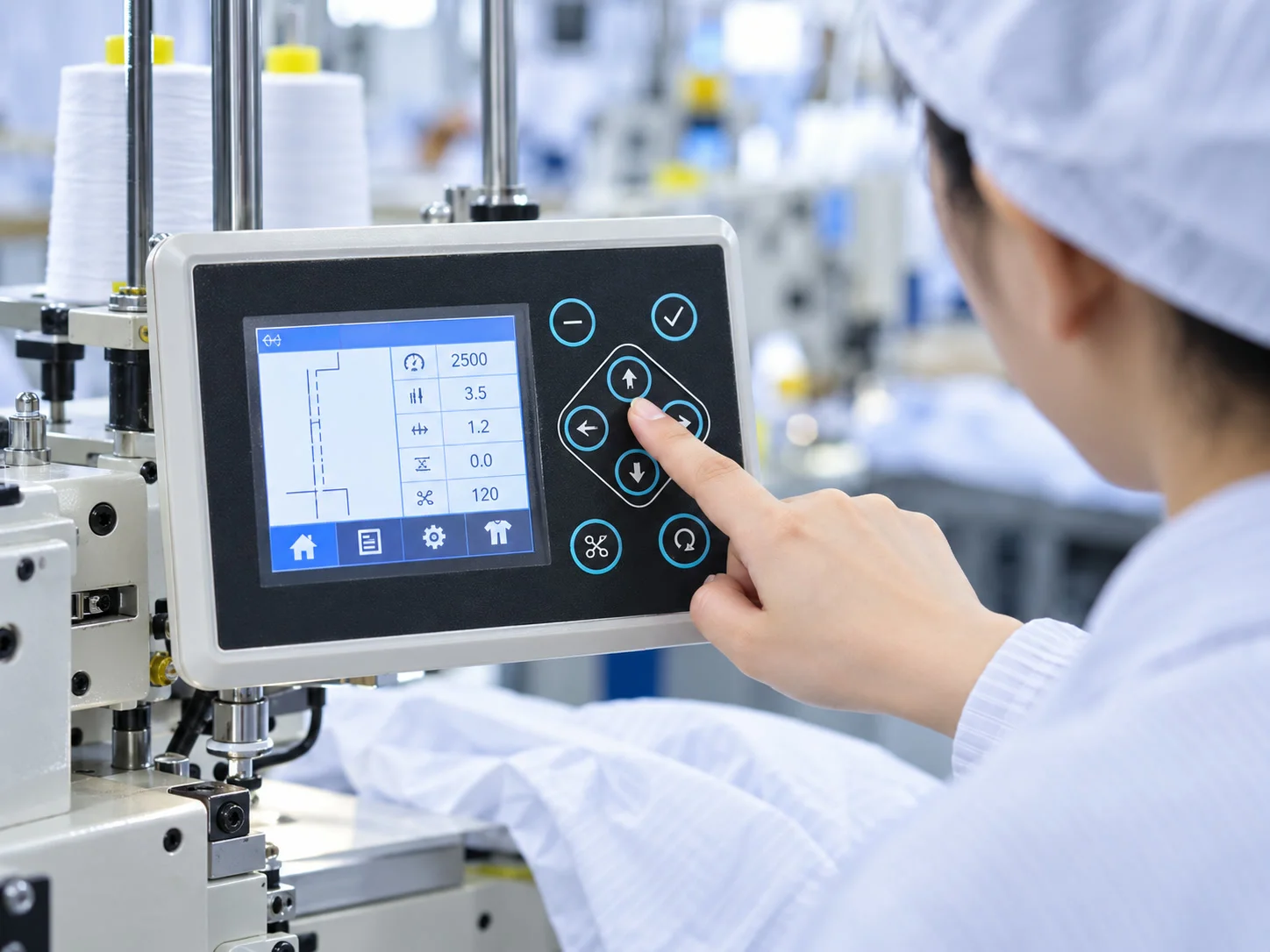
Step 1: write a clear specification
- Intended use: cleanroom grade (for example GMP Grade A–D or ISO 5–8), industry and whether garments will be autoclaved, gamma irradiated or laundered only.
- Styles: coveralls, split suits, hoods, boots, lab coats or frocks (see our autoclavable cleanroom garment range).
- Fabric: low-lint polyester, and whether conductive yarn is required for ESD control (see the materials comparison).
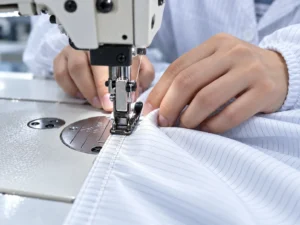
- Construction details: seam type, zipper and snap types, cuff and ankle finishes.
- Sizing: your size range and any custom size chart (see our sizing and fit guide).
- Branding: labels, logos, color coding, size indicators and packaging.
Step 2: request samples and test them
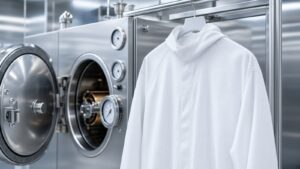
Never approve a bulk order from a drawing alone. Ask for samples in the fabric and style you specified, and test them in your own process. For autoclavable garments this usually means running them through your laundry and sterilization cycle several times, then checking fit, closures, seams and particle shedding. Ask staff to wear samples during real gowning so you get feedback on comfort and ease of donning.
Step 3: agree on documentation
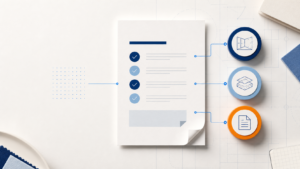
Regulated buyers need paperwork as much as garments. Before ordering, agree on which documents the manufacturer will provide, for example product specification sheets, material information, the manufacturer’s quality system certificate, test reports where available, and lot or batch identification for traceability (see our documentation checklist). MIDPOSI, for instance, works under an ISO 13485 quality management system and shares available quality documentation for the selected product.
Step 4: quality checks and approval
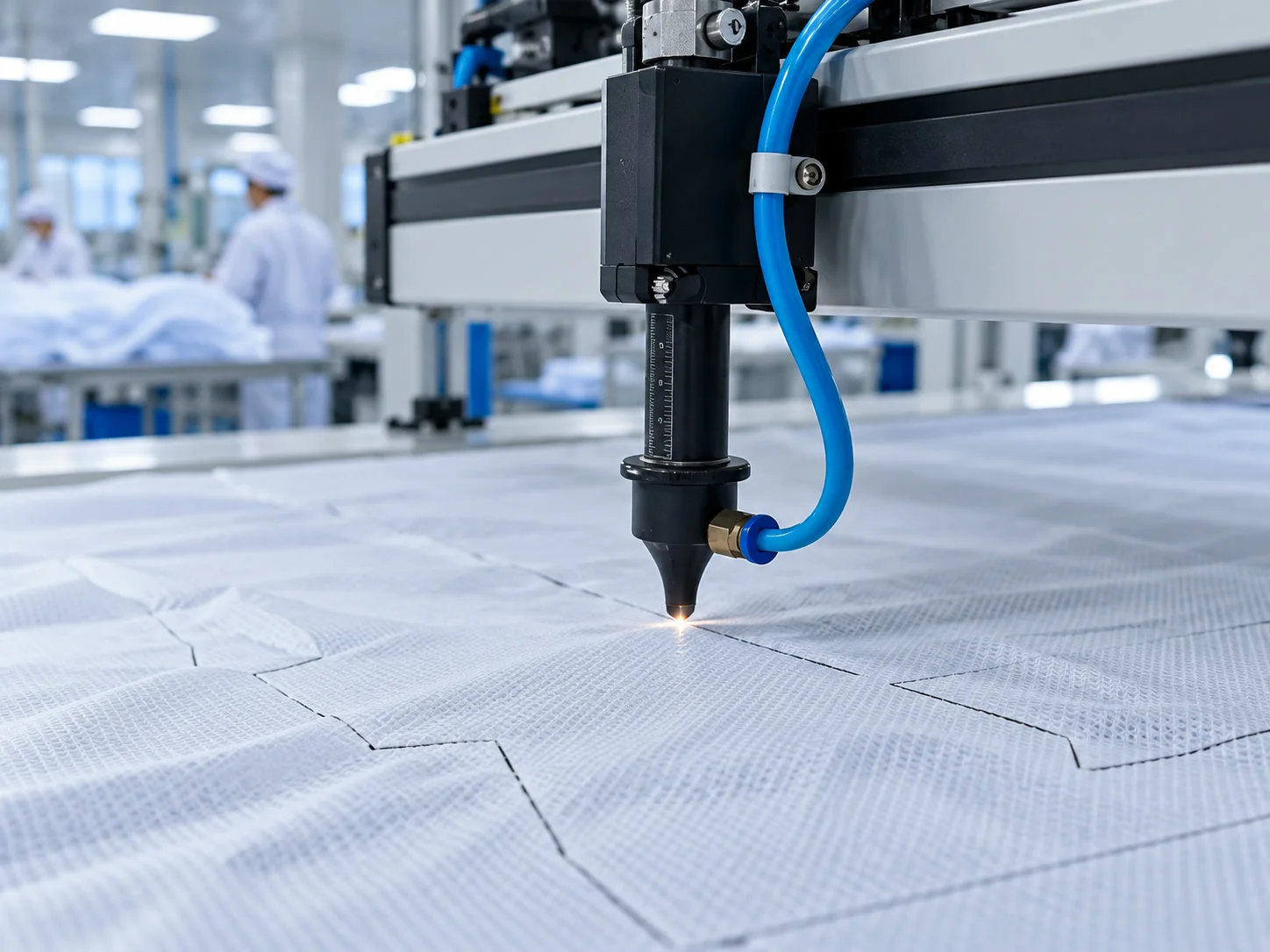
Agree on how each order will be inspected: what is checked, how many pieces are sampled, and what counts as a defect. Keep an approved golden sample on both sides, so any later order can be compared against it. If you are a distributor, include your own incoming inspection in the plan.
Step 5: ordering, packaging and logistics
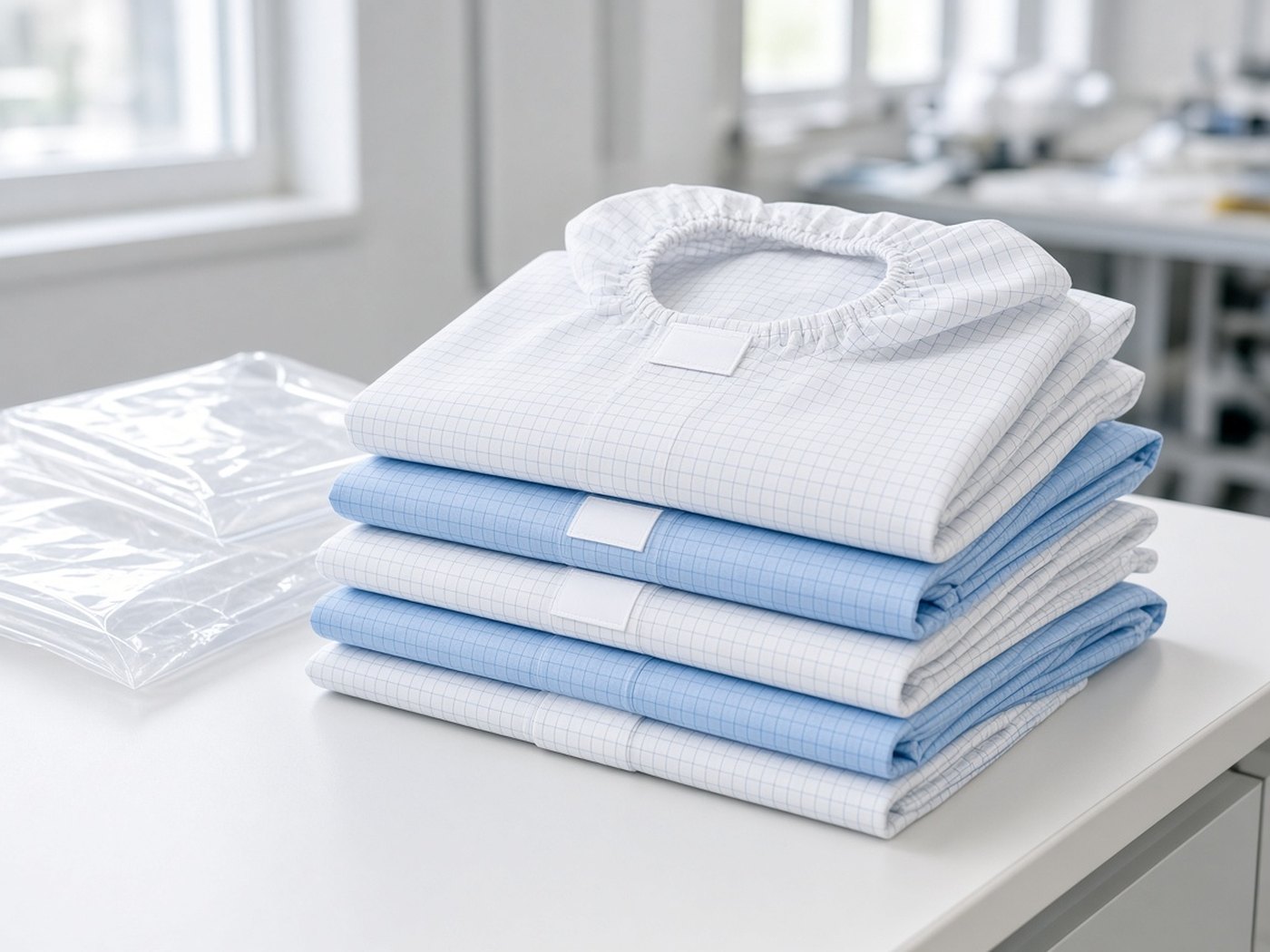
Confirm minimum order quantities, lead times, packaging (for example individually bagged garments and carton markings) and shipping terms before you sign off. MIDPOSI offers an MOQ of 50 pieces and a standard lead time of about 25 days. These figures can vary by product configuration, so ask for them in writing for your exact specification.
Questions to ask a cleanroom garment manufacturer
- How long have you manufactured cleanroom garments, and for which industries?
- Which quality system certificate do you hold, and can I see it?
- Which fabrics do you offer, and are ESD conductive options available?
- Can you supply samples in my exact specification?
- What documentation comes with each order?
- How do you identify lots for traceability?
- Can you apply my labels, logo and packaging?
Why work with MIDPOSI
MIDPOSI has manufactured cleanroom products since 2004 and supplies B2B buyers worldwide directly from the factory. Our range covers autoclavable cleanroom garments, including coveralls, hoods, boots, smocks and lab coats, alongside sterile and non-sterile mop systems. We support custom sizing and branding for bulk orders, provide samples and specification sheets before ordering, and work under an ISO 13485 quality management system. Send us your specification and target quantity, and we will prepare samples and a quotation.