Ein strukturierter Entscheidungsrahmen zur Bestimmung, wann in jeder Reinraumzone Ihrer Einrichtung sterile Wischmopps eingesetzt werden sollten und wann nicht sterile Optionen funktionell angemessen und kostengerecht sind. Behandelt GMP-Qualitätsanforderungen, Anhang 1-Risikobewertung, Produktkontaktnähe, Überlegungen zum Übertragungsweg und die Kosten-Gültigkeits-Kompromisse, die eine vertretbare Beschaffungsspezifikation beeinflussen.
Der Unterschied zu diesem Artikel: Dies ist ein Entscheidungsrahmen – Wann zwischen steril und unsteril wählen. Es handelt sich hierbei nicht um eine allgemeine Definition von sterilen Mopps und nicht um einen ausführlichen Einblick in aseptische Übertragungsprotokolle. Zu diesen Themen siehe die entsprechenden Artikel, die in Abschnitt 8 verlinkt sind.

Die Entscheidung zwischen sterilem und nicht sterilem Mopp ist keine einheitliche, einrichtungsweite Antwort. Es ist zonengeschichtet. Die folgende Matrix bietet einen schnellen Überblick darüber, wie sich die Sterilitätsempfehlung in gängigen Reinraumszenarien verändert. Jede Zeile stellt einen allgemeinen Bewertungsausgangspunkt dar, nicht einen universellen Regulierungsauftrag. Anlagenspezifische Risikobewertungen, Produktkontaktnähe und Reinigungsvalidierungsdaten sollten in die endgültigen Spezifikationen einfließen.
| Reinraumsituation | Empfehlung | Primäre Begründung |
|---|---|---|
| Aseptische Abfüllzone der Klasse A / ISO 5 | Steril | Das Risiko des Produktkontakts ist am höchsten. Die Sterilität aller Verbrauchsmaterialien, die in den aseptischen Kern gelangen, ist eine grundlegende Erwartung gemäß EU-GMP-Anhang 1. Die nicht sterile Einführung gilt in dieser Zone nicht als konform. |
| Hintergrund der Klasse B bis zur Klasse A | Steril (Standard) | Grad B dient als Schutzhintergrund für Grad A; Die Sterilität der Reinigungswerkzeuge unterstützt die Umweltkontrolle. Unsteril kann nur im Rahmen einer formellen, dokumentierten Risikobewertung mit QA-Genehmigung als eigenständiges Produkt der Klasse B bewertet werden. |
| Vorbereitung einer Lösung der Güteklasse C / ISO 7 | Unsteril | In der Regel sind unsterile, partikelkontrollierte Mopps akzeptabel. Die sterile Spezifikation für Zonen der reinen Klasse C erhöht die Kosten ohne entsprechenden Vorteil bei der Kontaminationskontrolle. Konzentrieren Sie sich stattdessen auf Materialqualität und Zonentrennung. |
| Materialbereitstellung der Klasse D / ISO 8 | Unsteril | Sterile Mopps der Klasse D sind in der Regel eine kostenineffiziente Überspezifikation. Die Grenzwerte für luftgetragene Partikel liegen deutlich höher als in aseptischen Zonen. Als Standardempfehlung gelten unsterile Mopps mit entsprechenden Materialspezifikationen und farblich gekennzeichneter Zonentrennung. |
| Mehrstufige Anlage mit gemeinsamem Reinigungsteam | Gemischt (zonengeschichtet) | Eine einzige Sterilitätsspezifikation für alle Zonen ist weder kosteneffizient noch betrieblich optimal. Als Vorgehensweise wird ein nach Klassenstufen geschichteter Ansatz empfohlen – steril für Klasse A/B, unsteril für Klasse C/D. Die betriebliche Komplexität der Verwaltung zweier Spezifikationen wird im Allgemeinen durch die Kosten- und Compliance-Vorteile der Anpassung der Sterilität an die tatsächlichen Zonenanforderungen aufgewogen. |
Haftungsausschluss: Hierbei handelt es sich um allgemeine Bewertungsrichtlinien, die auf der gängigen Branchenpraxis und den Rahmenprinzipien des EU-GMP-Anhangs 1 / ISO 14644 basieren, nicht auf behördlichen Vorgaben. Spezifische Risikobewertungen der Einrichtung, Protokolle zur Reinigungsvalidierung, Nähe zum Produktkontakt und geltende regionale behördliche Anforderungen sollten die endgültigen Sterilitätsspezifikationen für Mopps bestimmen.
Die Entscheidung zwischen sterilem und nicht sterilem Reinraummopp basiert nicht auf einem einzigen Faktor. Fünf miteinander verbundene Kriterien bestimmen in der Regel, ob eine Einrichtung sterile Wischmopps für eine bestimmte Zone festlegen sollte. Das Verständnis der Bedeutung jedes Kriteriums – und ihrer Wechselwirkung – ist die Grundlage einer vertretbaren Beschaffungsspezifikation. A Übersicht über Reinraum-Moppsysteme definiert die Komponenten; In diesem Abschnitt wird definiert, welche Sterilitätsspezifikation pro Zone für sie gilt.
Was es bestimmt: Die grundlegende Sterilitätserwartung. Zonen der Güteklasse A/ISO 5 unterliegen einer klaren regulatorischen Erwartung, dass alle in die Zone gelangenden Verbrauchsmaterialien abschließend sterilisiert und über einen validierten aseptischen Transfer eingeführt werden. In Zonen der Klassen C/ISO 7 und D/ISO 8 werden nicht die gleichen Erwartungen an Reinigungswerkzeuge gestellt. Allerdings ist die Klassifizierung allein nicht der einzige entscheidende Faktor – eine Zone der Klasse B, die physisch mit Betrieben der Klasse A verbunden ist, erfordert eine andere Analyse als ein eigenständiges Forschungslabor der Klasse B, auch wenn beide die gleiche GMP-Klassifizierung tragen.
Was es bestimmt: Der regulatorische Kontext, der Sterilität zu einer Compliance-Anforderung und nicht zu einer optionalen Qualitätsentscheidung macht. Der EU-GMP-Anhang 1 verlangt, dass „Desinfektionsmittel und Reinigungsmittel, die in Bereichen der Klassen A und B verwendet werden, vor der Verwendung steril sein müssen.“ Während sich der Text in erster Linie auf Flüssigkeiten bezieht, erstreckt sich das Prinzip der Kontaminationskontrolle auch auf Reinigungswerkzeuge, die in diese Zonen gelangen: Ein nicht steriler Moppkopf, der mit sterilem Desinfektionsmittel getränkt ist, schafft einen Spalt zur Kontaminationskontrolle. Aufsichtsbehörden, die Reinigungsprogramme in aseptischen Produktionsanlagen überprüfen, erwarten, eine Begründung dafür zu finden, warum an jeder Zonengrenze Sterilitätsentscheidungen getroffen wurden. Eine formell nicht dokumentierte Entscheidung stellt selbst eine potenzielle Prüfungsfeststellung dar.
Was es bestimmt: Der akzeptable Sterilitätsschwellenwert basiert darauf, wie nah die gereinigte Oberfläche am Produkt ist. Ein Boden, der in einer aseptischen Abfüllanlage der Klasse A gereinigt wurde, ist näher am offenen Produkt als ein Boden, der in einem Materiallager der Klasse D gereinigt wurde – selbst wenn es sich bei beiden um Böden handelt. Das Proximitätsprinzip lautet: Je näher die Reinigungsoberfläche eines Mopps an der produktberührenden Oberfläche ist, desto höher sollte der Sterilitätsstandard sein. Dieses Kriterium ist besonders in Grenzfällen relevant, beispielsweise in Vorräumen der Klasse B, in denen der Boden physisch an eine Abfülllinie der Klasse A angrenzt, aber durch eine Luftstromsperre von dieser getrennt ist. In solchen Fällen sollte bei der Risikobewertung berücksichtigt werden, ob ein nicht steriler Mopp auf der Seite der Klasse B einen inakzeptablen Kontaminationsweg schafft.
Was es bestimmt: Ob die Sterilitätskette von der Verpackung bis zum Einsatzort eingehalten werden kann. Die Spezifikation eines sterilen Mopps ist nur so gültig wie der Transportweg, der ihn in den Reinraum befördert. Wenn eine Einrichtung endsterilisierte, doppelt verpackte Mopps vorschreibt, aber nicht über ein validiertes, abgestuftes aseptisches Transferprotokoll verfügt (Entfernung des Außenbeutels an der Zonengrenze, Entfernung des Innenbeutels innerhalb der Empfangszone unter aseptischen Bedingungen), wird die Sterilitätsspezifikation zum Zeitpunkt der Einführung untergraben. Dieses Kriterium funktioniert auch umgekehrt: Wenn der Transferweg durch eine Zone der Klasse C zu einem Lagerbereich der Klasse C keine Phase umfasst, in der die Sterilität aufrechterhalten oder überprüft werden könnte, führt die Festlegung steriler Mopps für diese Zone zu Kosten, ohne dass ein erreichbarer Sterilitätsvorteil erzielt werden kann.
Was es bestimmt: Ob die zusätzlichen Kosten der Sterilspezifikation durch messbare Vorteile bei der Kontaminationskontrolle in der spezifischen Zone gerechtfertigt sind. Aufgrund des zusätzlichen Sterilisationsprozesses, der validierten Verpackung, der Sterilitätstests pro Charge und des Dokumentationspakets, das jeder sterilen Charge beiliegt, sind sterile Mopps teurer als nicht sterile Äquivalente. Wenn der Regulierungsrahmen der Zone keine Sterilität vorschreibt und das Produktkontaktrisiko gering ist, generiert die Sterilprämie eine minimale Kontaminationskontrollrendite. Dies wird in Abschnitt 4 ausführlich untersucht.
In diesem Abschnitt werden die fünf oben genannten Kriterien in zonenspezifische Sterilitätsempfehlungen übersetzt. Das Rahmenwerk orientiert sich an den vier GMP-Reinraumklassen, da die Sterilitätserwartung am stärksten mit der Reinraumklassifizierung korreliert. Eine vollständige Spezifikationsmatrix zu Material, Gewicht und Verpackung pro Klasse – über die reine Sterilität hinaus – finden Sie im Leitfaden zur Auswahl der GMP-Reinraummoppqualität. Informationen zu den spezifischen aseptischen Transferprotokollen, die die Sterilität während der Einführung gewährleisten, finden Sie im Steriler Reinraum-Mopp-Leitfaden für den aseptischen Transfer und die Verpackung.
Entscheidung: Steril. Es gibt kein glaubwürdiges nicht steriles Argument für aseptische Verarbeitungszonen der Klasse A.
Begründung: Klasse A ist der Bereich, in dem offene Produkte, sterile Komponenten und aseptische Verbindungen direkt der Umgebung ausgesetzt sind. EU-GMP-Anhang 1 definiert Klasse A als „die lokale Zone für Hochrisikooperationen“. Von jedem Verbrauchsmaterial, das in diesen Bereich gelangt – einschließlich Reinigungswerkzeugen –, wird erwartet, dass es abschließend sterilisiert und durch einen validierten aseptischen Transferprozess eingeführt wird. Ein nicht steriler Moppkopf der Klasse A stellt, selbst wenn er mit sterilem Desinfektionsmittel gesättigt ist, eine unkontrollierte Kontaminationsquelle dar, die bei behördlichen Inspektionen nur schwer zu verteidigen ist.
Die Sterilitätsspezifikation sollte Folgendes umfassen:
MIDPOSI-Optionen für diese Zone: Optionen für sterile Reinraummopps Dazu gehören White Mop 40 g, 55 g und 65 g in gammabestrahlten, sterilen Konfigurationen mit doppelt verpackter Verpackung für den stufenweisen aseptischen Transfer.
Entscheidung: Steril ist die Standardempfehlung. Unter bestimmten Bedingungen kann die Bewertung der Unsterilität erfolgen.
Begründung: Klasse B dient als Hintergrundumgebung für aseptische Operationen der Klasse A. Seine Ruheteilchengrenzwerte spiegeln Grad A wider (≤3.520 Partikel/m³ bei ≥0.5 µM). Während Anhang 1 im Gegensatz zu Desinfektionsmitteln nicht ausdrücklich sterile Reinigungswerkzeuge für Klasse B vorschreibt, gilt das Prinzip der Kontaminationskontrolle natürlich weiter: Der Hintergrund, der den aseptischen Kern schützt, sollte selbst keine Kontaminationsquelle sein. Ein nicht steriler Wischmopp der Klasse B erzeugt eine mikrobiologische Belastung in unmittelbarer Nähe der aseptischen Grenze.
Ausnahmerahmen – Nicht sterile Mopps können nur dann für Klasse B bewertet werden, wenn ALLE drei Bedingungen erfüllt sind:
In der Praxis verwenden viele Einrichtungen standardmäßig sterile Wischmopps für alle Zonen der Klasse B, da die Kosten für die Sterilprämie niedriger sind als die Kosten für die Dokumentation und Verteidigung einer nicht sterilen Ausnahme während einer behördlichen Prüfung. Wenn die Risikobewertung, die Überwachungsdaten und die QS-Genehmigung bereits vorhanden sind, kann eine nicht sterile Spezifikation für eine eigenständige Zone der Klasse B sowohl konform als auch kosteneffizient sein. Wenn einer der drei Zustände unsicher ist, bleibt die Sterilität der empfohlene Weg.
Entscheidung: Unsteril ist die Standardempfehlung. Steril kann verwendet werden, wenn eine Einrichtung ein einheitliches Sterilprogramm anwendet.
Begründung: Für Zonen der Klasse C – Lösungsvorbereitung, Komponentenwaschen, Gerätemontagebereiche – gelten keine Sterilitätsanforderungen für Reinigungswerkzeuge. Der Luftpartikelgrenzwert für die Klasse C in Ruhe beträgt 352.000 Partikel/m³ bei ≥0.5 µm (100x höher als Klasse A), und die Betriebsgrenze liegt bei 3.520.000 Partikeln/m³. Bei diesen Schwellenwerten ist der Kontaminationskontrollwert eines sterilen Mopps im Verhältnis zu seinem Kostenaufschlag marginal. Der wichtigere Spezifikationsschwerpunkt für Klasse C ist: (1) partikelkontrolliertes Material (Polyester oder Mikrofaser mit geeigneter Kantenversiegelung), (2) Zonentrennung zur Vermeidung zonenübergreifender Kontamination und (3) Kompatibilität mit der Desinfektionsmittelrezeptur der Einrichtung. Ein gut konzipiertes unsteriles Moppprogramm für Klasse C liefert die Ergebnisse der Kontaminationskontrolle, die auf dieser Klassifizierungsstufe wichtig sind.
Sterile Ausnahme: Einige Einrichtungen entscheiden sich aus Gründen der betrieblichen Vereinfachung dafür, ihre Spezifikationen für sterile Mopps von Klasse A/B auf Klasse C zu erweitern – eine Moppspezifikation für alle klassifizierten Zonen, ein Lieferant, ein Validierungspaket. Dies ist eine gültige betriebliche Entscheidung und keine regulatorische Anforderung. Die Entscheidung sollte im vollen Bewusstsein der Kostenunterschiede und mit der Dokumentation getroffen werden, dass die Zone der Klasse C aus regulatorischer Sicht keine sterilen Mopps erfordert.
Entscheidung: Unsteril. Die Angabe steriler Mopps für Klasse D ist in der Regel eine kostenineffiziente Überspezifikation.
Begründung: Zonen der Klasse D behandeln die unkritischsten Phasen der Herstellung steriler Produkte: Materialbereitstellung, Gerätereinigung, Verpackung. Die Grenzwerte für in der Luft schwebende Partikel der Klasse D liegen bei 3.520.000 Partikeln/m³ bei ≥0.5 µm – 1.000-mal höher als Klasse A. Die Kontaminationskontrolle bei einem sterilen Mopp ist in dieser Umgebung vernachlässigbar. Ein unsteriler Mopp mit entsprechender Materialqualität, Kantenversiegelung und Zonensichtbarkeit (Farbkodierung, Zonenbeschriftung) ist völlig ausreichend.
Häufige Fallstricke speziell für Klasse D: Der häufigste Fehler in Zonen der Klasse D ist nicht eine Unterspezifikation, sondern eine Überspezifikation – der Kauf steriler Mopps für Klasse D, „weil Klasse A sterile Mopps verwendet“, ohne zu fragen, ob der rechtliche Rahmen der Zone D, das Produktkontaktrisiko oder die Umweltüberwachungsdaten die Kosten rechtfertigen. Ein zweiter häufiger Fehler ist die unzureichende Zonentrennung zwischen Zonen der Klasse D und höherwertigen Zonen, bei der ein Mopp, der in der Klasse D verwendet wird, unbeabsichtigt in die Klasse C übernommen wird. Hierbei handelt es sich um ein Nutzungsprotokoll und ein Schulungsproblem, nicht um eine Frage der Sterilitätsspezifikation. Der Mopp selbst muss nicht steril sein; Das System der Einrichtung zur Verhinderung zonenübergreifender Bewegungen muss robust sein.

Die Entscheidung zwischen Sterilität und Nichtsterilität hat eine wirtschaftliche Dimension, die von der regulatorischen Dimension getrennt ist, diese aber ergänzt. Sterile Reinraummopps haben gegenüber ihren nicht sterilen Gegenstücken einen höheren Preis. Diese Prämie spiegelt die Kosten für den Sterilisationsprozess (normalerweise Gammabestrahlung), die validierte Sterilverpackung, die Sterilitätstests pro Charge und das Dokumentationspaket wider, das jeder sterilen Produktionscharge beiliegt. Eine ausführlichere Diskussion der Eigenschaften steriler und nicht steriler Mopps finden Sie im steriler vs. unsteriler Reinraummopp Übersichtsseite.
Während die genaue Preisgestaltung vom Bestellvolumen, der Produktkonfiguration und dem Lieferanten abhängt, kann das relative Kostenverhältnis in Form eines prozentualen Rahmens beschrieben werden:
| Kostenschicht | Unsteriler Mopp | Steriler Mopp | Inkrementeller Treiber |
|---|---|---|---|
| Basisprodukt | Standardstückkosten | Äquivalente Grundproduktkosten | Identisches Grundmaterial und Konstruktion; Sterilität verändert den Moppkopf selbst nicht |
| Sterilisationsprozess | Nicht zutreffend | +Gammabestrahlung pro Charge (Fixkosten pro Zyklus) | Kosten der Gammabestrahlungsanlage; Die Stückkosten sinken mit zunehmendem Chargenvolumen, erreichen jedoch nie Null |
| Verpackung | Einzelbeutel oder Großpackung; Standard-saubere Verpackung | Doppelt verpackt; validierte Sterilbarriereverpackung | Eine zusätzliche Beutelschicht, validierte Siegelintegrität und die Qualifizierung des Verpackungsmaterials erhöhen die Material- und Prozesskosten |
| Qualitätsprüfung | Standard-Echtheitszertifikat pro Produktionscharge | COA + Sterilitätszertifikat pro steriler Charge + Sterilitätsprüfung | Sterilitätstests pro Charge (biologische Indikatoren, Dosisüberprüfung) verursachen wiederkehrende Kosten für die Qualitätskontrolle |
| Dokumentation | COA, Materialzertifizierung | Echtheitszertifikat + Sterilitätszertifikat + Aufzeichnungen zur Chargenrückverfolgbarkeit + Bestrahlungszertifikat | Zusätzliche Vorbereitung, Überprüfung und Archivierung der Dokumentation; größtenteils ein fester Kostenaufwand pro Charge |
| Logistik und Lagerung | Standardlager; keine an Sterilität gebundene Haltbarkeitsbeschränkung | Sterile Lagerbedingungen; Überwachung des Sterilitätsablaufdatums; FIFO-Bestandsverwaltung | Die Verwaltung der Haltbarkeitsdauer erhöht die betriebliche Komplexität. Abgelaufene sterile Produkte müssen erneut sterilisiert oder entsorgt werden |
Die Sterilprämie ist eindeutig gerechtfertigt, wenn die Zone aus regulatorischen oder produktsicherheitstechnischen Gründen sterile Reinigungswerkzeuge erfordert – aseptische Abfüllung der Klasse A und Zonen der Klasse B, die als Hintergrund für Vorgänge der Klasse A dienen. In diesen Zonen übertreffen die Kosten eines Kontaminationsereignisses (Chargenablehnung, behördliche Feststellung, Produktrückruf oder Untersuchung der Patientensicherheit) die zusätzlichen Kosten einer sterilen Moppspezifikation. Dabei handelt es sich um eine unkomplizierte Berechnung der Ausfallkosten: Die Sterilprämie beträgt nur einen Bruchteil der Kosten für die Verteidigung eines einzelnen Umweltüberwachungsausflugs, der auf nicht sterile Reinigungswerkzeuge zurückzuführen wäre.
Die Sterilprämie lässt sich nur schwer rechtfertigen, wenn der regulatorische Rahmen der Zone, das Produktkontaktrisiko und die Umweltüberwachungsdaten eine Sterilitätsanforderung nicht stützen. Insbesondere in Zonen der Klassen C und D:
Ein nach Klassen geschichtetes Sterilitätsprogramm – steril für Klasse A und damit verbundene Klasse B, unsteril für Klasse C und D – stellt typischerweise die kostenoptimale Compliance-Position dar. Die betriebliche Komplexität der Verwaltung zweier Sterilitätsspezifikationen (steriles Inventar für den aseptischen Kern, nicht steriles Inventar für Stützzonen) wird im Allgemeinen durch die Kosteneffizienz aufgewogen, die dadurch entsteht, dass die Stützzonen nicht zu stark spezifiziert werden. Einrichtungen, die sich für ein einheitliches Sterilprogramm entscheiden, sollten dokumentieren, dass es sich hierbei um eine betriebliche Entscheidung und nicht um eine behördliche Anforderung handelt – diese Dokumentation kann bei Beschaffungsprüfungen und internen Kostenoptimierungsprüfungen hilfreich sein.
Der folgende Entscheidungsbaum übersetzt die fünf Kriterien und die zonenweise Analyse in einen strukturierten, schrittweisen Entscheidungsfluss. Beginnen Sie oben und folgen Sie dem Pfad, der dem Zonenprofil Ihrer Einrichtung entspricht.
Endgültig sterilisiert (Gamma, SAL 10).-6), doppelt verpackt, stufenweiser aseptischer Transfer, vollständiges Dokumentationspaket einschließlich Sterilitätszertifikat pro Charge.
Gleiche sterile Spezifikation wie Klasse A. Nicht sterile Ausnahme nur mit formaler, von der Qualitätssicherung genehmigter Risikobewertung, validierten Überwachungsdaten und dokumentierter Zonenunabhängigkeit.
Dokumentierte Risikobewertung, validierte Umweltüberwachung, QS-Genehmigung liegt vor. Es können unsterile Produkte mit entsprechender Materialspezifikation verwendet werden. Bewahren Sie die Risikobewertungsdokumentation für behördliche Prüfungen auf.
Partikelkontrollierte, entsprechend verpackte unsterile Mopps. Konzentrieren Sie sich auf Materialqualität, Kantenversiegelung, Zonentrennung (Farbcodierung) und Desinfektionsmittelverträglichkeit. Eine sterile Option ist verfügbar, wenn die Einrichtung aus Gründen der betrieblichen Vereinfachung ein einheitliches Sterilprogramm wählt – dies ist eine betriebliche Entscheidung und keine behördliche Anforderung.
Für nicht klassifizierte Bereiche sind in der Regel nicht sterile Standardreinigungsgeräte mit entsprechenden Industriespezifikationen ausreichend. Einrichtungsspezifische Reinigungsprotokolle sollten die Anforderung definieren.
WICHTIG: Dieser Entscheidungsbaum ist ein allgemeiner Orientierungsrahmen. Es ersetzt keine formelle einrichtungsspezifische Risikobewertung, ein Reinigungsvalidierungsprotokoll oder eine behördliche Überprüfung. Jede Einrichtung sollte ihre spezifischen Sterilitätsentscheidungen anhand der aktuell geltenden Vorschriften und der Umgebungsüberwachungshistorie der Einrichtung überprüfen. Wenn Sie sich nicht sicher sind, ob es sich um zwei Pfade handelt, verwenden Sie standardmäßig die konservativere Sterilitätsspezifikation – die Kosten einer Überspezifikation sind finanzieller Natur; Die Kosten einer Unterspezifizierung können regulatorischer und betrieblicher Natur sein.
Die Entscheidung für sterile gegenüber nicht sterilen Mopps ändert das Dokumentationspaket, das die Einrichtung von ihrem Lieferanten erwarten und in vielen Fällen auch verlangen sollte. Die Sterilitätsspezifikation fügt spezifische Dokumenttypen hinzu, die nicht Teil der Beschaffung eines nicht sterilen Mopps sind. Das Verständnis dieses Dokumentationsunterschieds ist aus zwei Gründen wichtig: (1) Er wirkt sich direkt auf den Umfang der Lieferantenqualifikation aus und (2) er bestimmt, was das QS-Team der Einrichtung für jede empfangene Moppcharge überprüfen und archivieren muss.
| Dokumenttyp | Unsteriler Mopp | Steriler Mopp | Warum der Unterschied wichtig ist |
|---|---|---|---|
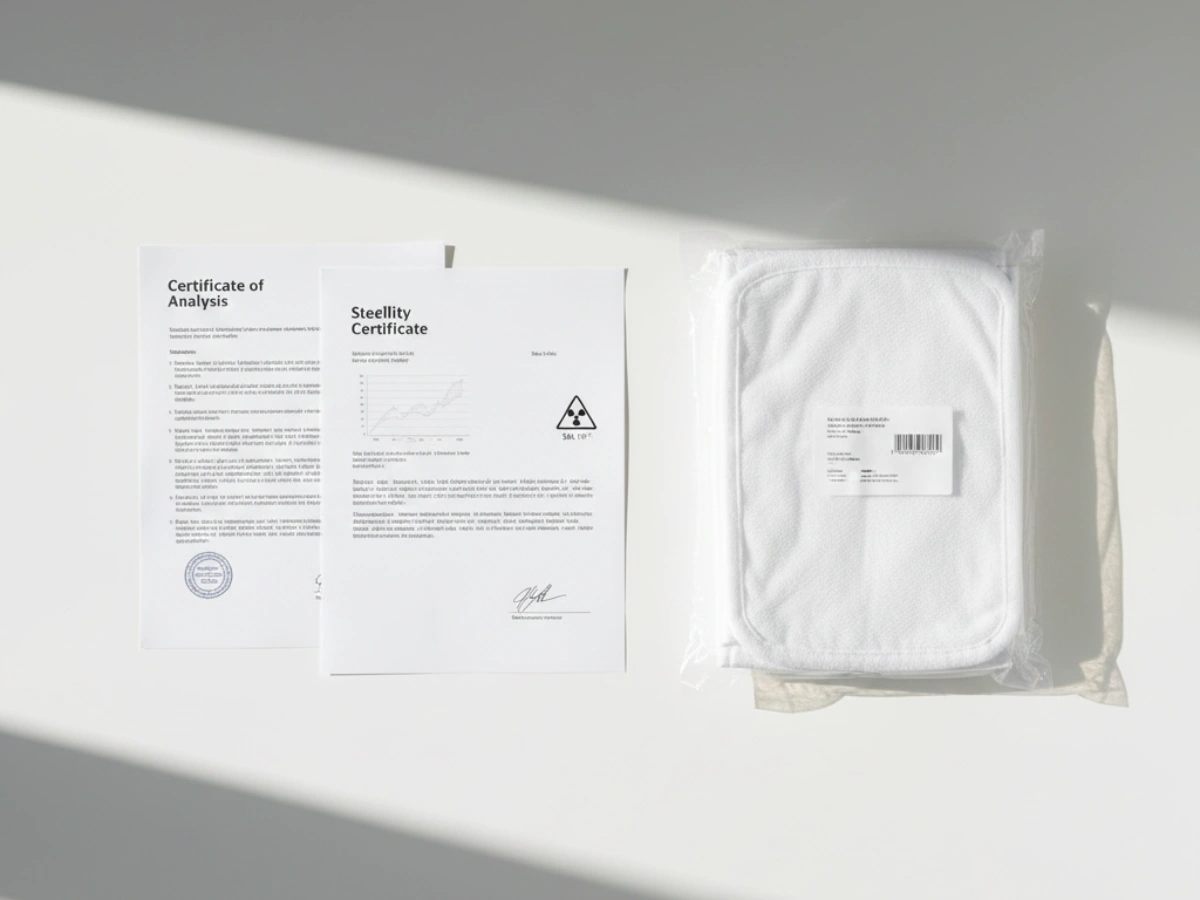
| Analysezertifikat (COA) | Erforderlich | Erforderlich | Standard für beides: bestätigt, dass das Produkt die angegebenen physikalischen Spezifikationen erfüllt (Gewicht, Abmessungen, Materialzusammensetzung). Gleiche Erwartungen, unabhängig von der Sterilität. |
| Sterilitätszertifikat | Nicht zutreffend | Kritisch | Dokument zur Sterilitätssicherung pro Charge mit Chargenkennung, Sterilisationsmethode, Sterilisationsdatum und SAL. Dies ist das Hauptdokument, das Prüfer für sterile Moppchargen anfordern, die in Zonen der Güteklasse A/B gelangen. Das Fehlen dieses Dokuments für ein als steril geltendes Produkt ist ein kritischer Befund. |
| Konformitätszertifikat (CoC) | Optional/häufig bereitgestellt | Erforderlich | Bestätigt, dass das Produkt den angegebenen Spezifikationen entspricht. Bei sterilen Produkten sollte das CoC auf den geltenden Sterilitätsstandard und die Sterilitätszertifikatskennung der Charge verweisen. |
| Aufzeichnungen zur Chargenrückverfolgbarkeit | Optional | Erforderlich | Verknüpfen der Moppcharge mit Rohstoffchargen, Produktionsdatum, Sterilisationszyklusdatum und Sterilitätstestcharge. Erforderlich für sterile Produkte, da ein Sterilitätsfehler zu Rückruf- oder Untersuchungszwecken auf die betroffene Produktionscharge zurückgeführt werden muss. |
| Bestrahlungszertifikat/Sterilisationsprozessprotokoll | Nicht zutreffend | Erforderlich | Dokumentiert die Parameter des Sterilisationsprozesses: Gammabestrahlungsdosis, Dosiskartierung und Zyklusvalidierung. Dies ist Teil des Nachweises, dass der Sterilisationsprozess für die jeweilige Charge korrekt durchgeführt wurde. |
| Aseptisches Transferprotokoll (einrichtungsseitig) | Nicht zutreffend | Von der Einrichtung erstellt | Der Lieferant stellt das sterile, doppelt verpackte Produkt zur Verfügung. Die Einrichtung ist für das dokumentierte, validierte aseptische Transferprotokoll verantwortlich, das den sterilen Mopp in den Reinraum einführt. Dieses Protokoll sollte Teil der Reinigungs-SOP der Einrichtung sein, nicht das Dokumentationspaket des Lieferanten. Während eines Audits erwartet der Inspektor, dass er beides sieht: die Sterilitätsdokumentation des Lieferanten UND das Transferprotokoll der Einrichtung. |
| Endotoxin-Testdaten | Normalerweise nicht anwendbar | Bedingt anwendbar | Erforderlich, wenn sterile Mopps bei der aseptischen Verarbeitung parenteraler Produkte verwendet werden, bei denen Endotoxingrenzwerte festgelegt sind. Nicht für alle sterilen Moppanwendungen erforderlich. Die Einrichtung sollte feststellen, ob der Produktkontaktweg in ihrem spezifischen Anwendungsfall Endotoxintestanforderungen auslöst. |
Eine strukturierte Checkliste für Käufer, die beschreibt, welche Unterlagen angefordert werden müssen und wie Lieferanteneinreichungen überprüft werden, finden Sie im Checkliste für Käufer von Reinraum-Mopp-Validierungsdokumenten. Eine ausführliche Erläuterung jedes Dokumenttyps, einschließlich COA-Inhalt und Überprüfung des Sterilitätszertifikats, finden Sie im Reinraum-Mopp-Validierungsdokumente und COA Führung.
Praktischer Hinweis für Beschaffungsteams: Wenn die Sterilitätsentscheidung einer Einrichtung für eine bestimmte Zone von unsteril auf steril übergeht, erweitert sich die Anforderung an die Lieferantendokumentation von etwa 2–3 Dokumenttypen auf 5–7 Dokumenttypen pro Charge. Dies hat direkte Auswirkungen auf die Arbeitsbelastung eingehender QA-Prüfungen, die Bearbeitungszeit für Chargenfreigaben und die Anforderungen an die Dokumentationsarchivierung. Einrichtungen, die einen Übergang von der Spezifikation für unsterile zu sterilen Mopps planen, sollten diesen Dokumentationsaufwand in ihre QS-Ressourcenplanung einbeziehen.
Die folgenden fünf Szenarien stellen häufig beobachtete Fehler bei der Herangehensweise von Einrichtungen an die Entscheidung zwischen sterilen und nicht sterilen Moppbezügen dar. Jedes enthält praktische Korrekturanleitungen.
Das Problem: Eine Einrichtung übernimmt eine Sterilitätsspezifikation – typischerweise „alle Mopps müssen steril sein“ – und wendet diese einheitlich von Klasse A bis Klasse D an, ohne eine Bewertung auf Zonenebene. Dies führt zu unnötigen Kosten in Stützbereichen, in denen unsterile Mopps mit entsprechenden Materialspezifikationen funktionell gleichwertig sind.
So korrigieren Sie: Führen Sie mithilfe des Entscheidungsbaums in Abschnitt 5 eine zonenweise Sterilitätsüberprüfung durch. Dokumentieren Sie für jede Zone die behördlichen Anforderungen, das Produktkontaktrisiko und die Kostengültigkeit der Sterilprämie. Wenn unsteril akzeptabel ist, implementieren Sie die Spezifikationsänderung mit einer Lieferantenbenachrichtigung, einer aktualisierten Reinigungs-SOP und einer Bedienerschulung. Die Kosteneinsparungen durch diese Neuschichtung sind typischerweise innerhalb des ersten Beschaffungszyklus messbar.
Das Problem: In der Bestellung sind „sterile, gammabestrahlte, doppelt verpackte Mopps“ für Klasse A angegeben, die Reinigungs-SOP der Einrichtung enthält jedoch kein validiertes, stufenweises aseptisches Transferprotokoll. Der äußere Beutel wird in einer Luftschleuse aus Material der Güteklasse D entfernt, der innere Beutel wird in einem Korridor der Güteklasse C geöffnet und der vermeintlich sterile Mopp wird ohne zusätzliche Transferschritte in die Güteklasse A transportiert. Der Sterilitätsanspruch wird gebrochen, lange bevor der Mopp seinen Einsatzort erreicht.
So korrigieren Sie: Eine Spezifikation für sterile Wischmopps ohne validiertes Übertragungsprotokoll ist eine Spezifikation ohne unterstützendes System. Führen Sie einen stufenweisen aseptischen Transfer durch: Entfernen des Außenbeutels an der Grenze der Güteklasse B/C, Entfernen des Innenbeutels innerhalb der Empfangszone unter aseptischen Bedingungen. Dokumentieren Sie das Protokoll in der Reinigungs-SOP, schulen Sie die Betreiber und beziehen Sie die Überprüfung des Übertragungsprotokolls in das interne Auditprogramm der Einrichtung ein. Die Sterilitätsdokumentation des Lieferanten beweist, dass der Mopp steril war, als er den Hersteller verließ. Das Transferprotokoll der Einrichtung beweist, dass es zum Zeitpunkt seiner Verwendung noch steril war.
Das Problem: Eine Einrichtung behandelt Klasse B als „sauberer als Klasse C“, verwendet jedoch keine sterilen Wischmopps, da „steril nur für Klasse A“ gilt. Dadurch wird die regulatorische und kontaminationskontrollierende Rolle der Klasse B als Schutzhintergrund für aseptische Vorgänge falsch eingeschätzt. Ein nicht steriler Mopp in einer Zone der Klasse B während der aktiven aseptischen Befüllung der Klasse A erzeugt eine mikrobiologische Quelle, die physisch an die aseptische Grenze angrenzt.
So korrigieren Sie: Überprüfen Sie die Nähe der jeweiligen Zone der Klasse B zu Betrieben der Klasse A. Wenn die Zone der Klasse B während der aseptischen Abfüllung aktiv als Hintergrund dient, wenden Sie dieselben sterilen Moppspezifikationen wie Klasse A an. Behalten Sie die unsterile Bewertung für eigenständige Zonen der Klasse B vor, bei denen die drei Bedingungen in Abschnitt 3 vollständig erfüllt sind. Dies ist für viele Einrichtungen die einflussreichste Anpassung der Sterilitätsentscheidung – durch die Aufrüstung von Mopps der Güteklasse B von unsteril auf steril wird eine Lücke bei der Kontaminationskontrolle an der Grenze des aseptischen Kerns eliminiert.
Das Problem: Eine Einrichtung konzentriert sich ausschließlich auf „steril oder unsteril“ als Moppspezifikationsentscheidung und behandelt die Sterilität als einzige Dimension der Moppauswahl. Wichtige Spezifikationsvariablen – Materialzusammensetzung (Polyester vs. Mikrofaser), Kantenversiegelungsmethode, Moppkopfgewicht, Verpackungskonfiguration und Zonenfarbcodierung – werden nicht bewertet, da die Frage der Sterilität die gesamte Spezifikationsdiskussion in Anspruch nahm.
So korrigieren Sie: Sterilität ist eine Dimension der Moppspezifikation, nicht die gesamte Spezifikation. Ein steriler Wischmopp mit einem für die Desinfektionschemie der Einrichtung ungeeigneten Material oder ein nicht steriler Wischmopp ohne versiegelte Kanten, der Partikelzahlen erzeugt, die über den Erwartungen der Zone liegen, sind beides Spezifikationsfehler. Zuerst sollte die Sterilitätsentscheidung getroffen werden (unter Verwendung dieses Rahmenwerks), dann sollten die verbleibenden Spezifikationsvariablen berücksichtigt werden: Material, Gewicht, Kantenversiegelung, Verpackung und Zonentrennungsmerkmale. In Abschnitt 8 finden Sie verwandte Themenressourcen zu diesen zusätzlichen Dimensionen.
Das Problem: Das QA-Team der Einrichtung erhält sterile Mopps mit der entsprechenden Lieferantendokumentation (COA, Sterilitätszertifikat usw.), es gibt jedoch keine internen Dokumentenaufzeichnungen, WARUM die Einrichtung steril für Klasse A/B und unsteril für Klasse C/D gewählt hat. Die Entscheidung besteht als ungeschriebener Konsens zwischen den Anlagen-, Technik- und Qualitätssicherungsteams, ohne formelle Begründung, Risikobewertungsreferenz oder Entscheidungsaufzeichnung. Bei einem Audit kann das Team nachweisen, dass die sterilen Mopps steril sind, kann jedoch nicht nachweisen, warum die Einrichtung entschieden hat, dass für die Zonen, in denen sie verwendet werden, Sterilität erforderlich ist.
So korrigieren Sie: Erstellen Sie ein einfaches Sterilitätsspezifikationsbegründungsdokument für das Reinigungsprogramm der Einrichtung. Notieren Sie für jede Zone: (1) den GMP-Grad, (2) die Sterilitätsentscheidung (steril oder unsteril), (3) die primären Kriterien, die die Entscheidung unterstützen (siehe die fünf Kriterien in Abschnitt 2), (4) das Datum der letzten Überprüfung und (5) die QS-Genehmigung. Dieses Dokument muss nicht lang sein – eine einseitige Matrix reicht normalerweise aus. Fügen Sie es in das Dokumentationspaket zur Reinigungsvalidierung ein, damit es bei internen und behördlichen Audits verfügbar ist. Eine dokumentierte Entscheidung ist vertretbar; Ein undokumentierter Konsens ist es nicht.
Dieser Leitfaden befasst sich mit der Sterilitätsdimension bei der Auswahl von Reinraum-Mopps. Die folgenden Ressourcen befassen sich mit ergänzenden Dimensionen, die sich mit der Sterilitätsentscheidung überschneiden:
In aseptischen Verarbeitungszonen der Klasse A/ISO 5, in denen offene Produkte, sterile Komponenten oder aseptische Verbindungen direkt der Umgebung ausgesetzt sind, ist ein steriler Reinraumwischer erforderlich. In diesen Zonen erstrecken sich die Anforderungen des EU-GMP-Anhangs 1 an die Kontaminationskontrolle auf alle Verbrauchsmaterialien, die in den aseptischen Kern gelangen, einschließlich Reinigungswerkzeugen. In Zonen der Klasse B, die als Hintergrund für aktive Operationen der Klasse A dienen, sollten standardmäßig auch sterile Mopps verwendet werden. Außerhalb dieser Szenarien sollte die Sterilität auf der Grundlage einer einrichtungsspezifischen Risikobewertung bewertet werden, die die Reinraumklassifizierung, die Nähe zum Produktkontakt, die Integrität des Übertragungspfads und die Kostenvalidität berücksichtigt.
In der Praxis hat der Unterschied drei Dimensionen. (1) Verfahren: Sterile Mopps wurden einem validierten Sterilisationsprozess unterzogen (typischerweise Gammabestrahlung mit SAL 10).-6); Bei unsterilen Mopps ist dies nicht der Fall. (2) Verpackung: Sterile Mopps sind in einer validierten Sterilbarriere-Verpackung doppelt verpackt, die für den stufenweisen aseptischen Transfer konzipiert ist; Nicht sterile Mopps werden zur sauberen Lagerung normalerweise einzeln oder in Großpackungen verpackt. (3) Dokumentation: Zu den sterilen Mopps gehört ein Sterilitätszertifikat pro Charge, Aufzeichnungen zur Chargenrückverfolgbarkeit und ein Bestrahlungszertifikat. Nicht sterile Mopps enthalten in der Regel ein Analysezertifikat und eine Materialzertifizierung. Der Moppkopf selbst – Stoff, Konstruktion, Gewicht, Kantenversiegelung – kann bei sterilen und nicht sterilen Versionen derselben Produktlinie identisch sein. Der Sterilitätsunterschied liegt in der Nachbearbeitung, Verpackung und Dokumentation, nicht im grundlegenden Design des Moppkopfes.
Im EU-GMP-Anhang 1 heißt es ausdrücklich, dass „Desinfektionsmittel und Reinigungsmittel, die in Bereichen der Klassen A und B verwendet werden, vor der Verwendung steril sein müssen.“ Eine explizite, gleichlautende Aussage zu Reinigungsutensilien wie Mopps wird nicht gemacht. Aufsichtsbehörden interpretieren das Prinzip der Kontaminationskontrolle jedoch so, dass es sich auch auf Reinigungswerkzeuge erstreckt: Ein nicht steriler Mopp, der mit sterilem Desinfektionsmittel gesättigt ist, führt an der Reinigungsstelle zu einer unkontrollierten mikrobiologischen Quelle. In der Praxis verwenden die meisten Einrichtungen standardmäßig sterile Wischmopps für Zonen der Klasse B, die als Hintergrund für Zonen der Klasse A dienen, um dieses Risiko der behördlichen Auslegung zu vermeiden. Eine nicht sterile Bewertung für eigenständige Zonen der Klasse B ist im Rahmen einer formellen Risikobewertung möglich (siehe Abschnitt 3, Bedingungsrahmen), sie sollte jedoch dokumentiert und von der Qualitätssicherung genehmigt werden.
Ja, und dies ist der empfohlene Ansatz für Einrichtungen mit mehreren Kategorien. Ein nach Klassen geschichtetes Programm – steril für Klasse A und damit verbundene Klasse B, unsteril für Klasse C und D – ist kosteneffizient und konform. Die betrieblichen Anforderungen für die Verwaltung gemischter Sterilitätsspezifikationen sind: (1) klar gekennzeichnete, physisch getrennte Lagerung für sterile und nicht sterile Bestände; (2) SOP-Dokumentation, die angibt, welche Zonen welchen Mopptyp erhalten; (3) Bedienerschulung, die die Begründung für den Sterilitätsunterschied beinhaltet, damit Bediener verstehen, warum Mopps der Klasse A steril sind und Mopps der Klasse C nicht; und (4) eine Überprüfung der Leitungsabstände, um sicherzustellen, dass in jeder Zone der richtige Mopptyp eingesetzt wird, bevor mit der Reinigung begonnen wird. Die betriebliche Komplexität der Verwaltung zweier Spezifikationen wird im Allgemeinen durch die Kosteneinsparungen aufgewogen, die dadurch entstehen, dass die Zonen der Klassen C und D nicht zu stark spezifiziert werden.
Sterile Reinraummopps haben gegenüber ihren nicht sterilen Gegenstücken einen höheren Preis. Die Prämie spiegelt die Kosten des Sterilisationsprozesses (Gammabestrahlung pro Charge), validierte Sterilbarriereverpackungen (Doppelverpackung mit Überprüfung der Siegelintegrität), Sterilitätstests und -dokumentation pro Charge sowie Haltbarkeitsmanagement wider. Der genaue prozentuale Aufschlag hängt vom Bestellvolumen, der Produktkonfiguration und dem Lieferanten ab. Im Allgemeinen gilt jedoch, dass der Sterilaufschlag in Zonen mit geringem Volumen und hohem Risiko (Klasse A/B) am meisten gerechtfertigt ist und in Zonen mit hohem Volumen und geringem Risiko (Klasse C/D) am wenigsten gerechtfertigt ist. Die Einrichtungen sollten die Sterilprämie im Vergleich zum Kontaminationskontrollvorteil in jeder Zone bewerten, anstatt sie als einheitlich angewendete Fixkosten zu behandeln. Einen detaillierten Kostendifferenzrahmen finden Sie in Abschnitt 4 dieses Artikels.
Ein steriler Mopp mit beschädigter Verpackung sollte nicht in Bereichen verwendet werden, in denen Sterilität erforderlich ist. Der Sterilitätsanspruch ist an die Unversehrtheit der Sterilbarriereverpackung gebunden. Wenn die Versiegelung des Außenbeutels oder des Innenbeutels gebrochen oder zerrissen ist oder Anzeichen von eindringender Feuchtigkeit aufweist, kann die Sterilität des Produkts nicht gewährleistet werden und der Mopp sollte entsorgt oder, sofern das Produkt dies zulässt, zur erneuten Sterilisation zurückgegeben werden. Aus diesem Grund sollten Einrichtungen eine visuelle Überprüfung der Verpackungsintegrität als Schritt in das Moppbereitstellungs- oder Transferprotokoll einbeziehen. Während eines Audits kann ein Inspektor einen Nachweis verlangen, dass die Verpackungsintegrität überprüft wird, bevor sterile Mopps in den Reinraum eingeführt werden. Eine dokumentierte, fotografierte Integritätsprüfung der Verpackung ist eine einfache Compliance-Maßnahme.
Die Verwendung eines unsterilen Mopps mit sterilem Desinfektionsmittel der Klasse B führt zu einer Inkonsistenz bei der Kontaminationskontrolle. Das Desinfektionsmittel ist zum Zeitpunkt der Anwendung steril; Der Moppkopf, der es liefert, ist es nicht. Durch den unsterilen Moppkopf können beim Reinigen Mikroorganismen eingeschleppt werden, wodurch möglicherweise die Sterilität des Desinfektionsmittels für den zu reinigenden Bereich zunichte gemacht wird. Aufsichtsbehörden, die das Reinigungsprogramm überprüfen, können dies als Lücke bei der Kontaminationskontrolle identifizieren: Wenn die Einrichtung festgestellt hat, dass ein steriles Desinfektionsmittel für Klasse B erforderlich ist, sollte das Reinigungsgerät, das es liefert, einem vergleichbaren Standard zur Kontaminationskontrolle entsprechen. Wenn die Einrichtung durch eine formelle Risikobewertung festgestellt hat, dass nicht sterile Mopps für eine bestimmte Zone der Klasse B akzeptabel sind (unter dem Drei-Bedingungs-Rahmen), dann steht die Verwendung von sterilem Desinfektionsmittel mit nicht sterilen Mopps in dieser spezifischen Zone intern im Einklang mit den Schlussfolgerungen der Risikobewertung. Der Schlüssel liegt darin, dass die Mopp-Sterilitätsspezifikation und die Desinfektionsmittel-Sterilitätsspezifikation mit derselben Kontaminationskontrolllogik für dieselbe Zone bewertet werden sollten.
Die Dokumentation sollte in einem angemessenen Verhältnis zum regulatorischen Risiko stehen, aber mindestens Folgendes umfassen: (1) Eine zonenweise Sterilitätsspezifikationsmatrix, in der jede GMP-klassifizierte Zone, die ihr zugewiesenen Sterilitätsanforderungen (steril oder nicht steril) und die primären Kriterien zur Unterstützung der Entscheidung aufgeführt sind. (2) Für Zonen, in denen nicht sterile Mopps verwendet werden, eine kurze Begründung mit Verweis auf die geltenden Kriterien (z. B. „Klasse D – unsteril: Produktkontaktrisiko ist gering, Grenzwerte für luftgetragene Partikel erfordern keine Sterilität, Kosten-Gültigkeitsbewertung unterstützt nicht sterile Spezifikation“). (3) Das Datum der letzten Überprüfung der Sterilitätsspezifikation und der QS-Genehmigung. (4) Verweis auf unterstützende Risikobewertungen, Umweltüberwachungsdaten oder Reinigungsvalidierungsstudien, die als Grundlage für die Entscheidungen dienten. (5) Aufnahme dieses Dokuments in das Dokumentationspaket zur Reinigungsvalidierung oder Kontaminationskontrollstrategie der Einrichtung. In der Regel reicht eine ein- bis zweiseitige Matrix mit einem kurzen Begründungsabschnitt aus. Der Zweck besteht darin, nachzuweisen, dass die Sterilitätsentscheidung bewusst und anhand dokumentierter Kriterien getroffen wurde und nicht aufgrund von Standard oder historischer Trägheit.
Unabhängig davon, ob Ihre Einrichtung endsterilisierte, doppelt verpackte Wischmopps für aseptische Kernzonen der Klassen A/B oder kostenoptimierte unsterile Optionen für Stützbereiche der Klassen C/D benötigt, ist die MIDPOSI White Cleanroom Mop-Serie sowohl in sterilen (gammabestrahlten) als auch unsterilen Konfigurationen mit Gewichten von 40 g, 55 g und 65 g erhältlich. Zu jeder sterilen Charge gehören ein Sterilitätszertifikat, ein Analysezertifikat und Aufzeichnungen zur Chargenrückverfolgbarkeit zur Unterstützung Ihres QA-Dokumentationspakets. Nicht sterile Konfigurationen umfassen ein Analysezertifikat und eine Materialzertifizierung. Kontaktieren Sie unser technisches Team, um die zonenspezifischen Sterilitätsanforderungen Ihrer Einrichtung zu besprechen und Produktproben zur internen Bewertung anzufordern.
MIDPOSI liefert Reinraum-Mopps in steriler und unsteriler Konfiguration an Pharma-, Biotech- und Medizingerätehersteller. Eine Dokumentation auf Chargenebene, einschließlich Analysezertifikat (COA) und, für sterile Konfigurationen, Sterilitätszertifikat ist auf Anfrage erhältlich. Kontaktieren Sie unser Team, um die zonenspezifischen Sterilitätsanforderungen Ihrer Einrichtung zu besprechen und Produktmuster zur internen Qualifizierung anzufordern.