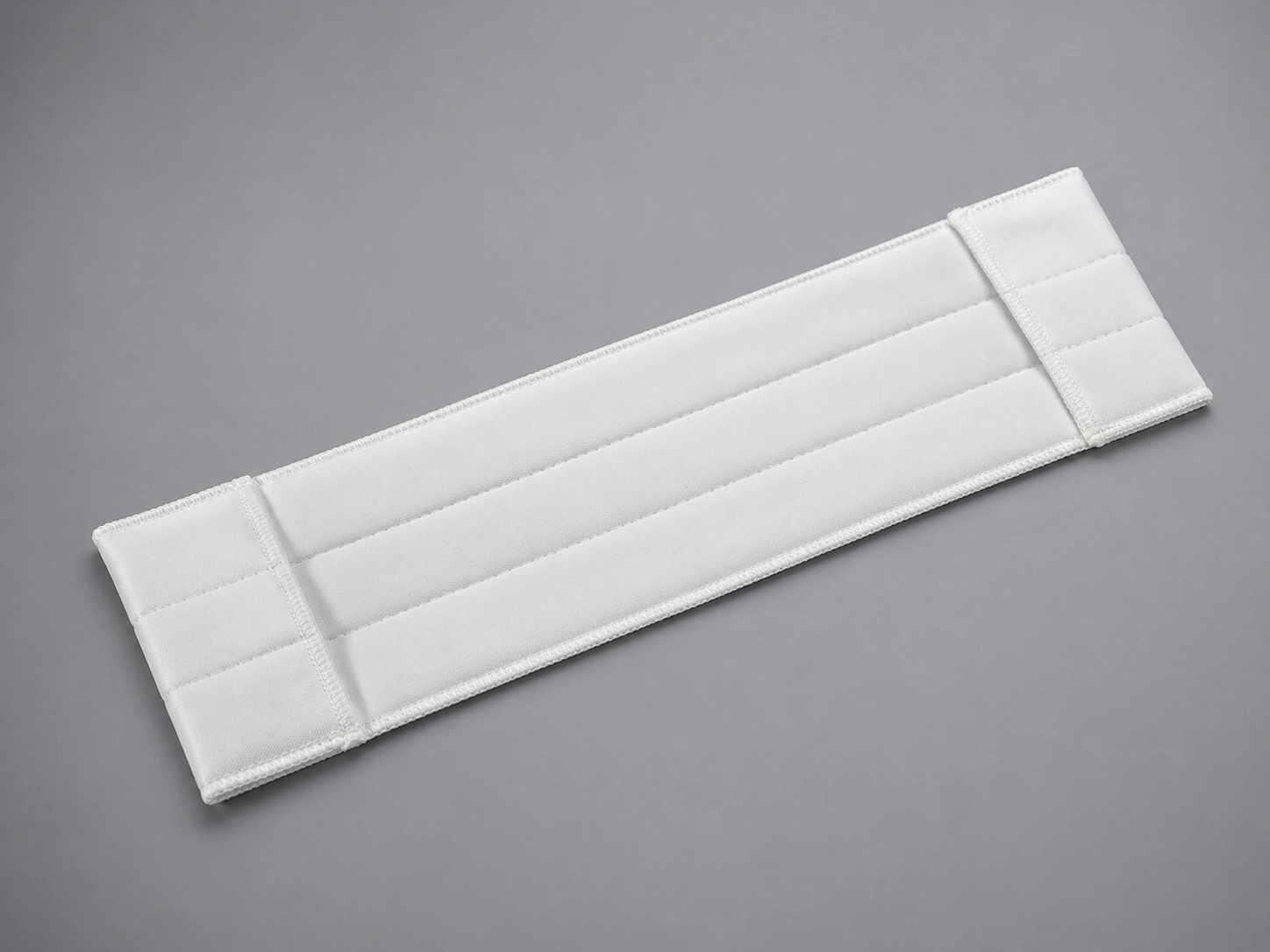
A cleanroom mop handle is a structural and ergonomic component of the система швабры для чистых помещений that connects the operator to the mop frame and head. Handle selection affects material compatibility with sterilization processes (autoclave, chemical disinfection), operator ergonomics during extended cleaning shifts, and mechanical integration with frames via attachment interfaces. The right handle choice depends on cleanroom grade, cleaning surface type (floor, wall, ceiling), frequency of use, and sterilization requirements — not simply on what ships with the frame by default.
In many procurement processes, the mop handle receives the least attention. Buyers and facility managers often accept whatever handle comes bundled with a frame, treating it as a commodity accessory rather than a specification decision.
This approach introduces several risks that are avoidable with deliberate handle selection:
A handle material not rated for autoclave or chemical disinfection may degrade, corrode, or release particles into the cleanroom environment after repeated sterilization cycles.
A threaded handle cannot connect to a clip-type frame. Without verifying the attachment interface, the handle and frame cannot form a functional system — resulting in wasted procurement or field improvisation.
An incorrect handle length, diameter, or grip design increases operator fatigue. In multi-shift GMP facilities, cumulative ergonomic strain can reduce cleaning consistency and raise the risk of incomplete coverage.
Handles with painted surfaces, plastic coatings, or unsealed joints may shed particles over time — a contamination source that undermines the low-particle design of the mop head itself.
Handle selection should be evaluated alongside cleanroom mop handle options as part of a structured procurement review. It is one dimension of the broader Схема оценки покупателя системы швабры для чистых помещений, and its impact extends to operator safety, cleaning consistency, and sterilization workflow compatibility.
The handle material determines more than weight and durability. It affects autoclave compatibility, chemical resistance, particle shedding characteristics, and long-term cost profile. Three material families dominate cleanroom mop handle design.
| Материал | Масса | Autoclave Compatibility | Химическая стойкость | Particle Shedding Risk | Typical Cost (Relative) |
|---|---|---|---|---|---|
| СС 304 | Heavier | Yes (standard autoclave cycles) | High — resistant to most cleanroom disinfectants | Low — no coatings to degrade | Выше |
| СС 316 | Heavier | Yes (superior pitting resistance) | Higher — enhanced chloride/pitting resistance | Low — no coatings to degrade | Самый высокий |
| Aluminum (anodized) | Lighter | Not recommended — anodized layer may degrade | Moderate — sensitive to aggressive alkaline/acidic cleaners | Moderate — surface oxide can release particles if scratched | Ниже |
| Composite / Fiberglass | Самый легкий | Limited — depends on resin system (verify with supplier) | Moderate — depends on resin and surface finish | Moderate — fiber ends may release if surface is damaged | Ниже |
Note: This table describes general material characteristics. Specific handle models should be evaluated through supplier documentation and, where practical, in-facility compatibility testing.
Stainless steel handles are the reference choice for cleanrooms where sterilization — particularly autoclave — is part of the cleaning tool workflow. The distinction between SS 304 and SS 316 matters for specific use cases.
СС 304 is the workhorse stainless grade for cleanroom mop handles. It provides adequate corrosion resistance for most GMP cleaning environments where handles are exposed to standard cleanroom disinfectants (quaternary ammonium, hydrogen peroxide, isopropyl alcohol). It withstands repeated autoclave sterilization cycles at 121 degrees C without structural degradation, provided proper passivation is maintained.
СС 316 adds molybdenum to the alloy, which improves resistance to pitting and crevice corrosion — particularly relevant in environments where chloride-containing disinfectants or saline solutions are used. Facilities in coastal locations (where ambient humidity carries salt) or those that use aggressive chemical disinfection protocols may evaluate SS 316 as a precaution against long-term pitting. The material cost differential is noticeable but may be justified by handle longevity in demanding environments.
Selection guidance: For most GMP Grade C/D cleanrooms with standard disinfectant rotation, SS 304 is typically sufficient. For Grade A/B areas with aggressive sporicidal agents, or for facilities planning long asset life (>3 years), SS 316 may be evaluated. The decision should be informed by actual cleaning chemical compatibility data rather than material grade alone.
Aluminum handles offer a significant weight advantage over stainless steel — typically 35-50% lighter — which can reduce operator fatigue during extended cleaning sessions. This is particularly relevant for wall and ceiling cleaning applications where the handle is held at shoulder height or above.
However, aluminum introduces material-specific limitations that must be evaluated:
When aluminum may be evaluated: For non-autoclaved workflows in Grade C/D areas where chemical disinfection (not thermal sterilization) is the cleaning protocol, and where the weight reduction offers a meaningful ergonomic benefit — particularly for overhead or extended-reach applications.
Composite and fiberglass handles occupy a niche position in cleanroom mop handle selection. They offer the lightest weight among common handle materials and do not conduct heat — which can be an advantage when handles are removed from autoclaves and must be handled immediately.
The primary limitations relate to sterilization compatibility and long-term structural integrity:
Typical application scope: Composite handles may be evaluated for non-sterile, chemically disinfected workflows in lower-grade cleanrooms (Grade D / ISO 8) where weight reduction is prioritized and autoclave cycling is not required. They are not a default choice for GMP Grade A/B sterile manufacturing areas unless supplier documentation specifically supports autoclave compatibility.
Handle length directly affects cleaning coverage, operator posture, and storage practicality. The decision between fixed-length and telescoping (adjustable) handles depends on the range of cleaning surfaces and the facility layout.
Limitation: One length per application. Facilities cleaning both floors and ceilings may need different handles for each task — increasing inventory and change-over complexity.
Limitation: The locking mechanism introduces a potential particle generation point and a crevice that requires cleaning validation. Mechanism failure during use can interrupt cleaning workflows.
| Приложение | Recommended Length Range | Handle Type | Обоснование |
|---|---|---|---|
| Floor cleaning — standard height operators | 1.3 m – 1.5 m | Fixed or Telescoping | Standard ergonomic reach; fixed length is sufficient for single-operator consistency |
| Floor cleaning — multi-operator shifts | 1.3 m – 1.7 m (adjustable) | Telescoping | Accommodates operator height variation across shifts without stocking multiple fixed lengths |
| Wall cleaning — lower half (0-2 m) | 1.3 m – 1.5 m | Fixed | Controlled reach; fixed length maintains consistent pressure and technique |
| Wall cleaning — upper half (2-3 m) | 1.8 m – 2.5 m | Telescoping | Extended reach required; telescoping allows length adjustment to the specific wall section |
| Ceiling cleaning | 2.0 m – 3.0 m | Telescoping | Maximum reach required; overhead ergonomics demand the lightest possible handle material |
| Under-equipment / confined space | 0.8 m – 1.0 m (short) | Fixed (short) | Short handle needed for clearance under equipment; fixed length avoids mechanism snagging |
Note: Length ranges are practical guidance based on typical cleanroom layouts and operator ergonomics. Exact handle length should be validated through in-facility trial with representative operators.
The attachment interface is the mechanical connection point between the handle and the mop frame. An incompatible interface means the handle and frame cannot be used together — a procurement error that is easily avoided by specifying the connector type during evaluation.
Three primary attachment interface types are common in cleanroom mop systems. Each has distinct implications for change-out speed, contamination risk, and mechanical reliability.
| Interface Type | Connection Mechanism | Скорость замены | Риск загрязнения | Mechanical Reliability | Типичное использование |
|---|---|---|---|---|---|
| Быстрое подключение | Spring-loaded ball bearing or push-button lock into a receiving socket on the frame | Fast — single-handed operation | Low — sealed connection point; minimal crevices | High — fewer wear-prone threads or clips | Multi-task facilities; frequent frame change-outs; GMP environments with cleaning SOP time targets |
| Threaded (Screw-Type) | Male thread on handle screws into female thread on frame connector | Slower — requires rotation and two-handed alignment | Moderate — threads can trap residue; requires cleaning validation | Moderate — threads can cross or strip under repeated use | Stable, low change-out frequency applications; where frame stays on the handle for an entire shift |
| Clip / Hook-Type | Spring-loaded clip or hook on the handle engages a bar or loop on the frame | Fast — similar to quick-connect | Moderate — clip mechanism may have exposed spring elements | Moderate — spring fatigue can reduce clamping force over time | Light-duty applications; lower-grade cleanrooms; non-sterile workflows |
Note: Interface performance characteristics are general observations. Specific models should be evaluated through supplier documentation and, where possible, hands-on testing under representative usage conditions.
Quick-connect interfaces are the reference choice for GMP facilities where frames are changed between cleaning zones to prevent cross-contamination. The single-handed operation reduces the time the handle spends disconnected, and the sealed design minimizes crevices where cleaning chemical residue or particles could accumulate.
Threaded interfaces are mechanically straightforward and widely available, but their slower change-out speed and thread-cleaning requirements make them less suitable for high-frequency change-over workflows. They may be evaluated when the handle-frame combination is expected to remain assembled for an entire shift or longer.
Clip-type interfaces offer quick change-out but introduce a spring mechanism that can be a particle source if not enclosed. They are more common in lower-grade cleanroom applications where the cleaning protocol is less demanding and the sterilization requirement does not involve autoclave.
Procurement note: Before ordering handles and frames from different suppliers, confirm that the connector types are mechanically compatible. A quick-connect handle from Supplier A is unlikely to fit a threaded frame from Supplier B. System compatibility should be verified at the specification stage, not discovered at installation.
Handle ergonomics affect cleaning consistency more than many facility managers realize. An operator experiencing grip fatigue or wrist strain mid-shift will apply less controlled pressure, may rush stroke patterns, and is more likely to miss coverage areas. In GMP environments where cleaning SOPs specify technique with documented compliance expectations, ergonomic handicaps are a quality risk.
The grip is the operator’s primary contact point. Grip materials commonly found in cleanroom mop handles include:
| Grip Material | Characteristics | Cleanroom Considerations |
|---|---|---|
| Textured stainless steel (knurled or brushed) | Durable, autoclavable, no degradation over time | Can feel cold; may be less comfortable during extended use; no particle shedding from grip material breakdown |
| Silicone sleeve / overmold | Soft, non-slip, comfortable for extended use | Must be verified for autoclave compatibility; silicone may absorb cleaning chemicals over time; check for particle shedding with age |
| EPDM / synthetic rubber grip | Good grip in wet conditions; impact-absorbing | Autoclave tolerance varies by formulation — verify with supplier; some grades may off-gas or degrade under repeated chemical exposure |
| Bare composite / fiberglass | Lightweight; may have ribbed or textured surface | Grip texture is integral to the material — no separate grip to degrade; surface roughness may trap cleaning solution residue |
Handle diameter is an often-overlooked ergonomic factor. A diameter that is too narrow increases grip force requirement; too wide reduces control precision. Standard cleanroom mop handles typically range from 22 mm to 32 mm in diameter.
Handles intended for multi-position use (floor, wall, ceiling) may include a secondary grip positioned lower on the shaft. This allows operators to apply controlled pressure closer to the frame — useful for wall cleaning where the handle angle differs from floor mopping. Telescoping handles with a secondary grip should be evaluated for whether the grip position remains accessible at all extension lengths.
The following table synthesizes the material, length, attachment, and ergonomic dimensions into application-specific handle recommendations. Facilities may use this as a starting point for procurement specification, adapting to their specific cleanroom grade and cleaning workflow.
| Приложение | Материал ручки | Length Type | Attachment Type | Ergonomic Notes | Совместимость по стерилизации |
|---|---|---|---|---|---|
| Grade A/B — floor cleaning | СС 316 | Fixed (1.4 m) | Быстрое подключение | Knurled SS grip — autoclavable, no degradation | Autoclave (121 degrees C) |
| Grade C/D — floor cleaning | SS 304 or Anodized Aluminum | Fixed or Telescoping | Быстрое подключение | Silicone grip acceptable if chemical-resistant | Chemical disinfection; autoclave optional |
| Wall cleaning (all grades) | SS 304 or Aluminum (lightweight) | Telescoping (1.0-2.5 m) | Быстрое подключение | Secondary grip recommended; aluminum preferred for overhead weight | Match handle material to grade requirement |
| Ceiling cleaning | Aluminum (lightest practical) or Composite | Telescoping (1.5-3.0 m) | Быстрое подключение | Lightest possible handle; secondary grip essential; consider operator rotation | Typically chemical disinfection; verify autoclave if required |
| Multi-zone / multi-operator | СС 304 | Telescoping | Быстрое подключение | Adjustable to operator height; consistent connector across zones simplifies SOP | Chemical disinfection and autoclave |
| Under-equipment / confined | СС 304 | Fixed (short — 0.8-1.0 m) | Quick-Connect or Threaded | Short handle; no protruding locking mechanism to snag | Match grade requirement |
Note: This table provides general application guidance. Specific facility requirements — including Выбор класса швабры для чистых помещений GMP, chemical compatibility data, and operator feedback — should inform final handle specification. In-facility trial is recommended before committing to a single handle type for the entire facility.
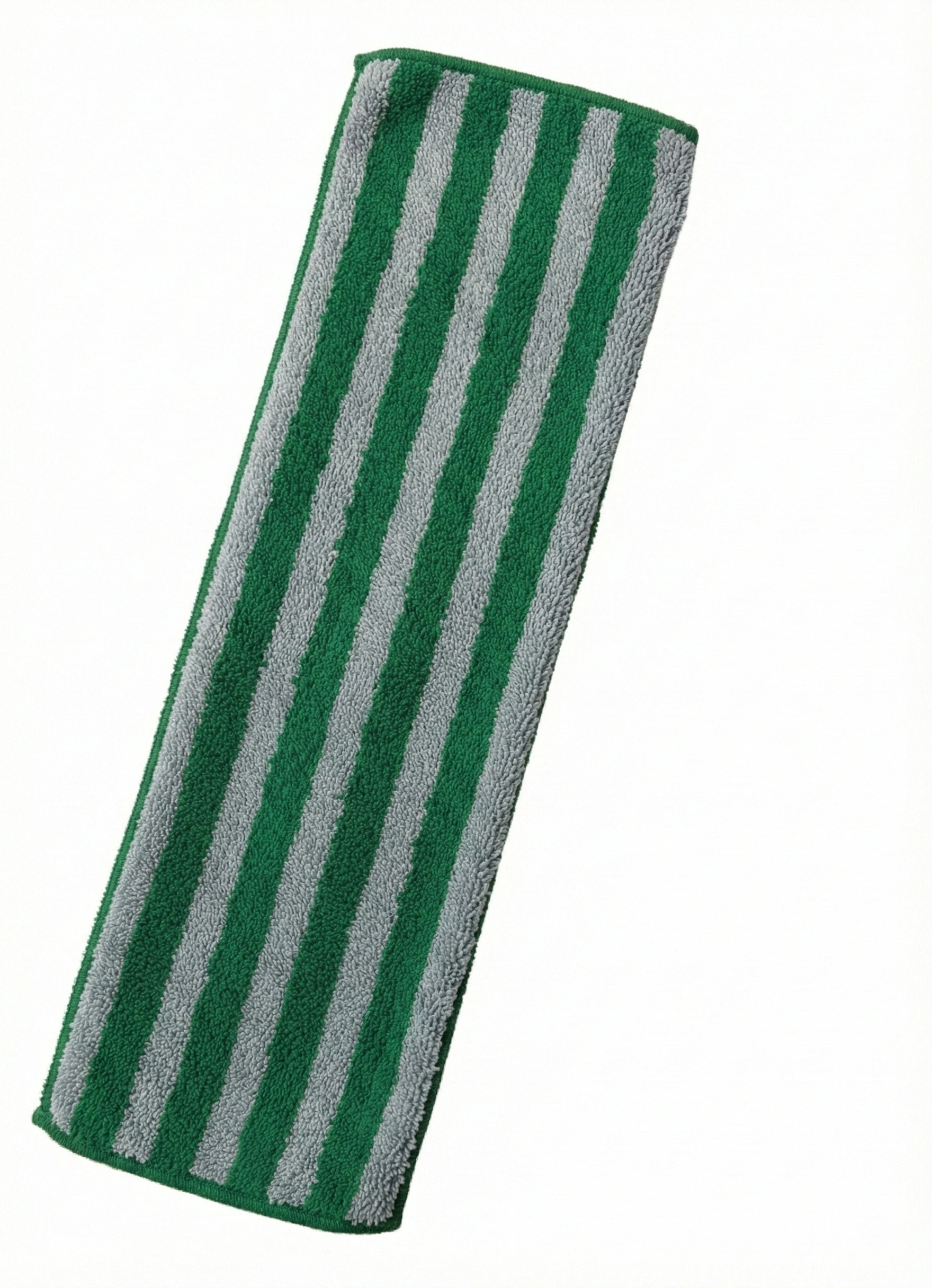
The handle does not exist in isolation. It is one third of the handle-frame-head system, and its attachment interface type determines which frames it can connect to — and, by extension, which mop heads can be used. Understanding this chain of compatibility is essential for procurement planning.
Compatibility chain: Handle connector type → limits compatible frame types → frames are designed for specific mop head attachment styles (pocket, Velcro, clip). A handle selection made without considering this chain can result in an unusable system, even if each individual component is appropriate for the cleaning task.
The integration between cleanroom mop head, frame, and handle components is a well-documented factor in cleaning system performance. A handle with an incompatible connector cannot be field-modified to fit a different frame type — the only resolution is replacement.
Stainless steel — specifically SS 316 — is the most commonly evaluated handle material for GMP Grade A/B cleanrooms. Its resistance to pitting and crevice corrosion supports repeated autoclave sterilization at 121 degrees C, and it has no surface coatings that can degrade and release particles. SS 304 may be sufficient for facilities with less aggressive chemical disinfection protocols. Aluminum and composite handles are generally not recommended for Grade A/B unless supplier documentation specifically confirms autoclave compatibility and particle-shedding test results.
No. A telescoping handle can only connect to frames that have a matching attachment interface type. The telescoping mechanism affects only handle length — it does not change the connector type. A telescoping handle with a quick-connect interface requires a frame with a quick-connect receiver. A telescoping handle with a threaded interface requires a frame with a threaded socket. Always verify connector compatibility before procurement, regardless of whether the handle is fixed-length or telescoping.
There is no universal replacement interval for cleanroom mop handles. Replacement should be triggered by visual inspection findings rather than calendar time. Indicators for replacement include: visible corrosion or pitting on stainless steel surfaces, degraded or peeling anodized coating on aluminum handles, locking mechanism failure on telescoping handles, connector wear that results in loose frame attachment, grip material degradation (cracking, softening, or particle release), and any handle damage that creates crevices where cleaning solution or contaminants can accumulate. Handles used in GMP Grade A/B areas should be subject to periodic inspection as part of the cleaning tool maintenance program.
Aluminum handles are generally not recommended for autoclave sterilization. The thermal expansion mismatch between aluminum and its anodized surface layer can cause micro-cracking under repeated autoclave cycles, compromising the protective coating and exposing raw aluminum to oxidation and particle release. If a facility’s cleaning protocol requires autoclave sterilization of handles, stainless steel (SS 304 or SS 316) is the more appropriate material. Aluminum handles may be evaluated for workflows relying on chemical disinfection without thermal sterilization.
A telescoping handle in the 1.0 m to 2.5 m range is typically evaluated for combined floor and wall cleaning applications. The collapsed length serves floor cleaning at standard operator height (approximately 1.3-1.5 m), while the extended length reaches upper wall sections (2.0-2.5 m). Facilities performing ceiling cleaning in addition to floors and walls may require a telescoping handle with a wider range (up to 3.0 m extended). Using one telescoping handle for multiple surfaces reduces inventory complexity compared to stocking separate fixed-length handles for each application.
Handle grip material affects cleanroom compatibility through three pathways: particle shedding (degrading grip materials can release particles into the cleanroom), chemical compatibility (grip materials may absorb, react with, or be degraded by cleanroom disinfectants), and autoclave tolerance (some grip materials cannot withstand repeated thermal sterilization cycles). For GMP Grade A/B areas, bare stainless steel grips (knurled or brushed) are the lowest-risk option because they have no material that can degrade. Silicone or synthetic rubber grips may be evaluated for lower-grade areas where autoclave is not required, but their long-term compatibility with the specific facility’s cleaning chemical regimen should be confirmed.
Yes — if the frames share the same attachment interface type as the handle. For example, a quick-connect handle can be used with any frame that has a compatible quick-connect receiver, regardless of whether those frames are designed for pocket mop heads or clip-on heads. However, the frame-to-head compatibility must also be verified independently. Using a single handle across multiple frame types is a practical strategy for reducing handle inventory — but only when the connector type is standardized across the facility’s frame inventory.
Procurement managers evaluating cleanroom mop handle suppliers should consider: (a) material composition documentation — whether the supplier provides clear material grade specifications (SS 304 vs 316, aluminum alloy, composite type) rather than generic descriptions; (b) connector type specification — whether the attachment interface is explicitly documented and compatibility with standard frame types is confirmed; (c) sterilization compatibility data — whether the supplier provides documentation on autoclave cycle tolerance, chemical resistance, and any known limitations; (d) ergonomic design rationale — whether grip diameter, weight, and secondary grip options are designed for extended cleanroom use; and (e) system-level thinking — whether the supplier can discuss handle compatibility with frames and heads rather than treating the handle as an isolated component.
Handle material, length, and attachment type are specification decisions — not afterthoughts. Speak with MIDPOSI to discuss handle configurations that match your cleanroom grade, cleaning surfaces, and sterilization workflow.
White Cleanroom Mop Series — available in 40g, 55g, and 65g configurations in sterile and non-sterile options. Designed for structured cleanroom cleaning programs in GMP and ISO-controlled environments.