Ein Reinraummopp ist kein eigenständiges Produkt. Es handelt sich um eine Baugruppe aus drei voneinander abhängigen Komponenten – Kopf, Rahmen und Griff –, bei der Maßtoleranzen, Materialkompatibilitäten und Befestigungsmechanismen als aufeinander abgestimmter Satz konstruiert werden müssen. Wenn eine Komponente unabhängig und ohne Überprüfung beschafft wird, sind die Folgen nicht nur Unannehmlichkeiten: Es handelt sich um Kontaminationsereignisse, SOP-Abweichungen und Prüfergebnisse, die durch Beschaffung auf Systemebene vollständig vermeidbar sind.
Ein Reinraum-Moppsystem ist wichtig, weil Die drei Komponenten – Kopf, Rahmen und Griff – sind strukturell voneinander abhängig. Der Moppkopf wird am Rahmen befestigt. Der Rahmen wird mit dem Griff verbunden. Der Bediener drückt den Griff, wodurch die Kraft über den Rahmen auf den Moppkopf gegen den Boden übertragen wird. Eine Nichtübereinstimmung der Abmessungen oder des Materials an einem dieser beiden Grenzflächen verändert das Reinigungsergebnis: ungleichmäßiger Bodendruck, unvollständige Abdeckung, Ablösung von Komponenten oder Partikelbildung durch inkompatiblen Materialkontakt. Der Systemansatz garantiert, dass alle drei Komponenten wie vorgesehen zusammenarbeiten. Der Standalone-Ansatz verlagert diese Überprüfungslast auf den Käufer – und auf den Betreiber, der die Nichtübereinstimmung während der Nutzung entdeckt.
| Komponentenpaar | Was passiert bei Nichtübereinstimmung? | Operative Auswirkungen |
|---|---|---|
| Kopf → Rahmen | Tasche zu flach → Kopf rutscht beim Wischen ab. Rahmen zu schmal → unvollständiger Bodenkontakt, ungleichmäßiger Druck. Rahmen zu breit → Tasche dehnt sich, Risse an den Nähten. | Kontaminationsereignis (Kopf löst sich während der Reinigung). Reinigungsinkonsistenz (verpasste Bereiche). Vorzeitiger Kopfaustausch (zerrissene Taschen). |
| Rahmen → Handhaben | Faden stimmt nicht überein → Griff lässt sich nicht befestigen. Schnellkupplung mit falschem Empfänger → unvollständige Verriegelung, Griff löst sich unter Zugkraft. Materialunverträglichkeit (Edelstahlgriff + Aluminiumrahmen) → galvanische Korrosion mit bestimmten Desinfektionsmitteln. | Sicherheitsrisiko für den Bediener (Ablösung des Griffs). Das Werkzeug ist unbrauchbar, bis der richtige Stecker gefunden wurde. Partikelbildung durch korrodierte Kontaktflächen. |
| Handhaben → Operator → Rahmen → Kopf | Griff zu kurz → Bediener beugt sich, wodurch die Hubkonsistenz beeinträchtigt wird. Griffwinkel nicht mit Rahmengelenk kompatibel → Wischdruck ungleichmäßig. Kombinierter Effekt: Ermüdung des Bedieners → Reinigungsqualität nimmt im Laufe der Schicht ab. | Inkonsistenz bei der Reinigungsvalidierung (verschiedene Bediener erzielen mit demselben Werkzeug unterschiedliche Ergebnisse). Audit-Ergebnis: „Die Wirksamkeit des Reinigungsverfahrens wurde unter tatsächlichen Bedienbedingungen nicht nachgewiesen.“ |
Das Mitnehmen: Komponentenkompatibilität ist keine Bequemlichkeit, sondern eine Variable zur Kontaminationskontrolle. Einen umfassenderen Vergleich der Beschaffungsansätze auf Systemebene und auf Komponentenebene finden Sie im Reinraum-Moppsystem vs. Flachmopp im Vergleich. Einen grundlegenden Überblick darüber, was ein Moppsystem ausmacht, finden Sie im Übersicht über Reinraum-Moppsysteme.
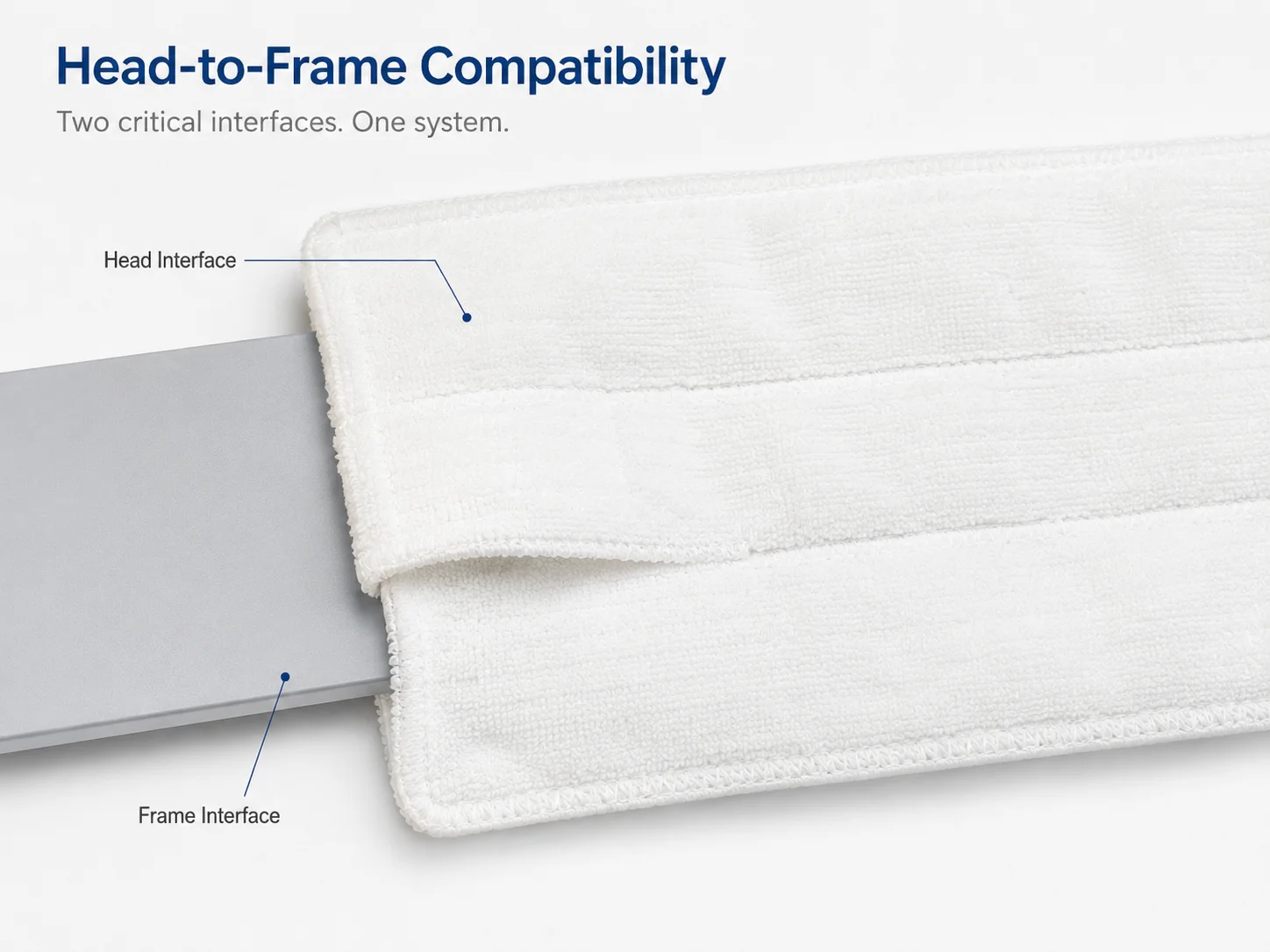
Um zu verstehen, warum das gesamte System wichtig ist, muss man verstehen, was an jedem Schnittstellenpunkt passiert – der physischen Grenze, an der zwei Komponenten aufeinandertreffen und als eine Einheit funktionieren müssen. Die folgende Aufschlüsselung stellt die drei Komponenten und die beiden kritischen Schnittstellen zwischen ihnen dar.
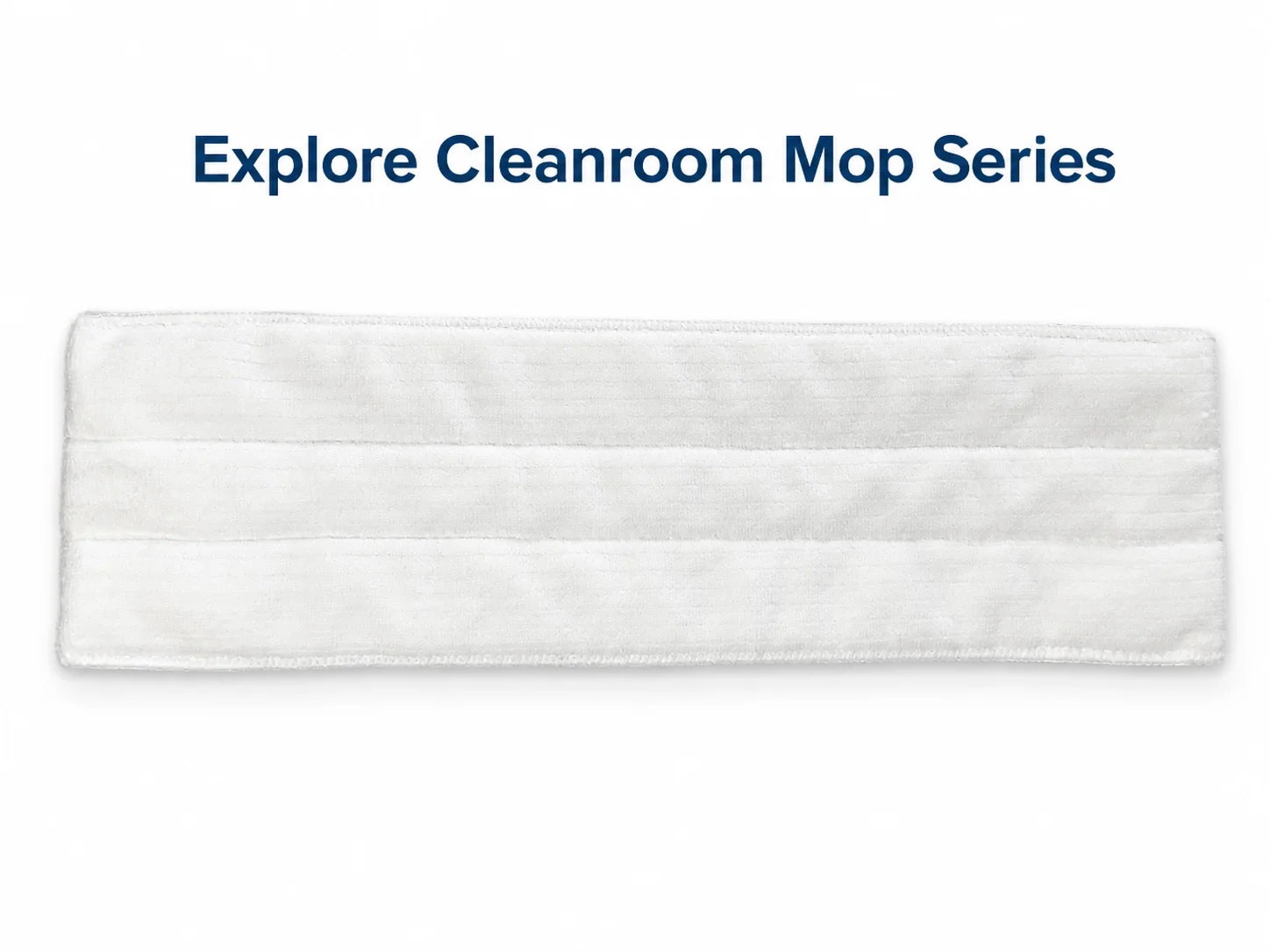
Die textile Reinigungsfläche. Die Taschenabmessungen (Breite und Tiefe), die Stärke des Taschenmaterials und das Stoffgewicht bestimmen, welche Rahmenbreiten es aufnehmen kann, wie viel Kraft die Tasche bei Push-Pull-Bewegungen aushält und wie das Gewicht des Kopfes mit der Steifigkeit des Rahmens zusammenwirkt, um einen gleichmäßigen Bodenkontaktdruck zu erzeugen.
Schlüsselschnittstelle: Taschenöffnung ↔ Rahmenbreite. Die Tasche muss breit genug sein, um den Rahmen ohne Krafteinwirkung aufzunehmen, tief genug, um den Rahmen bei Richtungsänderungen sicher zu halten, und an der Naht stark genug, um einem Reißen bei wiederholtem Gebrauch standzuhalten.
Informationen zu Kopfmaterial, Gewicht und Sterilitätsoptionen finden Sie im Arten und Auswahl von Reinraum-Moppköpfen Seite. Informationen zur gewichtsspezifischen Auswahl finden Sie im Leitfaden zum Gewicht des Reinraum-Moppkopfes.
Die starre Struktur, die den Moppkopf flach auf dem Boden hält. Rahmenbreite, Material (Edelstahl, Aluminium, Verbundwerkstoff), Gewicht und Griffverbindungstyp bestimmen, welche Köpfe und Griffe kompatibel sind – und wie die Reinigungskraft über die Oberfläche des Moppkopfes verteilt wird.
Wichtige Schnittstellen: Frame width ↔ Head pocket (Interface A). Griffaufnahme ↔ Griffanschluss (Schnittstelle B). Der Rahmen ist das zentrale Bauteil – er muss auf der einen Seite zum Kopf und auf der anderen Seite zum Griff passen. Ein Rahmen von Lieferant A mit einem Kopf von Lieferant B und einem Griff von Lieferant C weist zwei potenzielle Nichtübereinstimmungspunkte auf.
Informationen zu Rahmenmaterial, Breite und Befestigungstypoptionen finden Sie im Typen von Reinraum-Mopphaltern Seite.
Die Bedienoberfläche. Grifflänge, Material, Gewicht, Griffdesign und Verbindungstyp bestimmen den Komfort für den Bediener, die Konsistenz des Wischdrucks und die Wechselgeschwindigkeit. Der Griff ist kein allgemeiner Stock – seine Spezifikationen interagieren mit dem Rahmenanschluss und der Biomechanik des Bedieners.
Schlüsselschnittstelle: Griffverbinder ↔ Rahmenaufnahme (Schnittstelle B). Gewindeanschlüsse müssen zur Gewindesteigung und zum Durchmesser passen. Schnellverbindungssysteme müssen das gleiche Verriegelungsmechanismusdesign aufweisen. Ein Griff, der sicher auf der Werkbank befestigt wird, sich aber unter der Zugkraft beim Wischen löst, ist ein Kompatibilitätsfehler – kein Produktfehler.
Informationen zu Griffmaterial, Länge und Anschlussoptionen finden Sie im Auswahl der Reinraum-Moppgriffe Seite.

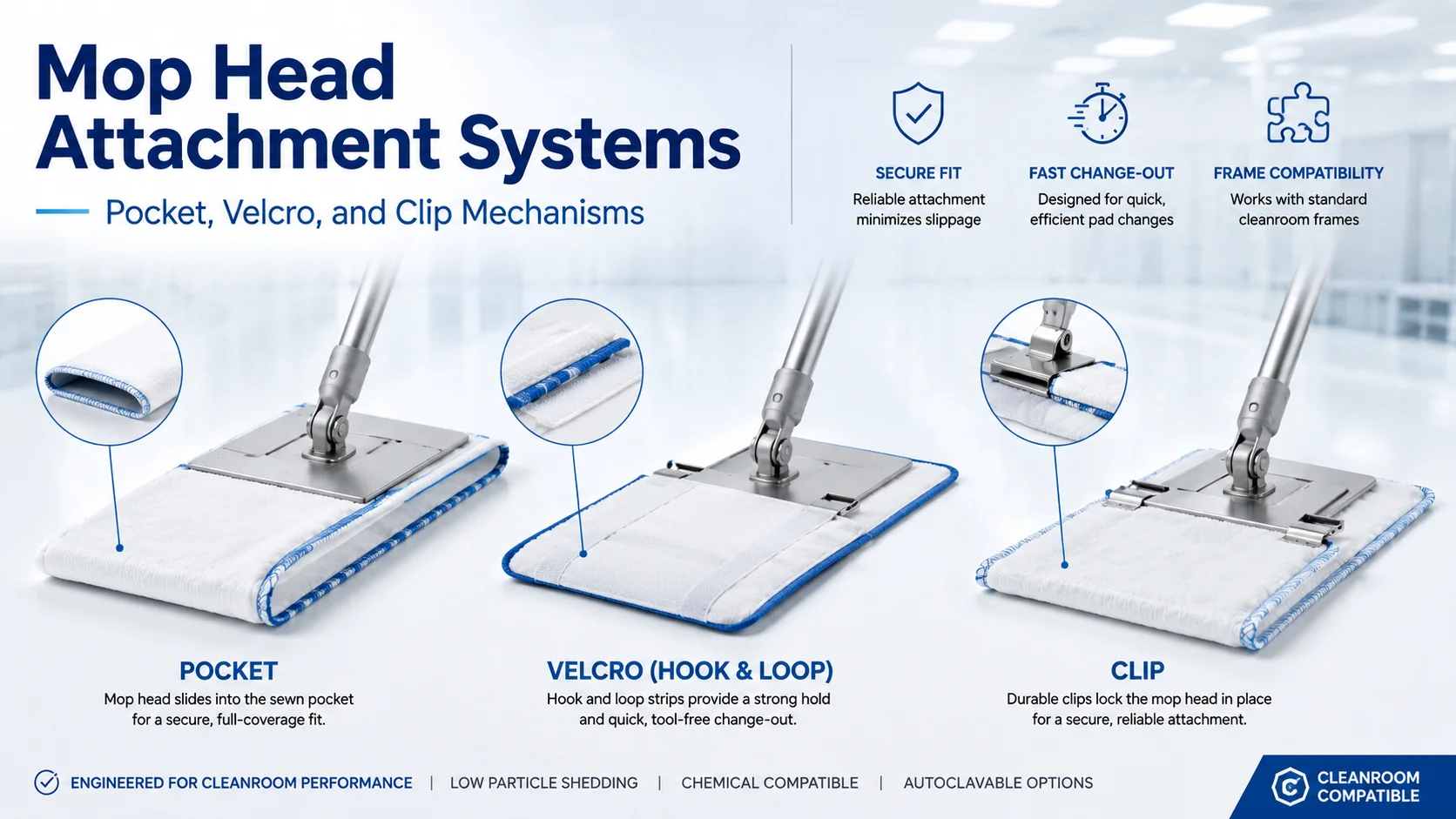
Von den beiden Schnittstellenpunkten in einem Moppsystem ist die Kopf-zu-Rahmen-Schnittstelle der Ort, an dem die meisten Komponentenfehlanpassungen auftreten. Der Grund ist struktureller Natur: Der Kopf ist ein Textilprodukt mit Toleranzbereichen, die durch die Stoffkonstruktion und Nähte bestimmt werden, während der Rahmen ein starres Produkt mit engen Maßtoleranzen ist. Wenn diese beiden Toleranzbänder nicht übereinstimmen, ist das Ergebnis entweder ein Verrutschen des Kopfes während des Gebrauchs oder ein Rahmen, der nicht vollständig am Kopf anliegt.
Die Wischkopftasche ist die Stoffhülle, in die der Rahmen eingesetzt wird. Zwei Taschenmaße bestimmen die Rahmenkompatibilität:
| Dimension | Was es steuert | Konsequenz der Nichtübereinstimmung |
|---|---|---|
| Taschenbreite (seitliche Öffnung) | Ob sich der Rahmen überhaupt einführen lässt und wie viel seitliche Bewegung der Kopf nach der Montage hat | Zu schmal: Rahmen kann nicht eingefügt werden. Zu weit: Der Kopf verschiebt sich bei Richtungsänderungen seitlich, was zu ungleichmäßigem Bodenkontakt und beschleunigtem Verschleiß der Taschennähte führt. |
| Taschentiefe (wie weit dringt der Rahmen in den Kopf ein) | Wie sicher der Kopf den Rahmen bei Druck- und Zugbewegungen greift | Zu flach: Der Kopf rutscht während des Zughubs vom Rahmen ab – der in GMP-Einrichtungen am häufigsten gemeldete Komponentenfehler. Zu tief: Überschüssige Stoffbündel an den Rahmenkanten, wodurch die effektive Reinigungsfläche verringert wird. |
Die Rahmenbreite muss der Moppkopfbreite entsprechen. Ein 40-cm-Rahmen in Kombination mit einem Moppkopf, der für einen 45-cm-Rahmen ausgelegt ist, lässt an jedem Ende 5 cm freitragenden Stoff übrig – Stoff, der keinen gleichmäßigen Reinigungsdruck erhält, Widerstand erzeugt und sich während des Gebrauchs unter dem Rahmen falten kann. Umgekehrt kann ein Rahmen, der breiter als der Kopf ist, nicht vollständig eingeführt werden, sodass die Rahmenkanten freiliegen und möglicherweise direkt mit dem Boden in Kontakt kommen.
Die Materialpaarung zwischen Rahmen und Kopf beeinflusst Reibung, Verschleiß und Partikelbildung:
Szenario aus der realen Welt: Eine Einrichtung bestellte 65-g-Moppköpfe und verwendete weiterhin vorhandene 40-cm-Rahmen. Die 65g schweren Köpfe wurden für 45cm Rahmen konzipiert. Der zu kleine Rahmen passte nicht vollständig in die Kopftasche – nur der mittlere Teil des Kopfes erhielt gleichmäßigen Druck. Innerhalb von zwei Wochen meldeten Bediener ein Abrutschen der Köpfe bei Zugbewegungen. Die Einrichtung führte den Fehler auf eine „schlechte Kopfqualität“ zurück. Die eigentliche Ursache war eine Dimensionsabweichung, die festgestellt worden wäre, wenn Kopf und Rahmen als aufeinander abgestimmtes System spezifiziert worden wären.
Während die Kompatibilität von Kopf zu Rahmen der offensichtlichste Fehlerpunkt ist, wird die Kompatibilität von Griff zu Rahmen am häufigsten übersehen. Der Griffanschluss ist klein, oft innerhalb einer Produktfamilie standardisiert und nach dem Anbringen nicht mehr sichtbar – ein Fehler an dieser Schnittstelle bedeutet jedoch, dass der Bediener die Kontrolle über das Werkzeug vollständig verliert.
| Steckertyp | Wie es funktioniert | Vorteil | Fehlermodus |
|---|---|---|---|
| Mit Gewinde (Schraubtyp) | Griffgewinde in die Rahmenaufnahme. Gewindesteigung und Durchmesser müssen übereinstimmen. | Sicherste Verbindung. Beständig gegen Trennung durch Zugkraft. | Überkreuztes Einfädeln, wenn der Griff vor dem Anziehen nicht ausgerichtet ist. Gewindeverschleiß bei wiederholter Montage/Demontage. Inkompatible Gewindestandards zwischen Lieferanten. |
| Schnellkupplung (Federverschluss) | Der Griff wird in den Empfänger gedrückt. Ein federbelasteter Stift oder Kragen verriegelt es. Zum Lösen muss ein Knopf gedrückt oder ein Halsband gezogen werden. | Schnellste Umstellung. Kein Einfädeln erforderlich. | Unvollständige Verriegelung, wenn der Stift nicht vollständig einrastet – der Griff scheint verbunden zu sein, lässt sich jedoch unter Zugkraft lösen. Frühlingsmüdigkeit im Laufe der Zeit. Mechanismusspezifisch – Schnellkupplung Marke A funktioniert nicht mit Marke B. |
| Clip / Haken | Der Griff wird über einen Clip- oder Hakenmechanismus am Rahmen befestigt. | Einfachster Mechanismus. Wenig bewegliche Teile. | Geringster Zugkraftwiderstand. Clipverformung bei wiederholtem Gebrauch. Unbeabsichtigtes Lösen, wenn der Mopp an einem Hindernis hängen bleibt. |
Wenn Griff und Rahmen aus unterschiedlichen Metallen bestehen – beispielsweise ein Edelstahlgriff, der mit einem Aluminiumrahmen verbunden ist – entsteht durch den Kontaktpunkt ein galvanisches Paar. In Gegenwart eines Elektrolyten (die meisten Reinraum-Desinfektionsmittel sind dafür geeignet) kann es an der Grenzfläche zu galvanischer Korrosion kommen. Das sichtbare Ergebnis sind Verfärbungen oder Lochfraß an der Verbindungsstelle. Das funktionelle Ergebnis ist eine allmähliche Schwächung des Verbindungsmechanismus. Hierbei handelt es sich um ein materialwissenschaftliches Problem und nicht um einen Produktfehler – er kann jedoch nur verhindert werden, wenn Griff und Rahmen als aufeinander abgestimmtes Set mit geprüfter Materialkompatibilität spezifiziert werden.
Die Grifflänge interagiert mit dem Rahmendesign, um die Körperposition des Bedieners beim Wischen zu bestimmen. Ein zu kurzer Griff zwingt den Bediener dazu, sich nach vorne zu beugen, wodurch die Hubkonsistenz beeinträchtigt wird. Ein zu langer Griff verändert den Kraftvektor – mehr horizontaler Druck, weniger Abwärtsdruck. Die ideale Grifflänge hängt von der Körpergröße des Bedieners, der Bodenfläche und dem Gelenkwinkel des Rahmens ab. Für den Rahmen, mit dem er gekoppelt ist, und die Reinigungsaufgabe, die er ausführt, wird ein systemspezifischer Griff ausgewählt. Aufgrund der Verfügbarkeit und des Preises wird ein eigenständiger Griff ausgewählt – und die ergonomischen Konsequenzen werden beim Gebrauch entdeckt.
Die betrieblichen Folgen einer Nichtübereinstimmung der Komponenten sind sichtbar: rutschende Köpfe, nicht verbundene Griffe, inkonsistente Reinigung. Die Dokumentationsfolgen sind weniger sichtbar, aber ebenso bedeutsam – insbesondere während eines GMP-Audits.
Wenn ein Prüfer die Dokumentation zu Reinigungswerkzeugen überprüft, fragt er: „Gibt es dokumentierte Beweise dafür, dass die in dieser Einrichtung verwendeten Reinigungswerkzeuge für ihren Zweck geeignet sind und wie validiert verwendet werden?“ Die Antwort unterscheidet sich grundsätzlich, je nachdem, ob die Anlage ein integriertes System oder unabhängig beschaffte Komponenten verwendet.
Der Unterschied in der Audit-Vorbereitungszeit zwischen diesen beiden Szenarien ist messbar – und er verstärkt sich, wenn der Auditor Folgefragen zur Kompatibilitätsüberprüfungsmethodik, zu Maßtoleranz-Akzeptanzkriterien und zu Materialinteraktionstests stellt. Eine strukturierte Anleitung zur Dokumentation, die Käufer von Mopplieferanten anfordern sollten, finden Sie im Checkliste für Reinraum-Mopp-Validierungsdokumente. Ein Audit-Framework auf Lieferantenebene finden Sie im Audit-Checkliste für Reinraum-Mopplieferanten.
Die am häufigsten übersehenen Komponenten in der Spezifikation eines Reinraum-Moppsystems sind der Eimer und die Presse. Während Beschaffungsteams Moppköpfe, Rahmen und Griffe sorgfältig spezifizieren, werden Eimer und Presse häufig als generisches Hausmeisterzubehör behandelt – sie werden aus einem separaten Katalog gekauft, ohne Spezifikation, ohne Kompatibilitätsprüfung und ohne Dokumentation.
Hierbei handelt es sich um einen Spezifikationsfehler mit betrieblichen Folgen. Der Eimer enthält die Reinigungslösung, die mit jeder gereinigten Oberfläche in Kontakt kommt. Die Presse bestimmt den Feuchtigkeitsgehalt des Moppkopfes – und der Feuchtigkeitsgehalt wirkt sich direkt auf die Reinigungswirksamkeit, die Entfernung von Rückständen und die Trocknungszeit aus. Ein Eimer und eine Presse, die nicht den Reinraumstandards entsprechen, führen zu drei Kontaminationsvektoren in einem ansonsten validierten Reinigungsprotokoll.
Ein Eimer in Reinraumqualität ist kein Behälter, sondern ein Lösungsmanagementsystem. Drei Designelemente unterscheiden ihn von einem Hausmeistereimer:
Die Auspressöffnung muss maßlich auf die Breite des Mopprahmens abgestimmt sein. Eine unübertroffene Wringmaschine übt einen ungleichmäßigen Druck aus – die Mitte des Moppkopfes wird stärker zusammengedrückt als die Ränder – was zu ungleichmäßigen Feuchtigkeitswerten auf der Reinigungsoberfläche führt. Diese Inkonsistenz ist beim Wischen nicht sichtbar, führt jedoch zu unterschiedlicher Reinigungswirkung und Rückstandsentfernung. In GMP-Umgebungen, in denen die Reinigungskonsistenz nachgewiesen werden muss, stellt eine nicht validierte Feuchtigkeitsvariable, die von einem generischen Wringer eingeführt wird, eine Audit-Schwachstelle dar.
Eine Reinraumpresse sorgt für einen kalibrierten Druck, der auf die Abmessungen des Mopprahmens abgestimmt ist, und sorgt so für eine gleichmäßige Feuchtigkeitsentfernung über die gesamte Moppkopfbreite. Diese Konsistenz unterstützt das Argument der Reinigungsvalidierung, dass der Zustand des Moppkopfes von Hub zu Hub und von Bediener zu Bediener wiederholbar ist.
Ein in einem Reinraum verwendeter Standard-Hausmeistereimer weist vier Fehlermodi auf:
Ein komplettes Reinraum-Moppsystem besteht aus fünf Komponenten – Moppkopf, Rahmen, Griff, Eimer und Presse – die als ein einziger validierter Arbeitsablauf funktionieren. Der Moppkopf wird am Rahmen befestigt. Der Rahmen wird mit dem Griff verbunden. Der Wringer entfernt die Lösung mit einem kalibrierten Druck, der auf die Rahmenbreite abgestimmt ist, vom Kopf. Der Eimer enthält die Lösung in einem reinraumkompatiblen Behälter mit dokumentiertem Material und Reinigbarkeit. Wenn alle fünf Komponenten als integriertes System spezifiziert werden, ist die Kompatibilität durch das Design gewährleistet. Wenn eine Komponente unabhängig beschafft wird, führt diese Komponente eine nicht validierte Variable ein – und in einer GMP-Umgebung sind nicht validierte Variablen Auditergebnisse.
Eine ausführliche Auswahlhilfe für Eimer und Pressen zu Materialqualitäten, Pressentypen, Einzel-/Doppel-/Dreifach-Eimer-Logik und Kapazitätsplanung finden Sie im Auswahlhilfe für Reinraum-Moppeimer und -Wringer.
Wenn Ihre Einrichtung Moppköpfe, Rahmen und Stiele vom gleichen Lieferanten wie ein passendes System bezieht, liegt die Verantwortung für die folgende Checkliste beim Lieferanten und nicht bei Ihnen. Wenn Sie Komponenten unabhängig voneinander beschaffen – oder prüfen, ob dies der Fall ist – müssen Sie diese Checkliste überprüfen, bevor eine Komponente in die Produktionsreinigung gelangt.
Fordern Sie Lieferantenspezifikationen für Taschenbreite und -tiefe an. Rahmenbreite messen. Stellen Sie sicher, dass sich der Rahmen ohne Kraftaufwand vollständig einführen lässt und dass der Kopf nicht verrutscht, wenn er in die entgegengesetzte Einführrichtung gezogen wird. Dokumentieren Sie das Verifizierungsergebnis.
Identifizieren Sie den Steckverbinderstandard: mit Gewinde (Gewindesteigung und -durchmesser notieren), Schnellkupplung (Marke und Modell notieren) oder Clip (Abmessungen notieren). Bestätigen Sie den mechanischen Sitz sowohl unter statischer als auch unter dynamischer Belastung – schließen Sie es an und üben Sie dann eine Zugkraft aus, die dem Wischwiderstand entspricht. Dokumentieren Sie das Ergebnis.
Wenn Rahmen und Griff aus unterschiedlichen Metallen bestehen, beurteilen Sie das Risiko galvanischer Korrosion anhand der in Ihrer Einrichtung verwendeten Desinfektionsmittel. Wenn eine der Komponenten aus Verbundwerkstoff oder Kunststoff besteht, überprüfen Sie die chemische Beständigkeit gegenüber Ihren Reinigungsmitteln. Dokumentieren Sie die Kompatibilitätsbewertung.
Stellen Sie sicher, dass Kopf, Rahmen und Griff alle der in Ihrer Einrichtung verwendeten Sterilisationsmethode standhalten (Autoklavieren bei angegebener Temperatur und Zyklus, Gammabestrahlung mit angegebener Dosis oder EtO). Ein Kopf, der den Autoklaven verträgt, gepaart mit einem Verbundrahmen, der sich bei Autoklaventemperatur verformt, ist ein Systemfehler.
Jeder Komponentenlieferant sollte Folgendes bereitstellen: Analysezertifikat oder Konformitätszertifikat, Erklärung zur Materialzusammensetzung und Dokumentation zur Sterilisationskompatibilität. Wenn drei Lieferanten die Dokumentation in drei verschiedenen Formaten bereitstellen, konsolidieren Sie diese in einer einzigen revisionsfähigen Datei, bevor die Reinigungswerkzeuge in Betrieb genommen werden.
Überprüfen Sie das zusammengebaute System anhand Ihres tatsächlichen Reinigungsprotokolls: Ihr Reinigungsmittel, Ihre Bedienertechnik, Ihre Bodenoberfläche. Eine Komponentenkombination, die die Prüfstandsprüfung besteht, kann unter Produktionsbedingungen immer noch versagen – und die Produktion ist nicht der Ort, um dies zu entdecken.
Dokumentieren Sie die spezifischen Teilenummern der Komponenten, Lieferantennamen und das Überprüfungsdatum in der Reinigungs-SOP. Wenn sich eine Komponente ändert, muss die SOP überarbeitet und die neue Kombination erneut überprüft werden. Dies ist der Dokumentationslink, den Prüfer überprüfen werden.
Eine einfache Tabelle, in der jede genehmigte Kopf-, Rahmen- und Griffkombination mit Überprüfungsdatum, Überprüfungsmethode und Prüfer aufgeführt ist. Dieses Register ist das erste Dokument, nach dem ein Prüfer fragen wird, wenn er feststellt, dass Reinigungswerkzeuge von mehreren Lieferanten stammen. Siehe die Leitfaden zur Auswahl der GMP-Reinraummoppqualität wie dieses Register in den umfassenderen Rahmen für die klassenbasierte Werkzeugspezifikation passt.
Wenn Sie diese Checkliste für drei Komponenten von drei Lieferanten ausführen, führen Sie die Systemintegrationsarbeiten selbst durch – was bedeutet, dass SIE das Kompatibilitätsrisiko tragen. Der Systemansatz macht diese Checkliste von Natur aus überflüssig: Der Lieferant garantiert die Kompatibilität, und der Käufer überprüft die Dokumentation des Lieferanten auf Systemebene, anstatt Kompatibilitätstests auf Komponentenebene durchzuführen.
Die folgenden fünf Fehler stellen Muster dar, die beobachtet werden, wenn Einrichtungen Moppkomponenten unabhängig voneinander und nicht als integriertes System verwalten. Jedes dieser Probleme ist durch Beschaffung auf Systemebene vermeidbar – und jedes wurde im realen Anlagenbetrieb dokumentiert.
„Es handelt sich bei beiden um Standard-Flachmoppköpfe – sie sollten passen.“ Taschenabmessungen, Riemenkonfigurationen und Materialstärken variieren je nach Hersteller. Ein Moppkopf, der scheinbar auf die Werkbank passt, kann beim ersten Zughub in der Produktionshalle verrutschen. In einem Reinraum ist dies ein Kontaminationsereignis und kein Problem der Bequemlichkeit.
Korrektur: Überprüfen Sie vor der Beschaffung die Taschenmaße anhand der Rahmenmaße. Wenn Kopf und Rahmen von verschiedenen Lieferanten stammen, führen Sie vor der Bereitstellung für alle Bediener einen physischen Sitztest unter Produktionsbedingungen durch.
Eine Einrichtung stellt von 55-g- auf 65-g-Moppköpfe um. Der Kopf ist dicker, die Tasche ist etwas anders und der Rahmen – ausgewählt für 55-g-Köpfe – rastet nicht vollständig ein. Der Bediener bemerkt, dass sich der Kopf locker anfühlt, verwendet ihn aber weiterhin. So wird aus einer Beschaffungsentscheidung (versuchen wir es mal mit schwereren Köpfen) ein betriebliches Problem (loser Kopf am Rahmen).
Korrektur: Wenn Sie eine Komponentenspezifikation (Kopfgewicht, Material oder Lieferant) ändern, überprüfen Sie vor dem Produktionseinsatz erneut die Kompatibilität mit allen anderen Komponenten in der Baugruppe.
„Ein Griff ist ein Griff.“ Betriebe ersetzen kaputte Griffe routinemäßig durch alles, was im Lager verfügbar ist – andere Längen, andere Verbindungstypen, anderes Material. Das Ergebnis: Ein Bediener verwendet einen Griff, der nicht zum Rahmenverbinder passt, und erzwingt so entweder eine Verbindung, die den Empfänger beschädigt, oder verwendet ein improvisiertes Anbaugerät, das unter Last versagt.
Korrektur: Geben Sie Grifftyp, Länge und Anschluss als Teil der Moppsystemspezifikation an – nicht als separat verwaltetes Verbrauchsmaterial. Wenn ein Griff ausgetauscht werden muss, stellen Sie sicher, dass der Ersatz genau der Originalspezifikation entspricht.
In der Reinigungs-SOP ist Folgendes aufgeführt: „Moppkopf: Lieferant A, Teil #X. Rahmen: Lieferant B, Teil #Y. Griff: Lieferant C, Teil #Z.“ Ob diese drei Komponenten nachweislich zusammenarbeiten, wird nicht erwähnt. Ein Prüfer fragt: „Woher wissen Sie, dass Teil Nr. X zu Teil Nr. Y passt?“ Die Antwort sollte dokumentiert und nicht verbal erfolgen.
Korrektur: Wenn Sie Komponenten mehrerer Lieferanten verwenden, fügen Sie dem SOP-Anhang ein Kompatibilitätsüberprüfungsprotokoll bei. Beachten Sie das Komponentenkompatibilitätsregister (Checklistenpunkt 08) und das Überprüfungsdatum. Wenn Sie ein integriertes System verwenden, lesen Sie das Systemspezifikationsdokument und beachten Sie, dass die Kompatibilität vom Lieferanten garantiert wird.
Ein Edelstahlgriff, der mit einem Aluminiumrahmen verbunden ist und mit einem oxidierenden Desinfektionsmittel verwendet wird. Im Laufe von sechs Monaten entwickelt sich an der Verbindungsstelle galvanische Korrosion. Der Griff lockert sich. Die Einrichtung führt den Fehler auf die „Qualität des Griffs“ zurück und ersetzt den Griff – durch einen anderen Griff aus Edelstahl – und wiederholt den Zyklus, ohne die Grundursache zu beheben.
Korrektur: Bewerten Sie die Materialkompatibilität an beiden Schnittstellenpunkten während der Systemspezifikation. Wenn Sie gemischte Metalle verwenden, überprüfen Sie das Risiko galvanischer Korrosion mit den in der Anlage verwendeten spezifischen Desinfektionsmitteln. Geben Sie nach Möglichkeit Rahmen und Griff aus demselben Material an, um die galvanische Variable vollständig zu eliminieren.
Die Komponentenintegration ist eine Dimension der Bewertung von Reinraum-Moppsystemen. Der folgende verwandte Inhalt auf der MIDPOSI-Website befasst sich mit anderen Dimensionen der Systemauswahlentscheidung, die mit den in diesem Leitfaden behandelten Entscheidungen auf Komponentenebene interagieren.
Der häufigste Fehler ist das Verrutschen des Kopfes während des Zughubs – der Kopf löst sich während der Reinigung vom Rahmen. In einem Reinraum handelt es sich hierbei um ein Kontaminationsereignis. Weniger dramatisch, aber ebenso problematisch: Ein zu kleiner Rahmen, der nicht vollständig in die Tasche eingreift, erzeugt einen ungleichmäßigen Bodendruck, was zu einer ungleichmäßigen Reinigungsleistung führt. Die Reinigungs-SOP setzt einen gleichmäßigen Kontakt voraus; Das nicht übereinstimmende Tool liefert lückenhafte Ergebnisse, die möglicherweise erst erkannt werden, wenn die Umgebungsüberwachung eine Abweichung erkennt.
Technisch gesehen ja – wenn Sie vor dem Einsatz die Dimensionskompatibilität, Materialkompatibilität und Sterilisationskompatibilität überprüfen. Diese Überprüfung liegt in Ihrer Verantwortung, nicht in der des Lieferanten. Sie müssen die Abmessungen der Kopftasche anhand der Rahmenbreite messen, die Befestigung unter Produktionsbedingungen testen, die Materialwechselwirkung (galvanische Korrosion, Stoffabrieb) bewerten und die Überprüfungsergebnisse dokumentieren. Wenn Sie diese Überprüfung für jede Komponentenkombination in Ihrem Reinigungsprogramm durchführen, ist ein Multi-Lieferanten-Ansatz operativ gültig. Wenn Sie diese Überprüfung nicht durchführen, gehen Sie ein ungelöstes Kompatibilitätsrisiko ein.
Der Typ des Griffanschlusses beeinflusst drei Betriebsvariablen: (1) Wechselgeschwindigkeit – Schnellkupplung ist am schnellsten, Gewinde ist am langsamsten; (2) Verbindungssicherheit – Gewinde ist unter Zugkraft am sichersten, Clip am wenigsten sicher; (3) lieferantenübergreifende Kompatibilität – Gewindeanschlüsse verschiedener Lieferanten können unterschiedliche Gewindestandards haben, Schnellverbindungsmechanismen sind typischerweise markenspezifisch. Einrichtungen, die Wert auf einen schnellen Kopfwechsel legen, bevorzugen möglicherweise eine Schnellkupplung. Einrichtungen, in denen das Lösen des Griffs zu einer Kontamination in einer kritischen Zone führen würde, bevorzugen möglicherweise Gewinde. Die Auswahl sollte dem betrieblichen Risikoprofil der Reinigungszone entsprechen.
Mindestens: Breite und Tiefe der Kopftasche (vom Kopflieferanten), Rahmenbreite und Verbindungstyp (vom Rahmenlieferanten), Griffanschlusstyp und Gewindespezifikation (vom Grifflieferanten) und Grifflänge. Diese vier Messungen bestimmen die physikalische Kompatibilität. Überprüfen Sie außerdem Folgendes: Rahmenmaterial und Griffmaterial (zur Beurteilung der galvanischen Korrosion), Sterilisationskompatibilität aller Komponenten und die maximale Belastungsbewertung des Verbindungsmechanismus, sofern vom Lieferanten angegeben.
Bei der Reinigungsvalidierung wird davon ausgegangen, dass das bei der Validierung verwendete Werkzeug dasselbe Werkzeug ist, das bei der Produktionsreinigung verwendet wird. Wenn sich eine Komponente ändert – ein anderes Kopfgewicht, eine andere Rahmenbreite, eine andere Grifflänge – gelten die validierten Reinigungsbedingungen möglicherweise nicht mehr. Der Reinigungsdruck, das Abdeckungsmuster und die Bedienertechnik können sich bei Komponentenänderungen ändern. Eine Einrichtung, die mit System X validiert und dann den Kopf ohne erneute Validierung durch ein anderes Modell ersetzt, hat eine nicht validierte Variable in einen validierten Prozess eingeführt. Dies ist das Dokumentationsrisiko, das der Systemansatz eliminiert: Die Systemspezifikation ist die validierte Konfiguration, und jede Komponentenänderung löst eine erneute Validierungsbewertung aus.
Ein Lieferant, der ein integriertes Moppsystem anbietet, sollte Folgendes bereitstellen: (1) ein Systemspezifikationsdokument, in dem alle Komponenten aufgeführt sind und bestätigt wird, dass sie als aufeinander abgestimmter Satz entwickelt und getestet wurden; (2) Maßangaben für jede Komponente, die ausreichen, um die Passung zu überprüfen; (3) Materialspezifikationen für jede Komponente, die ausreichen, um die chemische Kompatibilität mit gängigen Reinraum-Desinfektionsmitteln zu beurteilen; (4) Erklärungen zur Sterilisationskompatibilität für jede Komponente; und (5) ein Analysezertifikat oder Konformitätszertifikat für die Verbrauchsmaterialkomponenten (Moppköpfe). Ein Lieferant, der diese Dokumente nicht für das System als Ganzes – sondern nur für einzelne Komponenten – bereitstellen kann, behandelt die Komponenten als eigenständige Produkte und nicht als integriertes System.
Das Mischen von Komponenten verschiedener Lieferanten ist zulässig, wenn: (1) eine dokumentierte Kompatibilitätsprüfung für die spezifische Kombination durchgeführt und bestanden wurde; (2) die Überprüfung umfasst Maßhaltigkeit, Materialinteraktion und Sterilisationskompatibilität; (3) die Überprüfung wird in der Reinigungs-SOP oder einem begleitenden Kompatibilitätsregister dokumentiert; und (4) es ist ein Änderungskontrollprozess vorhanden, der eine erneute Überprüfung auslöst, wenn sich eine Komponente in der Kombination ändert. Ohne diese vier Bedingungen führt die Mischung von Komponenten mehrerer Lieferanten undokumentierte Variablen in einen Prozess ein, der eine dokumentierte Kontrolle erfordert. Bei Zonen der Güteklasse A/B überwiegt der Dokumentationsaufwand der Verifizierung durch mehrere Lieferanten oft den Vorteil der Beschaffungsflexibilität.
Ein Systemansatz bedeutet, dass Sie an die Kompatibilität auf Systemebene gebunden sind – nicht unbedingt an einen Anbieter. Wenn Sie zum System eines anderen Anbieters wechseln, wird die gesamte Baugruppe (Kopf, Rahmen, Griff) zusammengefügt, wodurch die Kompatibilität gewahrt bleibt. Die Einschränkung besteht darin, dass Sie einzelne Komponenten nicht ohne erneute Überprüfung unabhängig voneinander wechseln können. Hierbei handelt es sich nicht um eine Lieferantenbindung, sondern um die logische Konsequenz der gegenseitigen Abhängigkeit der Komponenten. Ein für Rahmen A konzipierter Kopf wird nur mit Rahmen A eine vorhersehbare Leistung erbringen, sofern nicht anders bestätigt. Der Systemansatz erkennt diese Realität an und baut Beschaffungsprozesse darauf auf. Der Standalone-Ansatz ignoriert es – und fängt die Folgen im Betrieb ab.
Geben Sie Ihre Reinraumqualitäten, Reinigungsoberflächen und Arbeitsablaufanforderungen an. MIDPOSI bietet Empfehlungen für abgestimmte Kopf-Rahmen-Griff-Eimer-Systeme mit Dokumentation zur Dimensionskompatibilität für die GMP-Audit-Bereitschaft.
Die Verfügbarkeit der Dokumentation kann je nach Produktkonfiguration variieren. Bei jeder Anfrage erhalten Sie eine standardmäßige technische Dokumentation.